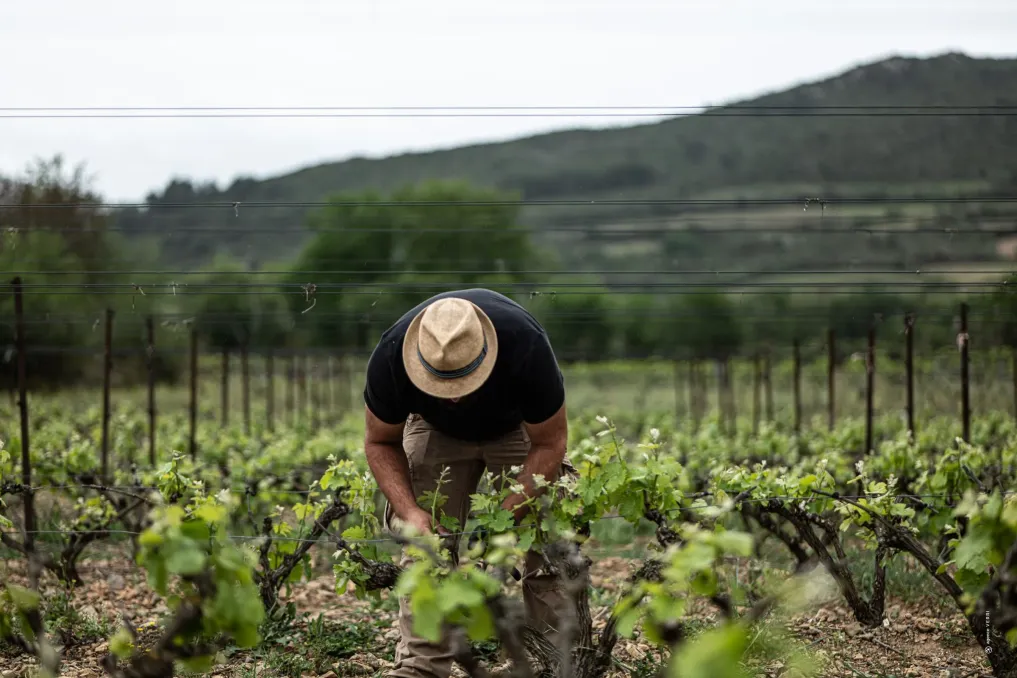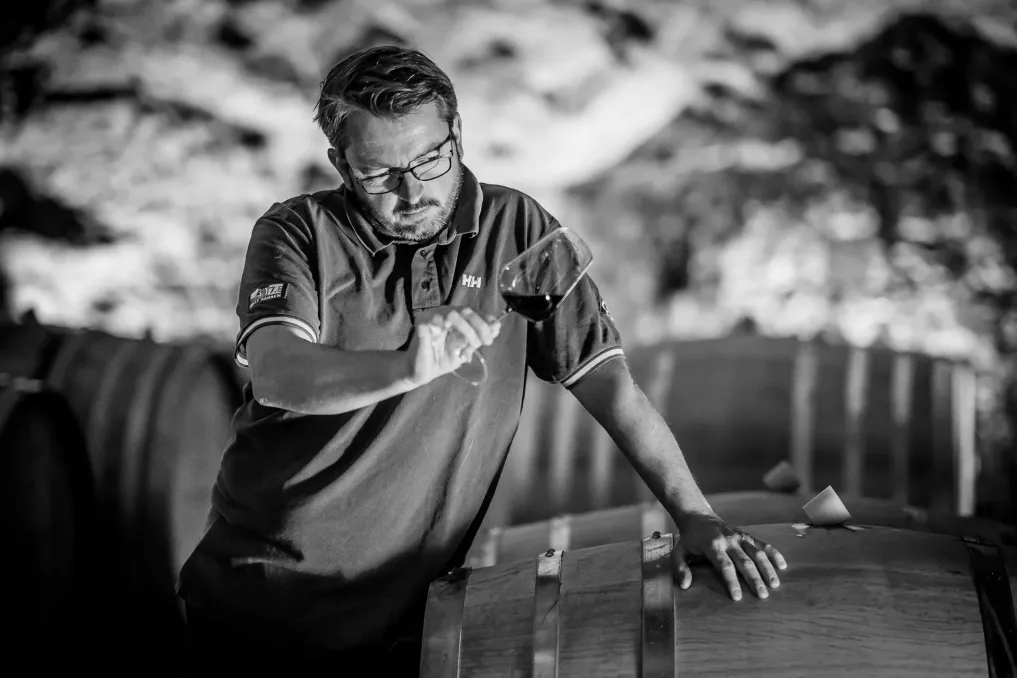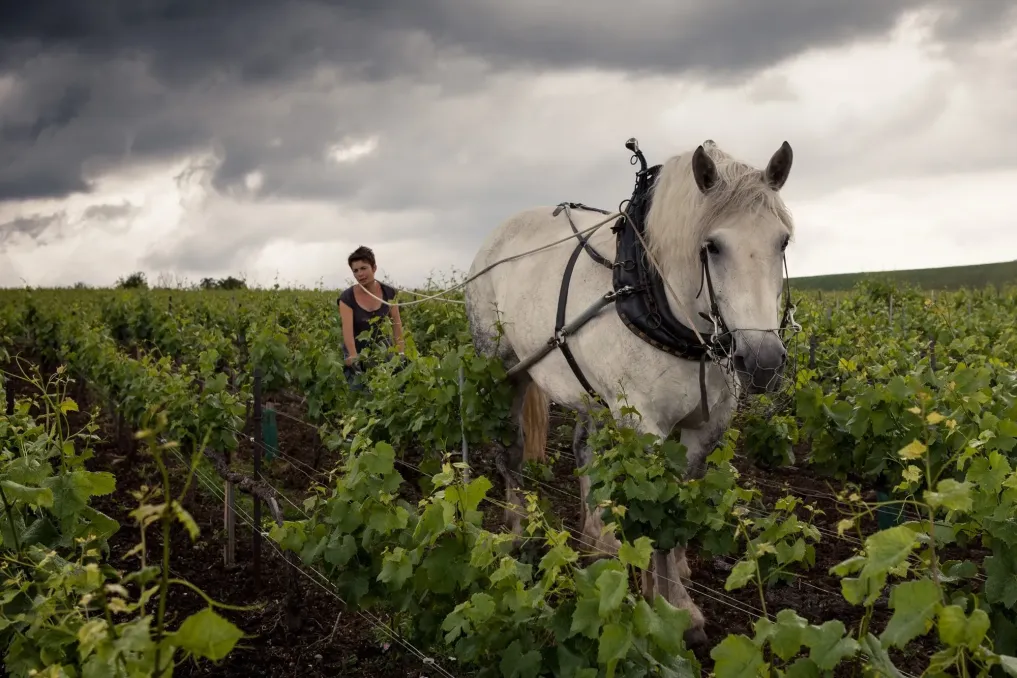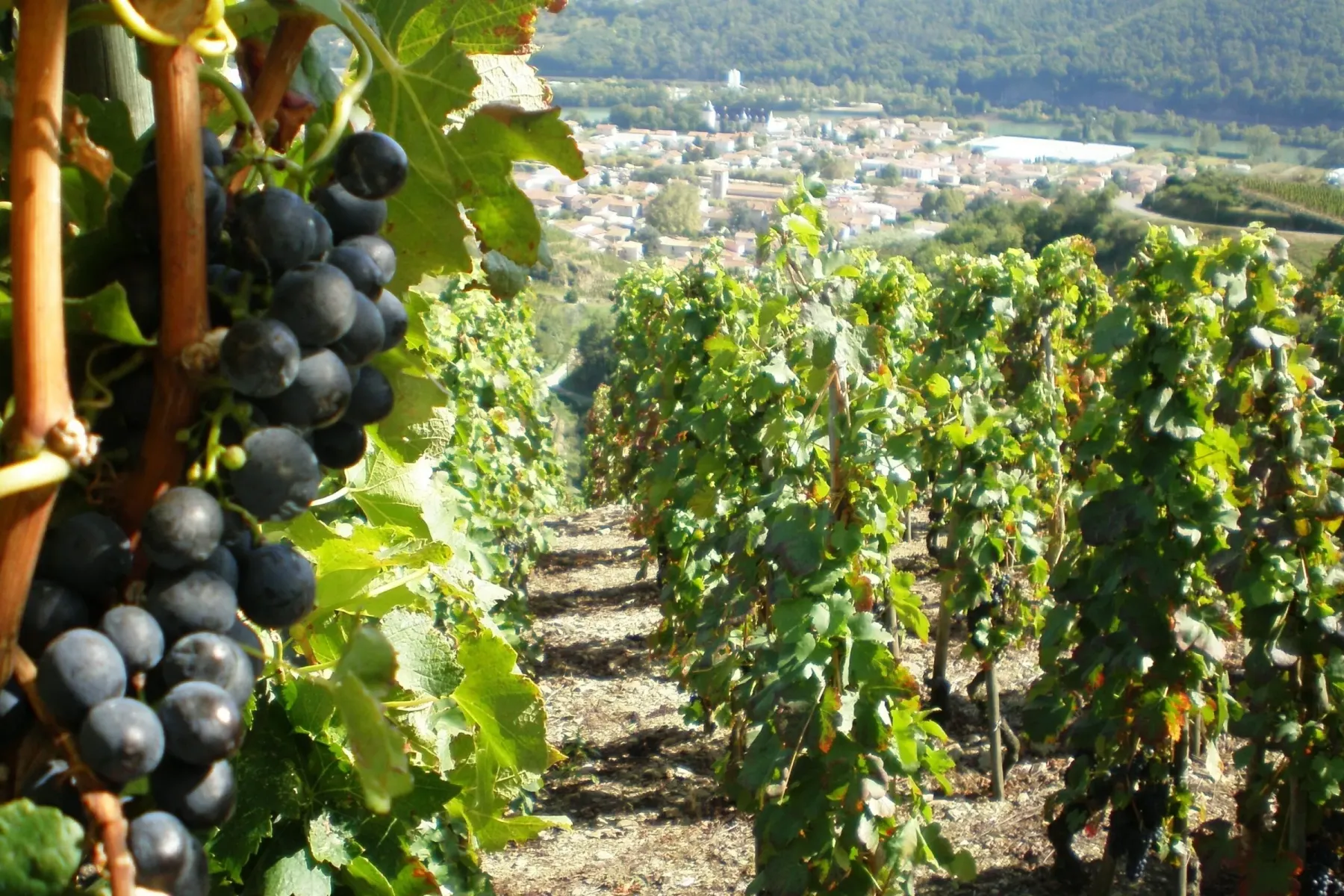
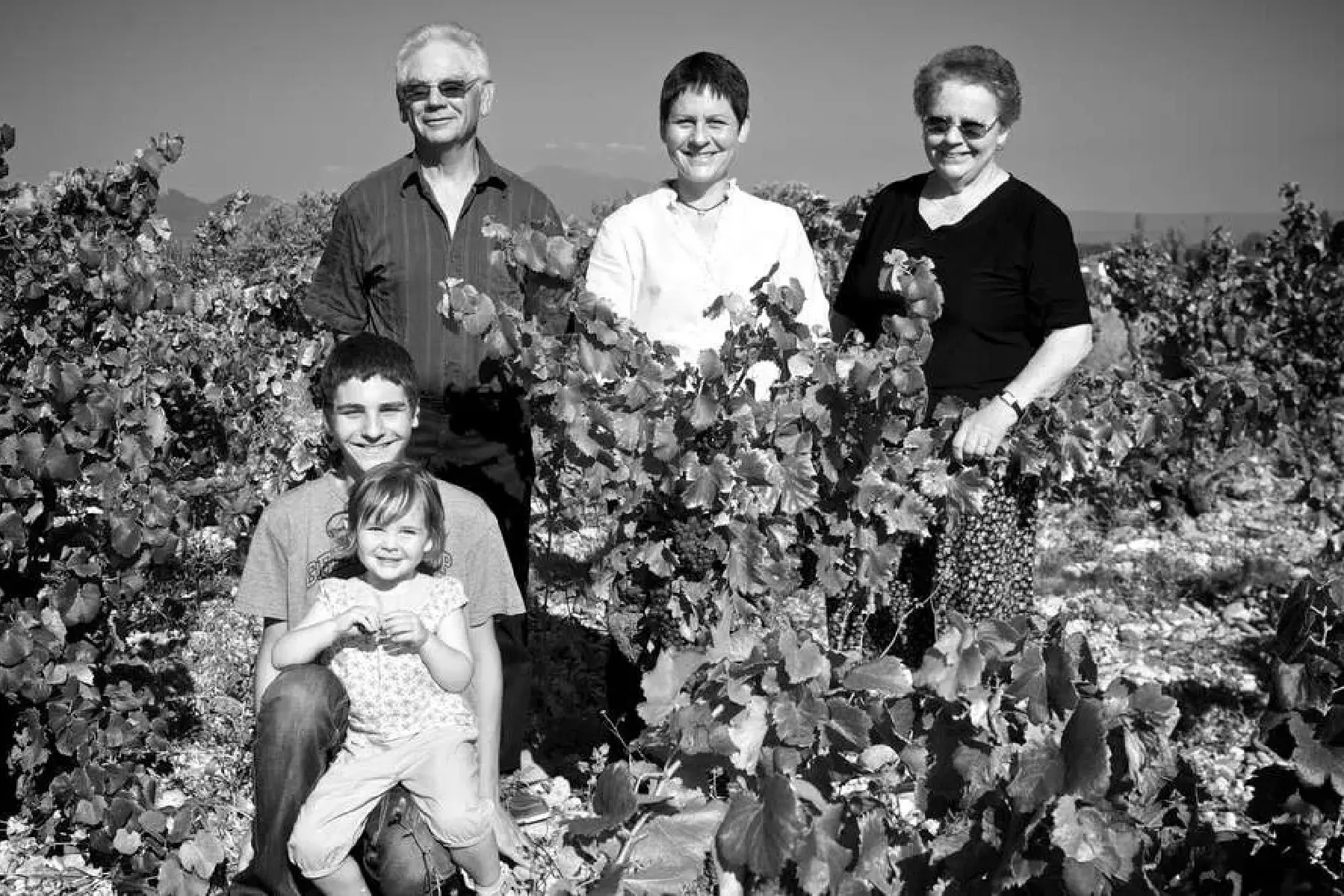
Three generations of the Domaine de Fontavin family in the vineyard

Atlas · Story · 9 episodes · 4 wineries

Going independent takes decades

For centuries the name on the bottle belonged to whoever bought the wine, not whoever grew it. How that order was broken, and what it still costs.

Atlas Vinaris · reviewed on 19/11/2026 · Photo: Domaine de Fontavin

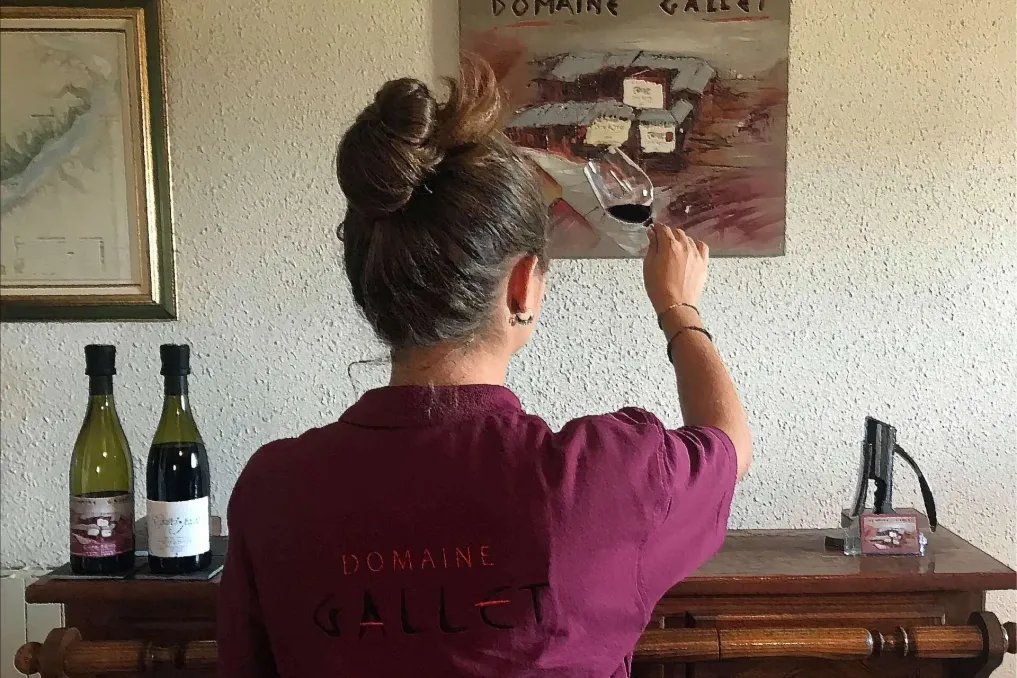
Between a family starting to grow vines and selling a bottle under its own name, decades can pass, sometimes centuries, because for a long time wine was bottled and signed by the trade. At Domaine Gallet, in Ampuis, the estate dates from 1807 and bottling at the property only began to develop in 1987.

Look at the label of a French bottle from before the war and you will most likely find not the name of whoever grew the grapes, but of whoever bought them. For centuries the name on the bottle belonged to the négociant: the one with the money to keep wine for years, customers in London or Amsterdam and a brand those customers knew.

Breaking that order took a ruin, a revolt with deaths, several laws and half a century of cooperatives. This story follows it episode by episode, each in its place on the map: the Bordeaux merchants, the Midi growers of 1907, the Champagne growers who threw wine into the Marne, the Châteauneuf baron who invented the rules, the aristocrat who bottled at his château, the scandal that sank a great house in 1973.

And it ends with four houses living it today: a family that sold to the trade for a hundred and eighty years, a grandson who left the cooperative contract by contract, a cooperative that gave up bulk wine and a great house that went the other way.

How long it took
Louis Roederer 69 years · 1776–1845 · from founding to its first own vineyard 69 years · 1776–1845 · from founding to its first own vineyard
Domaine Gallet 180 years · 1807–1987 · from the estate to bottling at the property 180 years · 1807–1987 · from the estate to bottling at the property
Castelmaure 57 years · 1921–1978 · from bulk cellar to its first Pompadour 57 years · 1921–1978 · from bulk cellar to its first Pompadour
Antoine Sanzay 15 years · 1999–2014 · from taking over the vines to bottling all of it 15 years · 1999–2014 · from taking over the vines to bottling all of it
In France 18001850190019502000 1901 · Maraussan: “Les Vignerons Libres”1907 · the Midi revolt1924 · Mouton bottles at the château1936 · the first appellations1978 · the confederation of estate bottlers

13 stops in 5 chapters. The map follows you as you read.

Chapter I

When the name belonged to the buyer

French wine grew great as a commodity, and the commodity was moved by others. As early as 1241 a Bordeaux privilege kept wines from other regions out of the city before 25 December, so its own would sell first; Turgot abolished it in 1776. In 1303 the port exported 102,724 tuns —a tun is four barrels, some nine hundred litres, about 1,200 of today’s bottles—, almost a million hectolitres.

That wine carried the name of nobody who had grown it. It left the estate in barrel, a merchant bought it, aged it in his cellars, blended it if needed and sold it under his brand. To understand why a family takes generations to put its name on a bottle, you have to start with who put a name on it.

Bordeaux · Gironde

The Chartrons

1620 → 1855

Bordeaux has had négociants since 1620, many of them Dutch. The district where they settled, the Chartrons, owes its name to the fact that foreign merchants had to live outside the city, beside a Carthusian convent.

Everything was run from there. Châteaux sold their harvest in barrel through a broker, the courtier, and the négociant financed the owners, kept the wine in his cellars and bottled it when it suited him. According to The Drinks Business, before 1949 Bordeaux wine from every château was sold in barrel and bottled by the trade: there are exceptions, as we will see, but it was the rule.

The famous 1855 classification is a child of that system. The Chamber of Commerce ranked 88 estates by the price their wines fetched, that is, by what merchants paid for them. By then the income of the great Bordeaux families already depended on wine: in 1755, three quarters of the revenue of the seventy largest came from selling the wine of their own estates.

Some understood the value of a name early. In 1550 Jean de Pontac built a “maison noble” among his vines, and Vinum magazine says that is how he invented the château. In 1660 a descendant, François-Auguste de Pontac, opened a tavern in London that served “Ho Bryan”.

Sources: Vinum (PDF) · The Drinks Business · The Wine Cellar Insider
For three centuries the chain stayed the same: the vineyard owner was paid within the year, and the merchant took on the time, the risk and the fame. Breaking it required three things the grower did not have: money tied up, customers and a name worth something.

Chapter II

Ruin and revolt

At the start of the 20th century the small grower was not worried about whose name was on the bottle, but about whether he could sell his wine at all. After the 1904 and 1905 harvests French production rose 96% to 69 million hectolitres, when the market was saturated at around 50. Algeria went from 5 to 8 million hectolitres between 1900 and 1904, and from 1903 sugar could be added to imported wines: sugar was used to “water” wine and make artificial wine.

Prices collapsed: from 16–24 francs a hectolitre in 1902–1903 to 6–7 francs in 1907. In the villages of the Midi, which lived off the vine and nothing else, that meant hunger. Out of it came the two answers in this chapter: joining forces to sell without a middleman, and taking to the streets.

The first answer was to join forces, and it began in a village in the Hérault.

Maraussan · Hérault

Les Vignerons Libres

23 December 1901

On 23 December 1901, 128 of the 280 growers of Maraussan founded “Les Vignerons Libres” to sell their wine without a middleman.

They finished the building in 1905 and were the first to make wine in common. That same year Jean Jaurès visited them. On the façade they put a motto still visible today: “Tous pour chacun, chacun pour tous”. With Mudaison, they were the first two cooperatives to sell without a middleman in 1901.

Today the building is a historic monument, since 2001, and that year the cooperative merged into the Vignerons du Pays d’Ensérune, part of the Foncalieu group. The idea had taken root: the cooperative did not make the grower independent, but it did make the whole village independent of the merchant.

Several cellars claim to have been France’s first cooperative: Damery, in Champagne, says 1891; Ribeauvillé, in Alsace, 1895. But in 1895 Alsace was German, so Maraussan keeps the canonical title.

Sources: Hérault Tourisme · Wikipedia FR · Wikipedia EN

The second answer was the street. Six years after Maraussan, the whole Midi rose up.

Montpellier · Narbonne

The Midi revolt

March–June 1907

On 11 March 1907, 87 growers set off from Argeliers for Narbonne behind Marcelin Albert. On 9 June, in Montpellier, there were between 600,000 and 800,000.

Albert, a grower from Argeliers, had telegraphed Clemenceau on 18 February. The Sunday rallies kept growing: more than 5,000 at Coursan on 14 April, 80,000 to 100,000 in Narbonne on 5 May, some 150,000 in Béziers on 12 May, 220,000 to 250,000 in Carcassonne on 26 May. Ernest Ferroul, mayor of Narbonne, resigned on 10 June, and some 442 town councils followed within a week.

On 19 and 20 June there were deaths in Narbonne; among them a fourteen-year-old boy and Cécile Bourrel, aged twenty. That night some five hundred soldiers of the 17th infantry regiment, recruited locally, mutinied and marched to Béziers; they ended up sent to Gafsa, in Tunisia.

The laws came in a cascade: on 29 June the obligation to declare area, harvest and stocks; on 3 September the definition that wine comes only from fresh grapes or must; on 21 October the fraud-repression service. In September the defence committee became the Confédération générale des vignerons du Midi.

On 23 June Marcelin Albert went to see Clemenceau in person. He came back discredited among his own, and died poor, years later, in Algeria: the country whose cheap wine had helped sink prices.

Sources: Wikipedia FR

Four years later it was Champagne’s turn, where the enemy was not sugar but grapes from elsewhere.

Damery · Champagne

Wine into the Marne

January–April 1911

On 17 January 1911 the growers of Damery threw into the Marne a wagon-load of wine brought in from outside the region.

They were coming out of terrible years: in 1908 the harvest yielded ten hectolitres a hectare, in 1909 rot came, in 1910 most districts harvested nothing, and in some villages more than two thirds of the land was mortgaged. Meanwhile some houses made champagne with wine from other regions. On 16 October 1910 ten thousand growers gathered in Épernay.

On the night of 11 April houses were looted in Damery, Dizy and Aÿ, and in Aÿ the cellars of Ayala and Bissinger burned, though they were not involved in any fraud. 40,000 soldiers were deployed until the harvest. On that same 12 April Champagne’s first cooperative was born, the CO.GE.VI., still the parent company of Champagne Collet today.

The revolt was, at heart, a fight over the value of a name: Champagne’s, protected on paper since the December 1908 decree that delimited the region, and which growers wanted to apply only to their grapes.

Sources: Maisons de Champagne · Wikipedia EN

The revolts gave nobody a bottle with their name on it, but they changed the rules: they forced harvests to be declared, defined what wine is and marked out where each is made. With that, for the first time, the name of a place could start to be worth more than a merchant’s.

Chapter III

The name passes to the place

The revolts produced a legal idea that changed everything: that the name of a place can be protected. The law of 1 August 1905 created administrative appellations against fraud, still without quality requirements; that of 6 May 1919 took their defence to the courts, with long lawsuits; that of 22 July 1927 banned hybrids and required “local, loyal and constant customs”. INAO itself admits this last one “came too late”.

A model was missing, and a Rhône village provided it. Meanwhile, in Bordeaux and Burgundy, a few owners decided not to wait for the law: they started bottling themselves, out of pride or because the trade left them no choice.

The missing rules were written by a lawyer who had been a war pilot.

Châteauneuf-du-Pape · Rhône

The baron and the rules

1923 → 1936

In 1923 Baron Pierre Le Roy de Boiseaumarié, a lawyer and former war pilot, drove the creation in Châteauneuf-du-Pape of a growers’ union with strict production rules. They became the model for the appellations of origin.

The decree-law of 30 July 1935 created the Comité national des appellations d’origine, chaired until 1947 by Joseph Capus. The first appellations, of 15 May 1936, were six: Arbois, Cassis, Cognac, Châteauneuf-du-Pape, Monbazillac and Tavel. In 1947 the committee became INAO, and Le Roy chaired it until 1967.

The logic was simple and revolutionary: what was protected was no longer a brand but an origin with its rules. From then on the name of a village could be worth more than any merchant’s, and the grower who put it on his bottle kept that value. In 2026 seventy-five appellations turn ninety; today French AOPs amount to some 15 million hectolitres on 404,300 hectares.

A Rhône village of growers, organised by an aviator baron, wrote the rulebook from which the whole French appellation system grew.

Sources: INAO, 1935-1970 · INAO, 1905-1935 · Taste France · Vitisphere

In Bordeaux, a year later, a twenty-year-old did not wait for the law.

Pauillac · Médoc

Mis en bouteille au château

1924 harvest

Philippe de Rothschild took over Mouton in 1922, aged twenty. The 1924 harvest was the first the estate bottled entirely at the château, with a label by the poster artist Jean Carlu and a sentence: “ce vin a été mis en bouteille au château”.

The sentence was a statement against the Chartrons system: wine no longer left in barrel for someone else to age and sign. Rothschild also introduced second wines and artists’ labels, commissioned every year since 1945. It is unclear whether the other Médoc greats followed as early as 1924 or from 1925.

Bottling at the estate trickled down slowly from the top. When the first palmarès of Médoc crus bourgeois was published in 1966, it required vinification at the property and, for the top category, ageing in oak and bottling on site.

Mouton, the estate that started all this, was then a deuxième cru. It was only promoted to first growth in 1973: half a century after its gesture.

Sources: Vinum (PDF) · Wine With Seth · Millesima · Crus Bourgeois (PDF)

In Burgundy the push came not from pride but from distrust.

Volnay · Burgundy

Shut out by the négociants

1920s and 1930s

Sem d’Angerville, in Volnay, denounced the négociants who cut burgundy with wine from the South. When they stopped buying from him, he had to bottle it himself.

Decanter tells it this way: his battle for quality and honest labelling antagonised some local négociants to the point that he was forced to bottle his own wine. Sources place it in the 1920s or the 1930s. Henri Gouges, in Nuits-Saint-Georges, began bottling and selling directly in 1933, and in 1935, at their colleagues’ request, the two completed a hierarchy of Burgundy’s vineyards.

They had an ally in the press: Raymond Baudoin, who had founded the Revue du Vin de France in 1927, championed estate bottling and drew in the American importer Frank Schoonmaker, who took those bottles with their own names across the Atlantic.

The Burgundian grower’s independence began as a punishment: the trade shut the door on the man who accused it of fraud, and he answered by putting his name on the bottle.

Sources: Decanter · Justerini & Brooks · Pearl of Burgundy · Decanter

With the appellation, a Châteauneuf-du-Pape was worth something for being from Châteauneuf, not for a house’s seal, and putting one’s own name next to the village’s began to pay. Even so it was slow: in the 1950s and 1960s many of Burgundy’s best producers still did not bottle at the estate.

Chapter IV

Together or alone

The two independences grew at the same time, each its own way. The collective one had public money. The law of 4 July 1931 opened the so-called wine statute —limits on high yields, a minimum price, control of transactions—, with Hérault deputy Édouard Barthe as a key figure, and from 1935–36 the Génie rural decided which cooperative was viable and set the subsidy, and the Crédit Mutuel Agricole lent long-term.

The result was the greatest concentration of cooperatives in the world. Between 1905 and 1974 the Languedoc-Roussillon built 580 of the roughly 1,200 in all France; before 1914 there were about thirty in the four departments, and between 1936 and 1940 alone 145 opened, ninety of them in the Hérault, more than half of all the department has, in four years. The founding idea was that the small grower should have vats like the big one: some private cellars were gigantic, like the domaine de Villeroy, in Sète, with 136 casks of 300 hectolitres and 35 kilometres of its own railway.

Individual independence, on the other hand, remained the business of a few for decades. It took a scandal and an association to turn it into a movement.

The scandal came from where it had all begun: the Bordeaux merchants.

Bordeaux · Gironde

Winegate

1973

In 1973 Winegate broke: a small négociant, Pierre Bert, filled bottles with cheap Algerian or Languedoc wine and put Bordeaux labels on them. The great house of Cruse was caught for having bought from him.

Prices collapsed and confidence took about ten years to return. The Cruse family had to sell Château Pontet-Canet to pay the fine, and the firm ended up merging in 1979.

It was the harshest proof of what d’Angerville and Rothschild had argued half a century earlier: if the name on the bottle belongs to whoever buys it, the buyer can put whatever he likes inside.

Sources: The Drinks Business · The Spectator (1974)

Three years later, the independents finally organised.

Paris

Those who do it all

1976 → 1978

In 1976 some thirty growers from the South went up to Paris to stage a first fair. In 1978 the Confédération nationale des caves particulières was formally founded, with François Chambovet as president.

Chambovet toured France with a group of Rhône growers, and federations sprang up department by department: Aude in 1977, Vaucluse in 1978. In 2003 the confederation changed its name and charter, becoming Vignerons Indépendants de France.

The charter is short and demanding: the member grows, vinifies and bottles himself. Today there are some 7,000. In Champagne, where most sell their grapes to the great houses, the federation brings together some 400 of its 20,000 growers.

Sources: Wikipedia EN · Lyon Capitale · Echo du Mardi · Réussir

Today both coexist: 560 cooperatives make more than 46% of French wine, against seven hundred négoce houses, and some 7,000 growers carry the seal of those who do everything themselves.

Chapter V

Who lives it today

Going independent still costs what it did in 1907: time, money tied up and customers. A commitment to a cooperative is signed for a period and renewed for periods of up to five years; only when it expires can a member leave, and leaving early means paying compensation. A Côtes-du-Rhône grower who inherited his father’s forty hectares, all delivered to the cooperative, described it in 2017: each hectare moved to his own cellar took twice the time and left about five times the margin. He stalled at five hectares for lack of time to find customers, and ended up pulling out seven to plant truffle oaks so he could move two more into bottle.

In Champagne the sums are different. Grand cru grapes fetched 6.68 euros a kilo in 2017, nearly 10 with bonuses, and selling grapes usually pays better than making wine. Growers making their own champagne fell from 2,015 in 2011 to 1,766 in 2018, and several of the most prestigious have moved to buying grapes. “RM is finished. It’s now NM”, says Frédéric Savart.

These four houses each embody one of the forms of this story.

What began in Pauillac in 1924 reached Ampuis in 1987.

Côte-Rôtie · Northern Rhône

Domaine Gallet

1807 → 1987 · 180 years

Domaine Gallet

The estate dates from 1807 and the family has spent six generations at the top of the Ampuis slope. According to the appellation body, the wine “was sold to the négociant”; bottling at the property began to develop in 1987.

Matt Walls, in Decanter, mentions grape sales to houses such as Villard, Ogier or Guigal. Today there are about four hectares of steep slope in Lancement, Combard and Chavaroche, with vines of some forty-five years, hand-picked and aged two years in barrel; Valérie runs the cellar and her brother the vines.

In the same village there is another Gallet family, Frédéric’s, bottling since the 2022 vintage: in Ampuis the surname alone does not tell you whose bottle it is.

A hundred and eighty years of vines with someone else’s name on the bottle. And the slope has its legend: a lord of Maugiron is said to have divided his land between two daughters, one fair and one dark, giving the Côte Blonde and the Côte Brune their names.

In the shop · Côte Rôtie 2023 → 44.59 € · 2 left

Sources: ODG Côte-Rôtie · domainegallet.com · Decanter · Guigal · the winery’s page at Vinaris

Côte-Rôtie in the atlas →

One of the cooperatives of that burning Midi still stands, and no longer sells in bulk.

Corbières · Languedoc

Cave de Castelmaure

1921 → 1978

Cave de Castelmaure

The Embres-et-Castelmaure cooperative has worked since 1921 in the middle of the village, and the wine still ferments in its original concrete vats. For decades it was a bulk cellar; in 1978 its first Pompadour came out.

In 1976, with the oenologist Marc Dubernet, they tried carbonic maceration on carignan, the grape the south had planted for volume. In 1983 Bernard Pueyo arrived as director; since 1985 almost everything has been sold as Corbières, with the Jeanjean house as commercial partner, and the 1999 floods were, in the Guide Hachette’s words, “the occasion for a new start”.

Today there are some sixty growers: in 2015 there were 65 members on about 400 hectares, 18 of whom lived from their vines and supplied 85% of the grapes. When they were invited to join Fitou, they said no.

Members are paid by the hectare, not by the kilo, so that nobody picks too early: exactly the opposite of the logic of weight that drove the bulk cooperatives born after 1907.

In the shop · San Sa 2022 → 9.80 € · 11 left

Sources: castelmaure.com · Rosemary George MW · Guide Hachette · the winery’s page at Vinaris

Corbières in the atlas →

And others, inside those cooperatives, took generations to leave.

Saumur-Champigny · Loire

Antoine Sanzay

1999 → 2014

Antoine Sanzay

In Varrains, the Sanzay family delivered its grapes to the cooperative for generations. Antoine took over the vines in 1999 and closed the contracts one by one: until 2013 he vinified only around 40% of his vines, and 2014 was the first vintage he bottled in full.

His father died when Antoine was ten, just as his grandfather was nearing retirement. His father loved wine; his grandfather lived off the land and sold all the grapes to the cooperative. His first vintage of his own was 2002.

The cooperative was both brake and bank: the contracts stopped him taking all the grapes at once, but what he kept delivering gave him, according to his importer, much-needed financial support while he built his own. Today he farms just over eleven hectares organically, almost all cabernet franc, four of them in Les Poyeux.

Twelve or fifteen years, depending on whether you count from 1999 or from 2002: that is how long it took him to make wine from all the grapes of land that was already his. He is the Rhône grower of 2017, with a name.

In the shop · La Paterne Rouge 2022 → 21.50 € · 4 left

Sources: Skurnik · Alliance Wine · Guide Hachette · the winery’s page at Vinaris

Saumur-Champigny in the atlas →

And in Reims, a great house went the other way: it stopped depending on growers.

Champagne

Louis Roederer

1833 → 1845

Louis Roederer

Louis Roederer inherited the Reims house that took his name in 1833; in 1845, against the custom of his time, he bought fifteen hectares of grand cru to secure his grapes and control the farming.

Buying vineyards was a bad investment at the time: grapes were worth very little, and the norm for a great maison was to buy them. Roederer kept doing the opposite for more than a century; Camille Olry-Roederer, who ran the house for forty-three years, bought grands and premiers crus in the 1960s and 1970s.

Today there are some 240–250 hectares in more than four hundred plots, and the house takes more than two thirds of the grapes it needs from its own vineyards. “Vineyard ownership has underpinned Roederer’s independence”, as a British magazine puts it.

On 7 June 1867, at the Café Anglais in Paris, Wilhelm I, Alexander II, the tsarevich and Bismarck dined on sixteen courses and eight wines over some eight hours; one was “Champagne Roederer frappé”. Cristal would come in 1876, for the same tsar, and was not sold to the public until 1945.

In the shop · Collection 243 → 58.75 € · 3 left

Sources: louis-roederer.com · VinePair · The Gentleman’s Journal · Wikipedia · the winery’s page at Vinaris

Champagne in the atlas →

Independence is not a straight line. For a grower it can mean no longer selling grapes; for a great house, no longer buying them; for a whole village, joining together; and in Champagne, sometimes, the sensible thing is to keep selling.

What it says about price

“Vigneron indépendant” is not a romantic label: it is a long economic process.

Behind those two words lies a cellar to pay for, harvests tied up before any money comes in —a wine for ageing can keep one or more vintages locked away— and customers to find one by one, whereas grapes sold are paid for within the year. And behind it, often, generations who sold their work under someone else’s name.

That explains much of what a bottle from a small grower costs. It is not just the price of the label: it is the price of the decades it took to be able to print it.

Sources: each stop lists its own, and every fact is checked against them and against the winery’s page at Vinaris.

Ask acopas

More stories


I hereby confirm I am above 18 years old