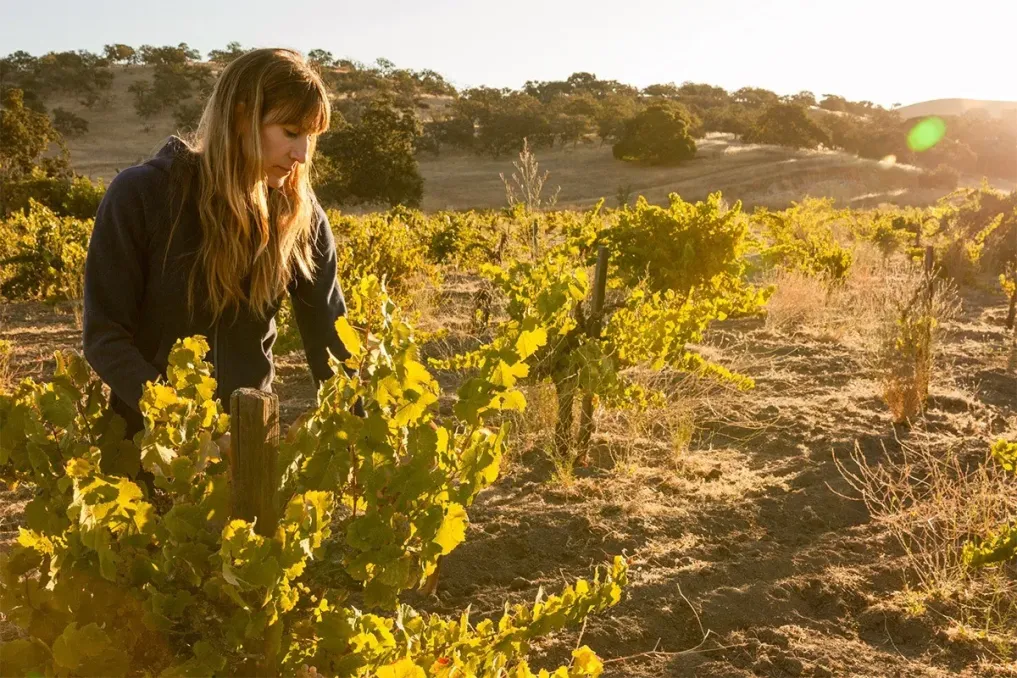
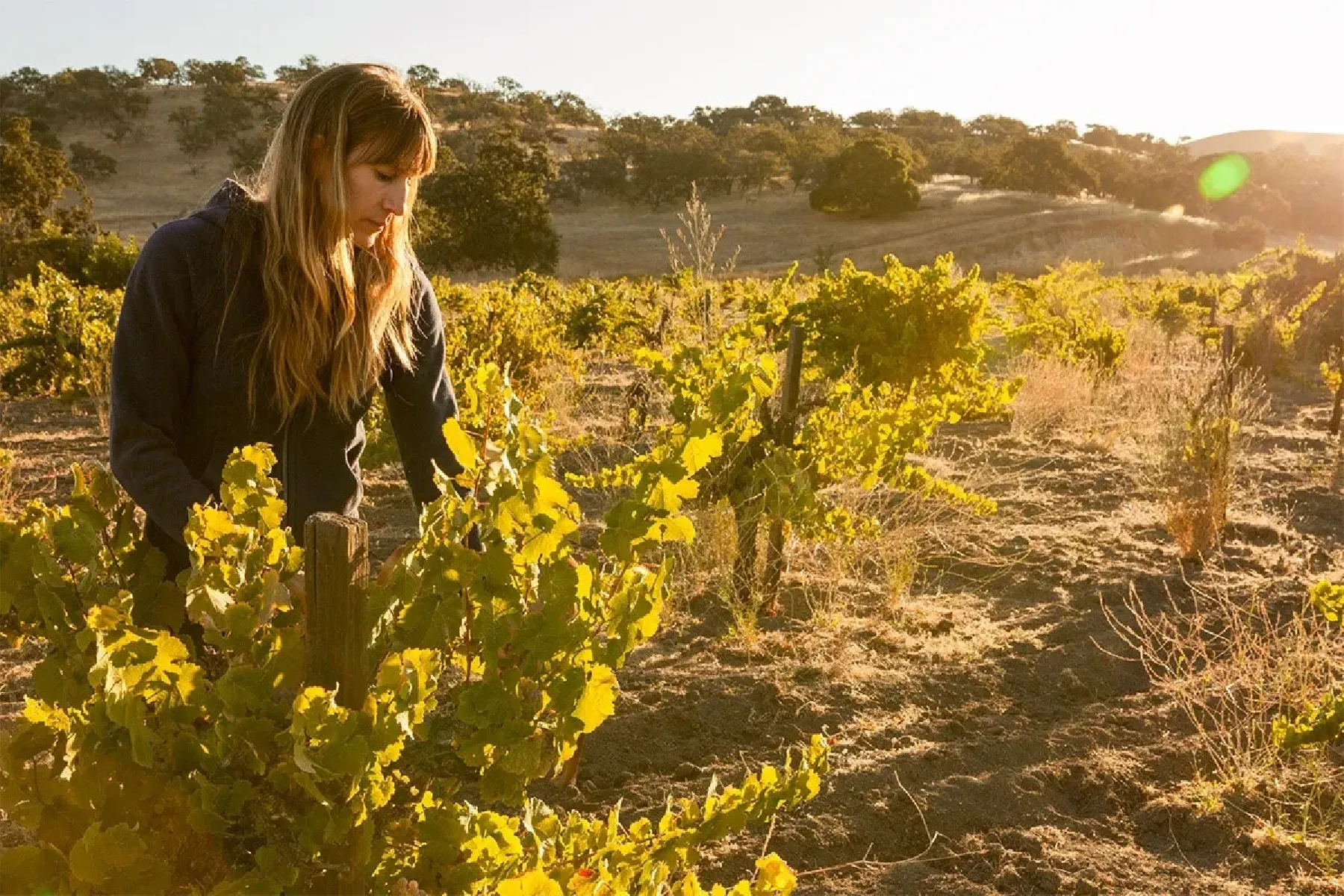
A grower among the vines, in a California vineyard in the late afternoon

Atlas · Story · 11 episodes · 2 wineries

California’s last ten vintages

Drought, deluge, heat and fire: in ten years California has lived through almost every extreme a wine region can suffer. And in the end, the hardest blow came not from the sky but from the market.

Atlas Vinaris · reviewed on 19/11/2026 · Photo: Lapis Luna

Between 2015 and 2025 California went through a drought, two historic heat waves and four fire seasons. The best vintages for Napa cabernet were 2018 (99 points on Wine Spectator’s chart) and 2021 (97); the worst, 2022 (84), and in 2020 smoke took much of the crop. But what changed most was the market: the crush fell from 4.5 million tons in 2018 to 2.76 in 2025, because more and more grapes had no buyer.

In one decade California has had a drought that ended in a deluge, two heat waves that broke all-time records, four fire seasons and two vintages of near-perfect scores. Any one of those would have been enough for a story.

The surprise is the ending. The largest crop of the decade was 2018, at 4,506,583 tons; the smallest, 2025, at 2,761,914. In between there was no natural disaster to explain it: hundreds of thousands of tons were left hanging on the vine because nobody bought them, and close to a quarter of the vineyard area at the pandemic peak was pulled out.

This story follows the ten vintages in their places on the map —Santa Barbara’s earliest harvest, the night of 8 October 2017, the lost year of 2020, the heat in Sacramento, the ownerless grapes of Lodi and Fresno— and ends with two houses from the shop that stand on either side of a California split in two.

What a ton of grapes fetched in 2025
Cabernet de Napa $8,644.88/t
Chardonnay de Sonoma $2,433.24/t on average; about $800 on new contracts
Media de California $977.76/t
Zinfandel de Lodi $597.43/t

Dollars per ton of purchased grapes, on a logarithmic scale: Napa cabernet is worth about fourteen times Lodi zinfandel (our calculation). Final California Grape Crush Report 2025 (USDA NASS / CDFA); new-contract Sonoma chardonnay price from Turrentine.

How long it lasted
La sequía 5 years · 2012–2017 · until the governor declared it over 5 years · 2012–2017 · until the governor declared it over
Del máximo al mínimo 7 years · 2018–2025 · from 4.5 to 2.76 million tons 7 years · 2018–2025 · from 4.5 to 2.76 million tons
Big Basin 2020 5 years · 2020–2025 · from the smoke to pouring the vintage away 5 years · 2020–2025 · from the smoke to pouring the vintage away
In California 2012201420162018202020222024 2017 · the October fires2018 · the big crop2020 · the year of smoke2023 · great vintage, unsold grapes2025 · the smallest crush

14 stops in 5 chapters. The map follows you as you read.

Chapter I

Drought, then deluge

The decade began dry. 2015 was California’s fourth straight year of drought, with a mild winter, early budbreak and a cold May that ruined fruit set. 2016 brought some rain and another early, short, good harvest: Cathy Corison, in St. Helena, summed it up in one phrase, “early, small and delicious”. Wine Spectator now gives that year’s Napa cabernet 98 points; in 2022 it gave it 94. Vintage charts change their minds too.

The winter of 2016 to 2017 ended the drought. On 7 April 2017 Governor Jerry Brown declared it over across almost all the state, with a warning: “This drought emergency is over, but the next drought could be around the corner”.

Sta. Rita Hills · Santa Barbara

The earliest harvest

2015 harvest

“This year was the earliest harvest in my 46 years as a winegrower”, said Richard Sanford at Alma Rosa. He picked from 10 August to 8 September.

The poor May fruit set explains the short crop better than the drought alone. In Santa Barbara, Louis Lucas reckoned his production would be down “about 50 percent”. In Paso Robles, Jeff Meier of J. Lohr saw cabernet fall “by as much as 60 percent!”, though with the deepest colour “in more than a decade”.

The final crush report gave 3,867,710 tons statewide, down 7%, at an average of $671.31 a ton, down 10%. In Napa, the county crop report showed production almost 29% below 2014.

That year’s fire was the Valley Fire, in Lake County. It razed Shed Horn Cellars, on the edge of Middletown, and its owners, Michael and Adawn Wood, also lost their home. Even so, an estimated 85% of the county’s vineyards were unaffected.

Sources: Wine Institute, 2015 · Grape Crush Report 2015 (PDF) · KTVU · Wines & Vines
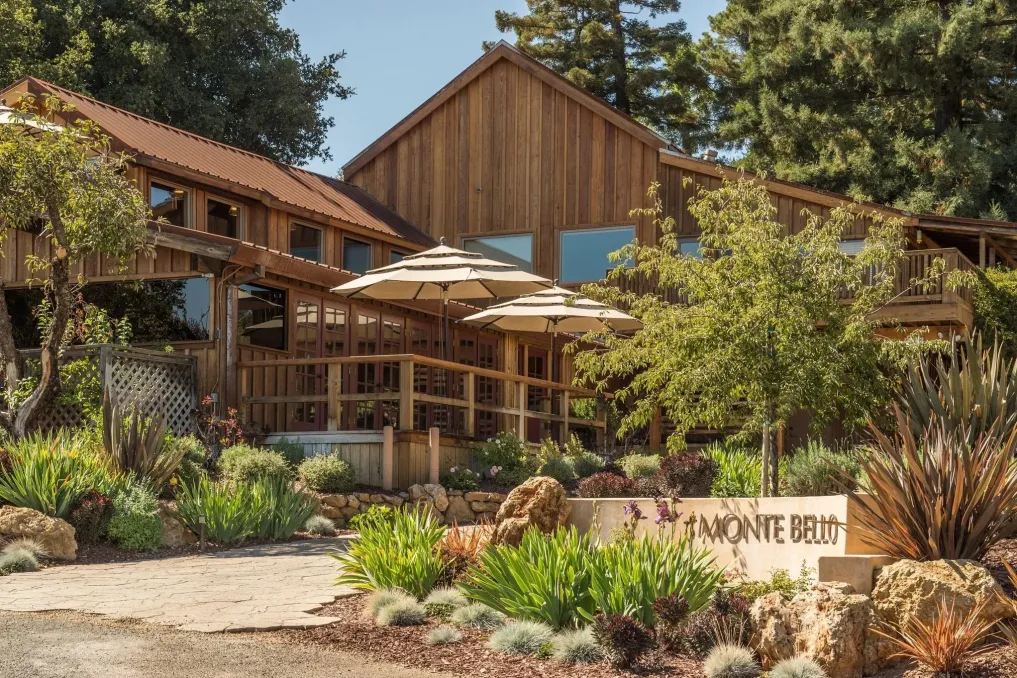
The first summer without drought ended with the highest heat ever measured in the city.

San Francisco

106 degrees in San Francisco

1 September 2017

On 1 September 2017 San Francisco reached 106 degrees Fahrenheit: its all-time high since records began in 1874. The Labor Day heat wave fell on grapes about to be picked.

In Lodi, Stuart Spencer of St Amant put it this way: “Our old-vine Zinfandels on the sandy soil suffered the most during the heat… more shrivel, mould and rot”. One lot reached 29.5 Brix after heavy sorting. David Hayman of Delicato summed it up: “Ripeness was accelerated and a lot of fruit became ready all at once”.

At Monte Bello, in the Santa Cruz Mountains, Ridge’s Eric Baugher had already seen zinfandel fall by “anywhere from 15% to 40%” because of rain during flowering: the water that ended the drought came at a bad moment.

Five months earlier, the governor had declared the drought over. The following summer proved the other half of his sentence: California’s problem was no longer just water, but extremes.

Sources: CBS SF · Vinography · Wine Institute, 2017 · KTVU

After years of water shortage, 2017 arrived with full reservoirs and building heat. A month after that September, the fires came.

Chapter II

The October fires

In California, fire season and harvest overlap. In 2017 and 2019 the big fires came in October, when almost all the grapes were already in the cellar: the drama was one of people and buildings, not of the vintage. Between them came 2018, the largest crop of the decade.

Five weeks after the heat, three fires were born on the same night.

Santa Rosa · Sonoma

The night of 8 October

8 October 2017

On the night of 8 October 2017 the Tubbs, Atlas and Nuns fires broke out at once, between Napa and Sonoma. Some 44 civilians died and 8,889 structures burned.

In Fountaingrove, in Santa Rosa, the Tubbs destroyed every building at Paradise Ridge. Over the hills, Signorello Estate, on Napa’s Silverado Trail, burned some thirty minutes after the Atlas fire swept the road; Ray Signorello Jr., who was in Vancouver, could later say: “We didn’t lose any vines”. The vineyard had acted as a firebreak. A wine broker told Fortune that a friend “could hear the wine boiling in the barrels before the roof fell in”.

For the vintage, the fire came late: 90% of the grapes in Napa and Sonoma had been picked before 8 October. The crush report hardly shows it: Napa cabernet rose from $6,830 to $7,498 a ton.

At Paradise Ridge, among the ruins, a sculpture spelling “Love” was left standing, scorched. The first stone of the rebuild was laid on 22 October 2018, a year and two weeks later.

Sources: Press Democrat · KTVU · Fortune (Yahoo Finance) · Wine Institute, 2017

The next year, the same valley had the harvest every grower dreams of.

Glen Ellen · Sonoma

“Played out like a dream”

2018 harvest

2018 was long and mild, with no scares. “This is one of those years where everyone is happy… Yields are up and quality is excellent”, said Mark Burningham of Benziger, in Glen Ellen.

It was the largest crop of the decade: 4,506,583 tons, at an average of $831.63. It set records on the North Coast, in Sonoma, in Lodi, with 850,686 tons, and for Napa cabernet. Statewide it did not top 2013, but it was the largest since.

Critics put it at the very top: Wine Spectator gives Napa cabernet 99 points, and Antonio Galloni spoke of “two stunning back-to-back vintages in 2018 and 2019 the likes of which I have never seen”.

A local business paper saw it coming and ran the headline “too much of a good thing?”. Lodi set its tonnage record, but its average price fell to $586. That is where the decade’s other story begins.

Sources: Wine Institute, 2018 · Grape Crush Report 2018 (PDF) · Vinous · North Bay Business Journal

In 2019 the fire returned, this time further north, beside the zinfandel vineyards.

Alexander Valley · Sonoma

The Kincade

23 – 27 October 2019

The Kincade broke out at 9:24 pm on 23 October 2019, northeast of Geyserville, at a PG&E transmission line. It burned 77,758 acres and forced some 190,000 people to evacuate, the largest evacuation in the county’s history.

At around three in the morning of 27 October it crossed Highway 128 and destroyed Soda Rock Winery. Left standing were the 19th-century stone façade and a steel boar. Ken Wilson lost his freshly made 2019 wine: “I’m still in a fog. It’s still surreal”.

As in 2017, the grapes were already in: 92% of Sonoma had been picked. In Alexander Valley some 50 of the 14,449 acres of vineyard burned. Wine Spectator gives 2019 Napa cabernet 96 points, and Sonoma pinot noir 95, the best score in its series.

Karissa Kruse, of the Sonoma growers, summed up an impossible year: “We’ve had curveballs of fighting fires and frost damage on the same night”.

Sources: Wikipedia, Kincade Fire · SF Chronicle · Press Democrat · Wine Industry Advisor

Three years, two fires that razed wineries and homes, and three vintages that were saved: 2017 with 92 points for Napa cabernet, 2018 with 99 and 2019 with 96. The rule that fire came late was broken in 2020.

Chapter III

The lost year

Between 16 and 17 August 2020 some 15,000 lightning strikes hit northern California, and CAL FIRE counted 367 fires. This time the fire did not come in October but with the grapes still hanging, after a very dry winter. And what ruins a vintage is not the flames but the smoke: it gets into the grape skins and comes out later in the wine.

One of those lightning strikes set the Santa Cruz Mountains alight.

Santa Cruz Mountains

It smelled of barbecue

August 2020 → summer 2025

The CZU Lightning Complex burned more than 86,000 acres in the Santa Cruz Mountains and destroyed 1,490 structures. Among them was the McHenry winery, in Bonny Doon: “We have lost our 2018 and most of the 2019 vintages”.

Bradley Brown, of Big Basin Vineyards, lost his house, more than $250,000 in wine and equipment and some six hundred vines. For years he tried to get the smoke out of the 2020 vintage; in the summer of 2025 he poured all of it away. His rosé must, he said, smelled of barbecue.

At Monte Bello, in the same range, Ridge analysed and tasted the grapes: “no significant issues for most of our vineyards. Those with issues were not picked”. Its chardonnay had been picked on 22 August, “the earliest recorded harvest to date”.

Ryan Beauregard cut a firebreak with his neighbours to save what they could: “I have a life of dedication to this mountain”.

Sources: Lookout Santa Cruz · Good Times · Ridge, 2020 Harvest Report (PDF)

In Napa, the worst came at the end of September, with the cabernet still on the vine.

Deer Park · Napa

The line of 27 September

27 September 2020

The Glass Fire broke out before dawn on 27 September in Deer Park, above St. Helena, and burned 67,484 acres. That date divided the grapes picked clean from those still on the hillsides.

Chateau Boswell was lost on the first night; only the façade remained. At Castello di Amorosa the castle was saved and the storage building burned. Philippe Melka summed it up: “Everything we test is bulk, bulk, bulk… Possibly 70 percent will be declassified”. Tegan Passalacqua of Turley, on Howell Mountain: “We dropped 100 tons… it literally turned my stomach”. St. Supéry left the 500 acres of Dollarhide, in Pope Valley, unpicked.

In the crush report, Napa crushed 99,308 tons at $4,592, down 20%, with a note: “Prices reflect adjustments due to smoke damage”. Wine Spectator gives 2020 Napa cabernet 87 points and chardonnay 93, as nearly all of it had been picked before the fire. Even so, houses such as Harlan, Spottswoode, Dominus or Corison released their 2020 reds.

Pete Richmond, of Silverado Farming, said some wineries were paying $1,500 a ton to leave the grapes on the vine. And Kirk Venge described that year’s smoke: “oily and almost resinous… this smoke is all the houses and barns that burned”.

Sources: Wine Spectator, 8 oct 2020 (PDF) · Fruit Growers News · Grape Crush Report 2020 (PDF) · SF Chronicle

Across the state between 165,000 and 325,000 tons of grapes were left unpicked because of smoke. 2020 was the first year of the decade in which the vintage itself was lost; the years that followed brought a different enemy.

Chapter IV

Heat, water and grapes with no owner

2021 was the second year of drought, and so it came out short and concentrated. Yountville had about 14 inches of rain, against an average of 31.5, and yields fell by 30% to 50% on many estates. “It’s like going to 11. Everything is intense”, said Chris Cooney of Dana Estates. Wine Spectator gives Napa cabernet 97 points, and Galloni called it “the best Sonoma vintage since 2018”.

It was the decade’s last vintage whose story was told by the weather alone. While cellars filled, sales fell: by the end of 2023 bulk inventories covered 21.7 months of sales, when about 18 is healthy.

A year after that concentrated vintage came the highest heat ever measured in the capital.

Sacramento

Cooler in Phoenix

3 – 9 September 2022

A heat dome covered northern California from 3 to 9 September 2022. Sacramento reached 116°F on 6 September: its all-time high.

In Napa, the stations collected by Lisa Perrotti-Brown recorded between 116 and 118°F, and mid-month it rained, which swelled the berries. “You can’t fight the vintage. It’s a bigger vintage, and the wines are bigger”, said Maya Dalla Valle. William Allen, of Two Shepherds, joked: “It’s cooler in Phoenix right now than Sonoma County”.

In the middle of harvest, Nate Weis of Silver Oak insisted: “The quality is off the charts”. Two years later, Wine Spectator gave Napa cabernet 84 points, the decade’s lowest score, and James Molesworth called it “a mostly forgettable year”. The whites were saved because they were picked before the heat: 93 for chardonnay.

That same year, in the Sacramento delta, an April frost had already left Aaron Lange of LangeTwins with 25% of a normal crop in some whites: cold in spring and the highest heat on record in September.

Sources: CapRadio · The Wine Independent · SF Chronicle · Wine Spectator

After the heat came water, and with it the paradox of the decade.

Lodi · Central Valley

The great vintage nobody wanted to buy

2023 harvest

Atmospheric rivers left 51 inches of rain in Napa, against an average of 32, and harvest came two weeks to a month late. In Lodi, Aaron Lange was still picking on 13 November, his family’s record.

Renée Ary of Duckhorn called it “one of the coolest and latest vintages I’ve seen in the last two decades”. Napa’s vintners sold it as “the vintage of a lifetime”; Galloni replied that it is magnificent but “maybe not the vintage of a lifetime”. Wine Spectator gives Napa cabernet 95 points, chardonnay 95 and pinot noir 97.

It was the largest crop from 2020 to 2025, 3,899,710 tons, and Napa’s price hit its peak. But the preliminary report already spoke of “a dramatic oversupply situation”: chardonnay fetched $2,560 a ton in Sonoma and $586 in Lodi. The Lodi commission estimated that perhaps 400,000 tons were left unpicked across the state.

Jeff Bitter, of Allied Grape Growers, saw it in the field: “You can travel to pretty much any part of the state this year and see grapes left behind”. One of the best vintages of the decade was also the first in which good grapes were left unpicked because nobody would buy them.

Sources: Wine Institute, 2023 (PDF) · Vinous · Vinography · AgAlert · AP (The Columbian)

In 2024 the heat returned, and unsold grapes stopped being an exception.

Paso Robles · Central Coast

Sour raisins

July 2024

At Tablas Creek, in Paso Robles, nine of the first eleven days of July 2024 topped 100°F, peaking at 111.9°F on the 6th. Sunburnt grapes were left as “hard, brown, sour raisins”.

In Napa, Mike Stornetta counted 38 to 40 days above 100°F, against 8 or 10 in 2023, and added: “Wine sales are not what they used to be”. Quality turned out well: Wine Spectator gives Napa cabernet 93 to 96 points, preliminary.

The problem was not the weather. In Lodi, Steve Perrin was refused a $300,000 credit line and put 80 acres up for sale: “I’m ready to pick, if there was someone who wanted it”. According to Bitter, more than a tenth of the state’s crop stayed on the vine: “I don’t think there’s ever been a time when we left that many acres of grapes on the vine”. The final crush fell 24%, to 2,961,433 tons.

Tablas Creek’s sour raisins were the problem of early summer. The harvest problem was another: healthy, ripe grapes and nobody who wanted them.

Sources: Tablas Creek · ABC7 · Ag Alert · Maven’s Notebook

In 2025 the valley where cheap grapes are grown began pulling out vines.

Fresno · San Joaquin Valley

A quarter of the vineyard, gone

2025 harvest

The 2025 crush was 2,761,914 tons, the smallest of the decade and about 1.7 million less than 2018. For the first time more white grapes were crushed than red.

According to Ag Alert, some 820,000 tons went unpicked, “roughly a quarter of the crop”. Between October 2024 and August 2025, 38,134 acres of vines were pulled; Fresno removed 18% of its vineyards, and San Joaquin County, Lodi’s, almost 8,000 acres. Another 47,229 acres went the following year. An estimated 25% of the vineyard area at the pandemic peak, around 600,000 acres, has gone.

Nurseries sold 7.7 million vines in 2025, when three years earlier they sold over 20 million. Bitter summed it up bitterly: “We made excellent strides, unfortunately, on the backs of growers who have left the grapes on the vine”.

And the vintage, paradoxically, was cool and elegant. Steve Peck of J. Lohr: “Our vineyards where we grow our $20 bottle of Cabernet taste like they could go into our $50 bottle”. The one scare was the Pickett Fire, in Calistoga, the decade’s first with criminal charges: it was caused by a burn pile between Hundred Acre properties.

Sources: Grape Crush Report 2025 (PDF) · Ag Alert, feb 2026 · Ag Alert, nov 2025 · Farm Progress · Wine Institute, 2025 (PDF) · Wine Spectator

Rob McMillan, of Silicon Valley Bank, called it “the first demand-based correction in three decades”. Gallup found in 2025 that only 54% of Americans drink, the lowest since 1939, and that same year Canada’s provinces pulled US wine from their shelves: exports there fell 78%.

Chapter V

Who lives it today

The crisis did not hit everyone equally. In 2025 a ton of Napa cabernet fetched $8,645 and a ton of Lodi zinfandel $597: about fourteen times less. The top end held; grapes with no brand and no contract sank. The big companies pulled back from the low end: Constellation sold some thirty brands to Gallo and, in June 2025, Woodbridge, Meiomi and others to The Wine Group; Vintage Wine Estates filed for bankruptcy in July 2024. And in 2026 Signorello and Gundlach Bundschu filed too, two houses hit by the 2017 fire: the fire did not bring them down, the market did.

The shop’s two houses stand on either side of that gap. Ridge, with its old Sonoma vineyards, embodies continuity: two vintages, 2018 and 2021, that escaped the fire years. Lapis Luna embodies the other California, that of brands bought and relaunched in a shrinking market.

The big crop of 2018, in a bottle from the shop.

Lytton Springs · Dry Creek Valley

Ridge Vineyards

1972 → 2018 vintage

Ridge Vineyards

Paul Draper saw Lytton Springs in 1972, with vines already some eighty years old; he made his first wine there that year and in 1991 Ridge bought the winery and the old vines. Its 2018 is 72% zinfandel, 18% petite sirah, 8% carignane and 2% mataro.

Ridge was born in the Santa Cruz Mountains: four engineers from the Stanford Research Institute revived the old Monte Bello winery for the 1962 vintage. Its 1971 Monte Bello came fifth at the 1976 Judgment of Paris and first in the 2006 rematch. Since the 2011 vintage it has printed the list of ingredients on the back label, to show “how little intervention is necessary”, and calls its method “pre-industrial”.

The 2018 was picked from 4 September to 18 October, after 25 inches of rain; according to Ridge, “after several early harvests, 2018 began on September 4th, a more typical start-date for Sonoma County”. It has 14.5% alcohol and fourteen months in American oak, and the house expects it to “age beautifully for at least ten years”. According to Ridge’s sheet, Wine Advocate and Vinous gave it 96 points.

For Ridge, the fires came close. In 2017 it finished the Sonoma harvest the Saturday before the fires, and those grapes were “not impacted by smoke or fire”. In 2019 the last Geyserville grapes came in on 8 October, two weeks before the Kincade broke out a few miles away.

In the shop · Lytton Springs 2018 → 69.89 € · 4 left

Sources: Ridge, Lytton Springs 2018 · Ridge, The Legacy of Lytton Springs · Ridge, History · Ridge, Ingredient Labeling · Ridge, Update on the Fires · the winery’s page at Vinaris

And the drought of 2021, a few miles further north.

Geyserville · Alexander Valley

Ridge Vineyards

1966 → 2021 vintage

Ridge Vineyards

Ridge has made Geyserville every year since 1966, from the vineyard some three miles south of the town, where vines over 130 years old remain. In 2021 only 12.3 inches of rain fell and the vineyard yielded 1.8 tons an acre.

It is a field-blend vineyard: the 2021 is 76% zinfandel, 16% carignane, 6% petite sirah and 2% alicante bouschet, picked from 3 September to 1 October and aged sixteen months in American oak. According to Ridge, the rain “limited yields and concentrated flavors”. It is the small, concentrated vintage Napa talked about, seen in a single vineyard.

Ridge’s founders bought those grapes from the Trentadue family, and the house says the relationship “continues to this day”. The shop also has the 2018 Geyserville, the big vintage: two bottles from the same vineyard on either side of the fire years.

The 2019 Kincade broke out a few miles from this vineyard. When it started, the Geyserville grapes had been in the cellar for two weeks.

In the shop · Geyserville 2021 → 69.89 € · 5 left

Sources: Ridge, Geyserville 2021 · Ridge, Geyserville · Ridge, 2021 Harvest Report · Ridge, 2019 Monte Bello Harvest Report (PDF) · the winery’s page at Vinaris

And the other California: a brand a company bought to relaunch it.

Santa Margarita · San Luis Obispo

Lapis Luna

2018 → 2023 vintage

Lapis Luna

WarRoom Cellars was born in 2018, in Santa Margarita, by buying Lapis Luna. Its president, Andrew Nelson, sums it up: “Our specialisation is revitalising declining wine brands”.

Today the group gathers Bonny Doon, Parducci, Lyeth and other brands, and in November 2025 it bought SIMI, Healdsburg’s historic winery, from The Wine Group, which had taken it from Constellation that same June. Lapis Luna’s winemaker is Nicole Walsh, formerly cellar master at Bonny Doon.

Of the 2022, Decanter reported it was 70% Mendocino, 15% Potter Valley and 10% Ukiah Valley, and explained its good price by the “lesser-known California AVAs”. The 2023 label says North Coast. It was a cool, late vintage: in Mendocino harvest came some thirty days late, and according to Wine Institute the long season “enhanced quality — especially for Chardonnay”.

The name means “stone” and “moon”, and the labels use engravings from Pia Desideria, a 1624 book by the poet Herman Hugo, with a faceless hero trying to reach the moon.

In the shop · Chardonnay 2023 → 18.50 € · 1 left

Sources: Just Drinks · Lapis Luna, About · Wine Industry Advisor · Decanter · Wine Institute, 2023 (PDF) · the winery’s page at Vinaris

Rob McMillan said it in 2026, thinking of the buyer: “You’re going to find wines that are incredible values, and you’ll never find them again”.

What it says about the bottle

In California the vintage matters, but who owns the grapes matters almost as much.

A house with its own old vineyards, like Ridge, can tell each year with dates, rain and blend, and its best vintages show in the bottle. A broad-appellation brand buys grapes where the price is best, and in a market awash with grapes that can mean a good wine at a price that did not exist a few years ago.

That is why two California chardonnays from the same vintage can be priced very differently, and why it is worth reading the back label: where the grapes come from and who bottles them say as much as the year.

Sources: each stop lists its own, and every fact is checked against them and against the winery’s page at Vinaris.

Ask acopas

More stories


I hereby confirm I am above 18 years old