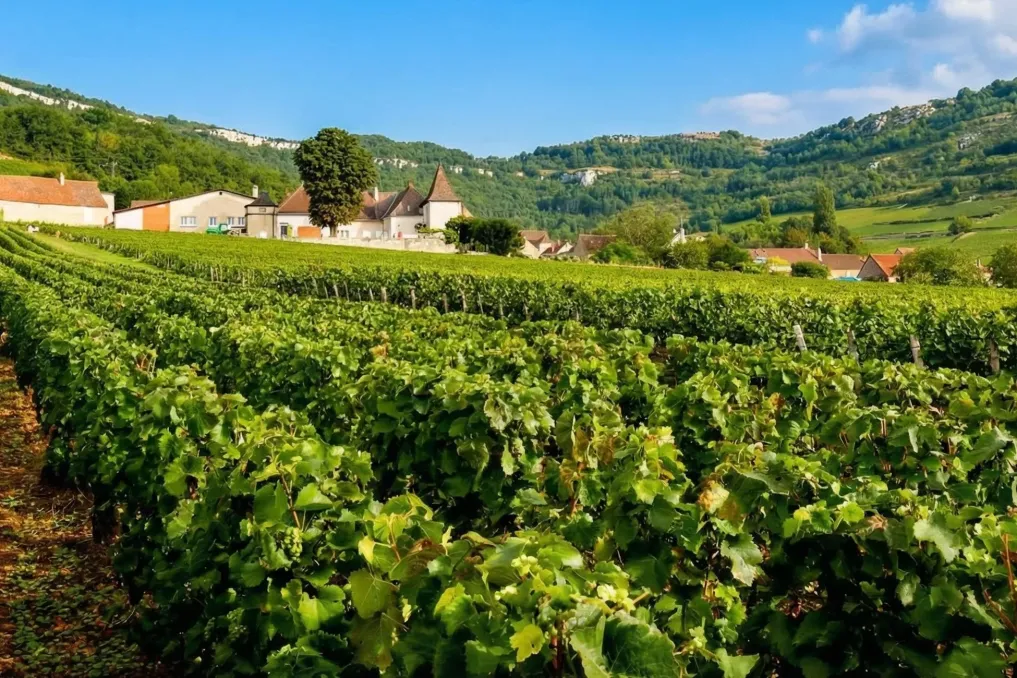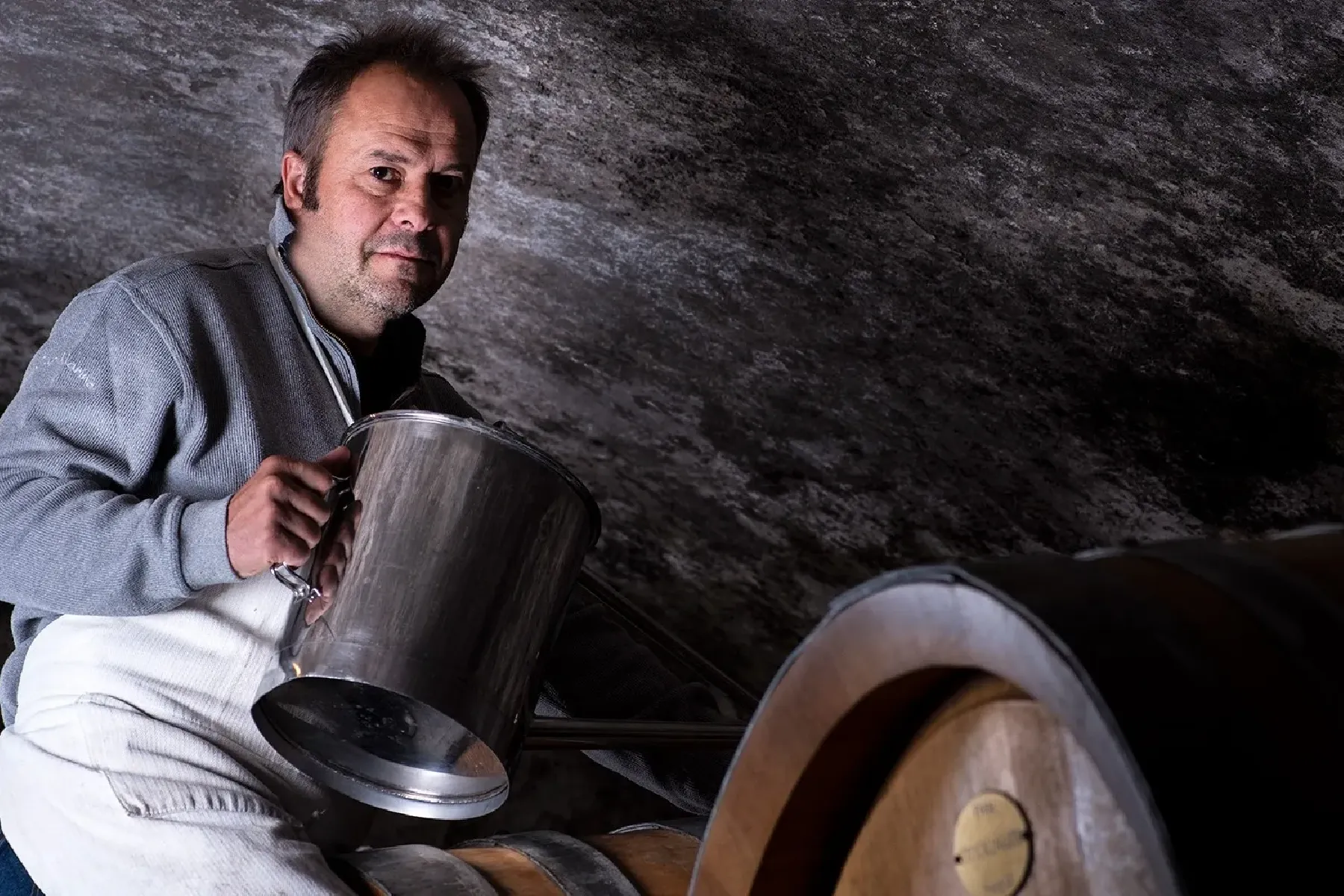
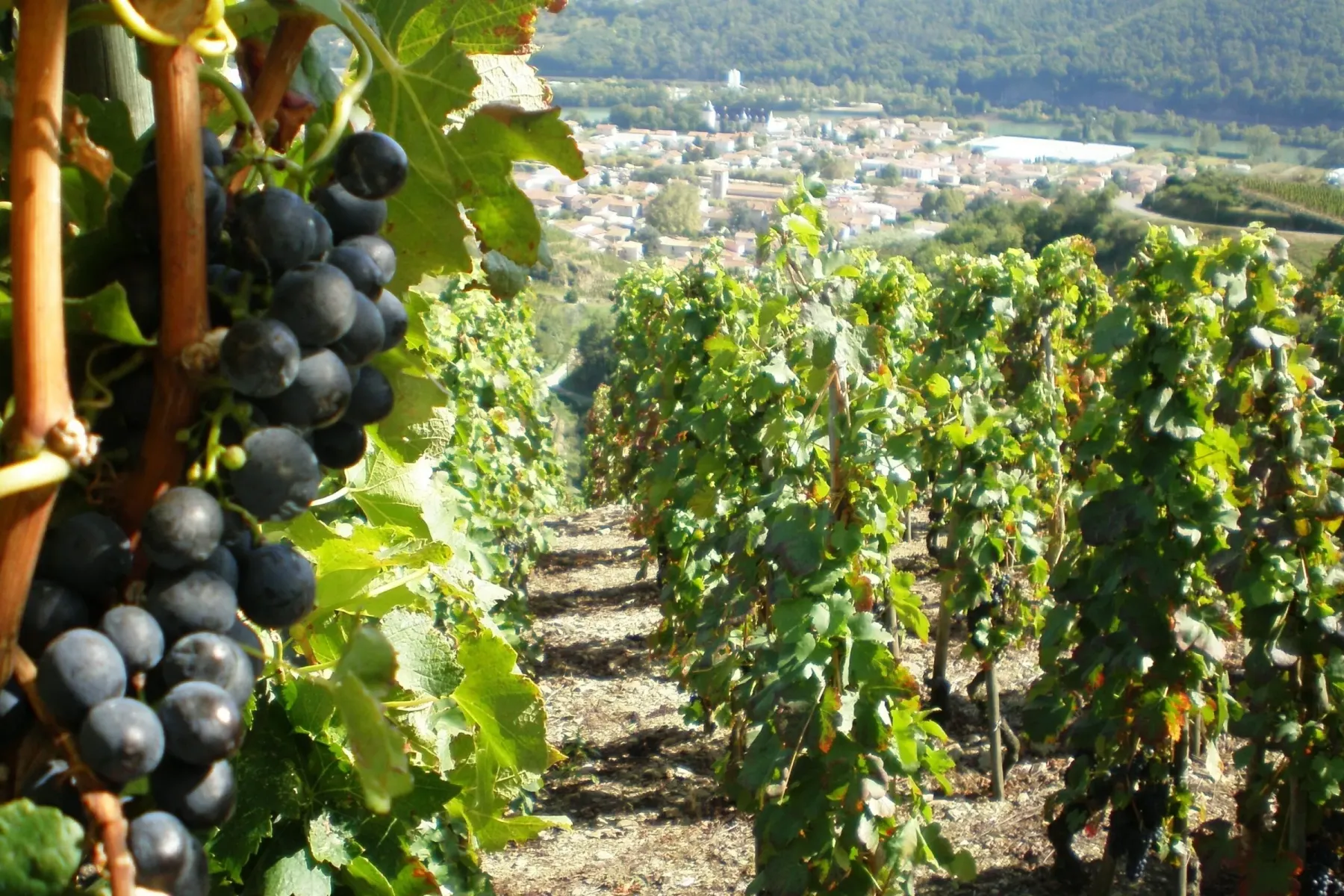
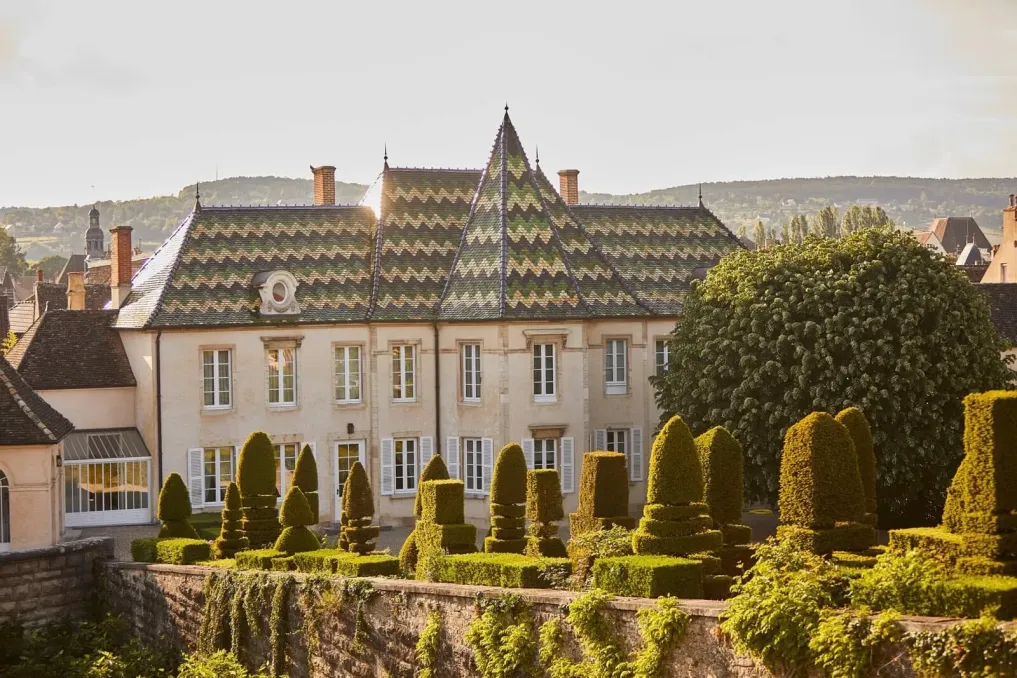
Domaine de Rosiers, in Ampuis

Atlas · Story · 5 episodes · 4 wineries

Why Europe’s vineyards are in pieces

A revolutionary auction, an inheritance law and a classification that rewarded the brand in Bordeaux and the land in Burgundy. How French vineyards ended up split into rows, and who lives today from putting them back together.

Atlas Vinaris · reviewed on 19/11/2026 · Photo: Domaine de Rosiers

Because since the Revolution inheritances have been split equally among the children, and in Burgundy the value lies in each named vineyard: the simplest way to treat heirs equally was to give each a piece of every one. Clos de Vougeot, sold whole in 1791, now has 72 growers on 51 hectares; in Bordeaux, where the brand was classified rather than the land, the great estates did not split but grew.

On the Côte d’Or a grand cru vineyard can have forty owners, and an owner can have forty vineyards of a couple of rows. In Alsace a sixty-hectare site once had two hundred and twenty owners. In the Médoc, by contrast, a single family holds ninety hectares in one stretch around its château.

It is neither chance nor temperament. It is the result of three things that happened in order: the Revolution auctioned off the Church’s vineyards, the Civil Code required inheritances to be split equally, and each region decided differently what held the value, the name of the land or the name of the house.

This story follows those episodes in their place on the map —the abbey that owned Burgundy’s best vineyard, the law made in Paris, the Alsace site with two hundred and twenty owners, the Vosne family that ended up as four estates, the Médoc that escaped— and ends with four houses that live today from splitting, joining or never having split.

How much vineyard each owner gets
Kaefferkopf (Alsacia) 60 ha and 220 owners
Montrachet 7.99 ha and 15 to 18 owners
Clos de Vougeot 50.96 ha and 72 growers
Château Mayne-Vieil 47 ha in one piece, in Fronsac
Château Latour 92 ha, a single owner; 47 in 1794

Hectares per owner or grower, on a logarithmic scale: Latour is more than three hundred times the Kaefferkopf. Sources: Michna (Kaefferkopf, late 1980s), Wikipedia (Montrachet), Decanter (Clos de Vougeot, 2023), Club Oenologique (Latour) and Château Mayne-Vieil.

How long it lasted
Clos de Vougeot 98 years · 1791–1889 · in one piece, from auction to break-up 98 years · 1791–1889 · in one piece, from auction to break-up
Familia Gros 133 years · 1830–1963 · from arriving in Vosne to the first split 133 years · 1830–1963 · from arriving in Vosne to the first split
Mayne-Vieil 108 years · 1918–2026 · the Sèze family, never split 108 years · 1918–2026 · the Sèze family, never split
Yves Girardin 22 years · 1981–2003 · from the split to buying back the château 22 years · 1981–2003 · from the split to buying back the château
In France 18001850190019502000 1791 · the Church’s vineyards are auctioned1804 · the Civil Code1855 · Bordeaux classifies its châteaux1970 · the vineyard land-trust law2024 · the Côte d’Or passes a million a hectare

9 stops in 5 chapters. The map follows you as you read.

Chapter I

The monks’ vineyard

Before 1789 Burgundy’s best vineyards belonged to no family: they belonged to the Church. On the eve of the Revolution the Cistercians held some 2,000 hectares of vines in the region, with plots in Vougeot and Corton, and the historian Rod Phillips calls the abbey of Cîteaux “the largest vineyard owner in Burgundy”. Bordeaux was different: there, the good vineyards belonged to the nobility.

In 1790 the Church’s property, roughly a tenth of the land of France, was confiscated and auctioned off as national property to pay the monarchy’s debt. The reserve price was the annual rent multiplied by twenty-two.

Vougeot · Burgundy

Sold in one piece

1098 → 1791 → 1889

The monks of Cîteaux took centuries to build Clos de Vougeot: vines from the early 12th century, the name in a papal bull of 1164, the wall around 1330 and the château in 1551. In January 1791 the Revolution auctioned it whole.

According to the parliamentary records, it was valued at some 760,000 livres and sold for more than 1.1 million. The rest of the Church’s vineyards went in lots: in the Dijon district, between March and December 1791, twenty-four vineyard lots were sold, from a single ouvrée in Morey —some 430 square metres, what one man could work in a day— to about nine hectares.

The buyers were mostly town professionals, merchants and well-off neighbours who already owned vines; small growers were priced out. In Champagne, Jean-Rémy Moët bought Church land.

Clos de Vougeot changed hands without being split: the banker Ouvrard bought it in 1818. After Victor Ouvrard’s death in 1861 it went to his nephews, an auction failed in 1887 and in 1889 a group of négociants from Beaune, Dijon and Nuits bought it. That is where the break-up began. Today its 50.96 hectares are farmed by 72 growers, with plots from two and a half hectares down to twenty-one ares.

In Meursault, on 23 February 1791, a Cîteaux estate went to auction at 100,000 livres and was knocked down for 150,100 to one “M. Lhomme Darnay LeDuquin”. The records keep his name; of the monks who planted it, not one remains.

Sources: Rod Phillips, Journal of Wine Economics · Wikipedia FR · closdevougeot.fr · Decanter
The Revolution did not cut up the Côte: it changed who owned the land. By around 1793 almost all French production was already in lay hands, those of moneyed townsmen and merchants. What would split it came later, through another law.

Chapter II

The law of equal shares

Until the Revolution, across much of France land passed whole to the eldest son, who supported his siblings. It was unfair to the others, but it kept estates together. The Revolution changed that in the name of equality, and the change was written into the Civil Code of 1804, which is still in force.

What split the Côte did not come from Burgundy, but from Paris.

Paris

Neither eldest nor younger son

1794 → 1804

The law of 17 Nivôse Year II, in January 1794, abolished in inheritances “the status of eldest or younger son, the distinction of sex or customary exclusions”, so as to “replace privileges with equality of shares”.

The Civil Code consolidated it. Today its article 913 reserves for the children half the estate if there is one, two thirds if there are two and three quarters if there are three or more: that share cannot be taken from any of them. Against division, article 831 lets whoever farms the holding ask to be allotted it whole, in exchange for paying the others their share in money, the soulte.

France’s Academy of Agriculture sums up the effect: equal division “caused a micronisation of plots”. In extreme cases, such as the Île de Ré, with vines and salt pans, pieces of under a hundred square metres or two metres wide were left. What slowed the process before 1914 was the rural exodus: those who left for the city stopped claiming their share.

The article 831 rule has a catch on the Côte d’Or: with land at over a million euros a hectare, hardly any heir can pay his siblings their share. The way out that protects the estate is open only to those who are already rich.

Sources: Archives parlementaires (Persée) · Académie d’Agriculture (PDF) · Légifrance · Asamblea Nacional (PDF)

Where the law fell on land that was already being shared out, the result was the extreme.

Ammerschwihr · Alsace

Two hundred and twenty owners

late 1980s

The Kaefferkopf in Ammerschwihr, a sixty-hectare site, had two hundred and twenty owners in the late 1980s, each with several plots.

The geographer Rudolf Michna measured it at the time: the average Alsace holding had 1.6 hectares, against 4 in the Bordelais; those under one hectare were 62.7% of declarations but only 12% of the area; and the average plot was 0.15 hectares, against 0.5 for France as a whole.

He gave three causes. Intensive farming lets people live off little land. In Alsace inheritances had been physically split long before, and the Civil Code merely enshrined it. And the Revolution broke up the great feudal estates: large holdings survived only where they passed straight to townsmen with capital. In 1907 there were 64,216 holdings on 22,000 hectares; since then their number has fallen by 80%.

Land consolidation has almost never been carried out in French vineyards. The Alsace exception was the work of the German occupation: in Cleebourg, between 1941 and 1945, 28 hectares were reorganised, and their 0.4-hectare plots are still double the regional average. In exchange, boundaries and walls were removed, and erosion got worse.

Sources: Rudolf Michna (PDF) · LSA

The Code does not require each plot to be split: it requires the value to be shared. But before companies existed, the simplest way to give every child the same was to give each a piece of every vineyard. So, generation after generation, estates turned into rows.

Chapter III

Every generation divides

In Burgundy the law met land whose value lay not in the estate but in each named vineyard, each climat. Dividing a hectare of Richebourg and one from an ordinary village is not dividing the same thing, so every heir wanted a piece of each. And the traditional measure, the ouvrée, was already tiny: some 430 square metres, twenty-three to a hectare.

What one generation split, another sometimes joined back together, almost always by the same means: a wedding. Estate histories repeat it so often it looks like a rule, though nobody has measured it.

Two kilometres from Clos de Vougeot, one family lived it generation after generation.

Vosne-Romanée · Burgundy

Four estates, one surname

1830 → 1963 → today

Alphonse Gros settled in Vosne in 1830, married into the Latour family and bought the Clos des Réas. His son bought two hectares of Richebourg in 1882. Today that Richebourg comes out under three different Gros labels.

Jules Gros bought Clos Vougeot in 1920. Louis Gros died in 1951 with four children, who ran the estate together until the split of 1963. Gustave and Colette joined their shares back together as Gros Frère & Sœur; Jean and François went their separate ways in the early 1970s.

François stopped bottling in 1978 and sold in bulk for ten years, until his daughter Anne relaunched the estate in 1988. Jean’s children divided again: Bernard, Michel and Anne-Françoise, married to François Parent, of Pommard, who brought vines from his own family. The result: four estates of the same family in the same village.

It is not a rare case. In Marsannay, Domaine Clair-Daü, founded in 1919, split in four around 1985, after Joseph Clair’s death in 1971; a large part ended up with the house of Jadot, by sale or lease, and his grandson Bruno Clair inherited what was left in 1986.

Sources: Vinfolio · Wine-Pages · Inside Burgundy · La Passion du Vin

That is why a single village holds so many labels with the same surname, and why a monopole, a vineyard with a single owner, is so rare: among the grands crus there are six, or eight depending on how strict you are.

Chapter IV

Bordeaux escaped

Bordeaux has the same Civil Code, and yet its great estates did not split. The difference begins with who built them: in the 17th and 18th centuries, magistrates of the Bordeaux Parliament and rich townsmen built the Médoc on marshes drained by Dutch engineers. Between 1700 and 1800 two families, the Ségurs and the Pontac-Fumels, came to hold the four first growths.

The key lies in what was classified in 1855.

Pauillac · Médoc

The brand was classified

1855 → today

The 1855 classification ranked châteaux, that is, buildings and brands, not pieces of land. A Médoc château can buy neighbouring vines in the same appellation and put them into its wine as soon as the contract is signed.

Jane Anson explains it like this: in the Médoc you can buy any land in the same appellation and “bring it into the fold as soon as the ink dries on the contract”, whereas in Saint-Émilion the classification goes by plot. The figures say it all: Latour went from 47 hectares in 1794 to 92; Lafite, from 74 in 1864 to some 110; Mouton, from 55 in 1855 to 83; Lascombes, from 17 to 120.

Classified estates totalled 2,650 hectares in 1855, fell to some 1,800 in the crisis of the first half of the 20th century and today come to about 3,450. While estates on the Côte were splitting, in the Médoc they were growing.

Bordeaux is not entirely immune. In Barsac, the Doisy estate split in three in the 19th century, after the Napoleonic inheritance laws. In 1968 Denis Dubourdieu’s father bought six hectares of one of the parts, and in 2014 Denis bought the rest: “It was my father’s dream”.

Sources: Club Oenologique · Cellar Tours · GuildSomm · Decanter

Where the brand holds the value, heirs share out shares in a company, not rows of vines. Where each piece of land holds the value, nobody wants to be left without theirs.

Chapter V

Who lives it today

Today the break-up has a price. In 2024 the average hectare on the Côte d’Or passed a million euros for the first time, with white premier cru at 2.55 million; grand cru can be worth several times more. At 2.5 million a hectare, a single ouvrée of white premier cru is worth some 107,000 euros. No heir can pay that to his siblings, so when there is no successor or no money, the land is sold.

Philippe Engel, grandson of the founder of a Vosne estate, died suddenly in 2005, aged 49, with nobody to take over; François Pinault bought the estate and renamed it Domaine d’Eugénie. In 2017 the Le Bault de la Morinière family sold the majority of Bonneau du Martray, in Corton, which by its own account had had only three owners in 1,250 years. Andrew Jefford calls it “the era of billionaire ownership in Burgundy”. The tool most used to resist is to separate the land from whoever farms it: a vineyard land trust, possible since a 1970 law, owns the vines and leases them long-term, and passing on its shares costs less in tax than passing on the land.

These four houses each live on one side of the story: one that bought in 1791 and joined what others split, one that received three hectares in a division and rebuilt the estate, one that was born of another’s division, and one in Bordeaux that has not been split in four centuries.

While inheritance was splitting the Côte, a Beaune house did the opposite.

Beaune · Burgundy

Bouchard Père et Fils

1731 → 1791 → today

Bouchard Père et Fils

Michel Bouchard, a cloth merchant from the Dauphiné, settled in Beaune in 1731; his son Joseph bought the first vines in 1775. In 1791, in the sale of confiscated property, the family bought the Vigne de l’Enfant Jésus and plots in several Beaune premiers crus.

Through the 19th century it kept buying with one goal: neighbouring plots to form clos in a single piece. Its Beaune Marconnets, more than two and a half hectares, was put together through successive purchases.

Today there are some 130 hectares, twelve of them grand cru and seventy-four premier cru; it is the largest owner of Beaune premier cru. In 1995 the house passed out of the family to Joseph Henriot, and since 2022 it has belonged to Artémis Domaines, the Pinaults’ group.

The Enfant Jésus belonged to the Carmelite nuns of Beaune. Legend has it that the nun Marguerite du Saint-Sacrement prayed for Anne of Austria to give France an heir and foretold the birth of Louis XIV. The State confiscated it and sold it in 1791, and it has had a single owner ever since. In the château cellars, some ten metres down, lie more than two thousand 19th-century bottles; the oldest is an 1846 Meursault Charmes.

In the shop · Clos du Roi 2020 → 49.60 € · 2 left

Sources: bouchard-pereetfils.com · iDealwine · Fells (PDF) · the winery’s page at Vinaris

Twenty kilometres south, the whole cycle fitted into a single life.

Santenay · Burgundy

Château de la Charrière

1981 → 2003

Château de la Charrière

In 1981 the Girardin family’s twelve hectares were divided among the heirs, and Yves was left with three. In 2003 he bought Château de la Charrière, which had been his father’s.

The Girardins have grown vines for thirteen generations, and the estate had grown in the 1960s under his father, Jean, who was the one who bought the château. After the split, Yves bought vines in Chassagne-Montrachet and Pommard until he was farming some twenty-one and a half hectares: seven times his share.

With the château he recovered the house that had left his branch, and built a new cellar there. His son Benoît has made the wine since the 2011 vintage.

It is the neatest story of all: the father gathers land and buys the château, the inheritance splits it, and the son rebuilds it by buying vines at Burgundy prices and ends up buying back the château.

In the shop · Clos des Loyères 2023 · Maranges 1er Cru → 34.50 € · 5 left

Sources: Vinatis · Guide Hachette · K&L Wines · the winery’s page at Vinaris

And in Marsannay, one of the houses that came out of the Clair-Daü division.

Marsannay · Burgundy

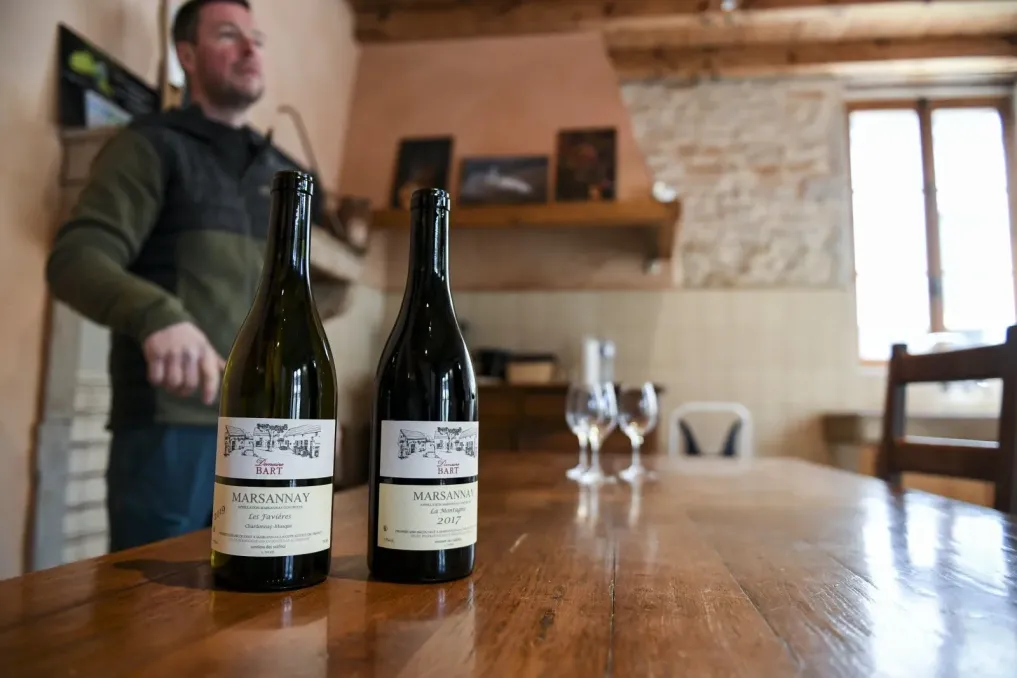
Domaine Bart

early 1980s → today

Domaine Bart

Domaine Bart had little more than six hectares for many years. In the early 1980s it became, as the Burgundy Report puts it, “one of the children of the division” of Domaine Clair-Daü, and that is where its grands crus came from.

Its Bonnes-Mares and Chambertin Clos de Bèze are, plot for plot, the mirror of Bruno Clair’s: they come from the same division. Martin and Odile Bart, André’s children, have run the house since 1982, and Pierre Bart, of the next generation, the cellar. Today there are some twenty-two hectares.

The rest has been bought in scraps. One of them, twelve ares of Bonnes-Mares bought from a cousin through the SAFER, the body that oversees sales of farmland. Pierre Bart puts it this way: “That was the sole sale at a proper price in the last 15 years!”

The wine at this stop comes from Les Finottes, two hectares the house farms as a monopole in Marsannay. In 2016 it yielded just two hectolitres a hectare: in a vineyard with a single owner, nobody shares a bad vintage.

In the shop · Marsannay Les Finottes Monopole 2022 → 32.14 € · 2 left

Sources: Burgundy Report, 2019 · Burgundy Report, Bart 2022 · Burgundy Report, Bart 2020 · Vinatis · the winery’s page at Vinaris

And on Bordeaux’s right bank, the estate that never split.

Fronsac · Bordeaux

Château Mayne-Vieil

47 ha · a single piece

Château Mayne-Vieil

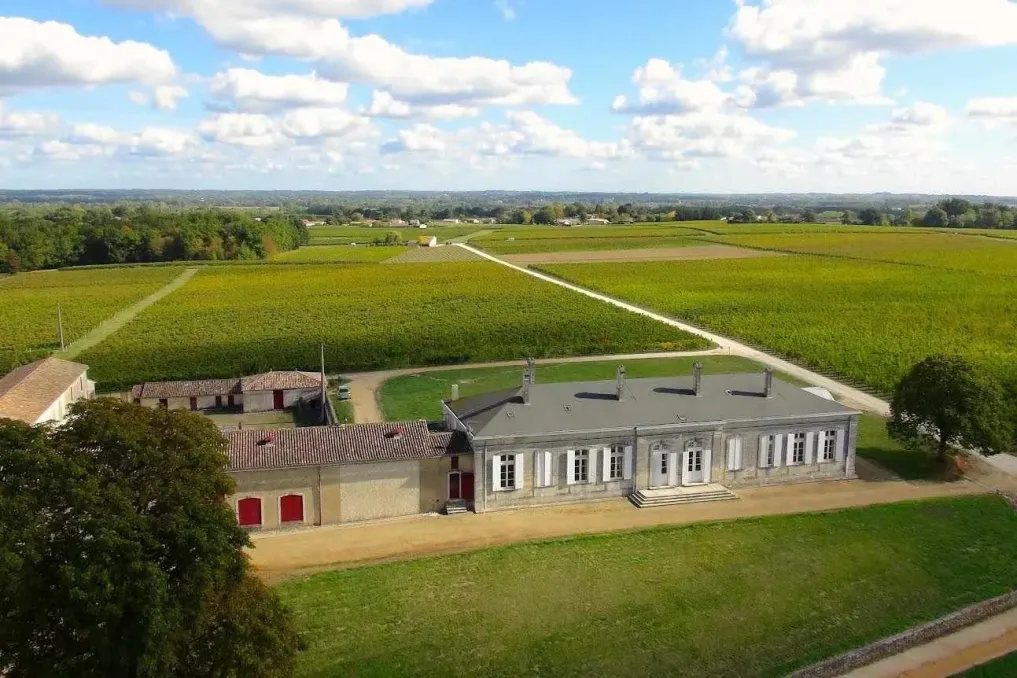
Château Mayne-Vieil has forty-seven hectares in a single piece above the Dordogne: thirty-two in the Fronsac appellation and fifteen in Bordeaux. It has passed through three families without being split.

From 1500 to 1809 it belonged to the de Paty family, who built the great cellars in the 17th century. It then passed to Jean Raymond Fontemoing, at a time when Fronsac wines sold for more than Saint-Émilions.

Since 1918 it has belonged to the Sèze family, who replanted the vineyard after the Great War. Roger Sèze began bottling and selling the wine himself, in the 1960s according to the Guide Hachette, and since 1989 his children, Bertrand Sèze and Marie-Christine Charmail, have run it. Seventy per cent merlot, thirty cabernet franc.

Four centuries, three families and the same boundary: in Burgundy, those forty-seven hectares would now be spread across dozens of plots in several villages.

In the shop · Château Mayne-Vieil 2019 → 16.30 € · 2 left

Sources: chateaumaynevieil.com · Guide Hachette · Château Monty (Wayback) · the winery’s page at Vinaris

On the Côte, a large estate is not the one that was lucky with its inheritance: it is the one that spent generations buying pieces, or the one a single person put back together. In Bordeaux, an estate in one piece is simply normal.

What it costs to work like this

Every plot is a trip, a treatment and sometimes a separate vat.

That is why a single Burgundy village has so many different names on its labels, and why a monopole is worth what it is: land that someone managed not to split, or to put back together.

And that is why two bottles from the same vineyard can be so different: they come from two pieces of one inheritance, farmed by two cousins.

Sources: each stop lists its own, and every fact is checked against them and against the winery’s page at Vinaris.

Ask acopas

More stories


I hereby confirm I am above 18 years old