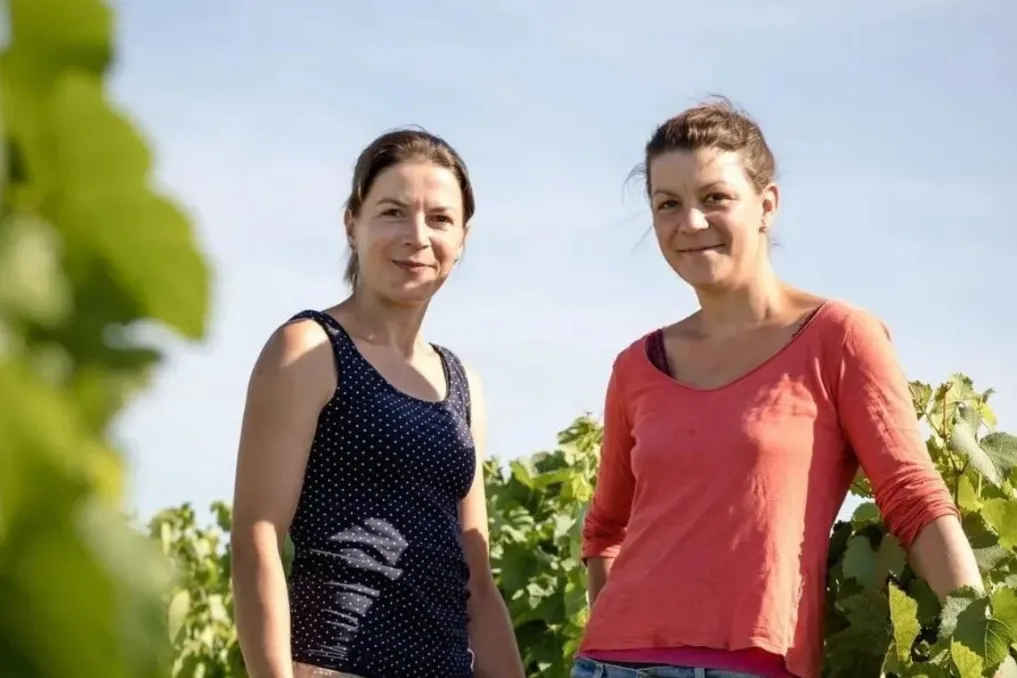
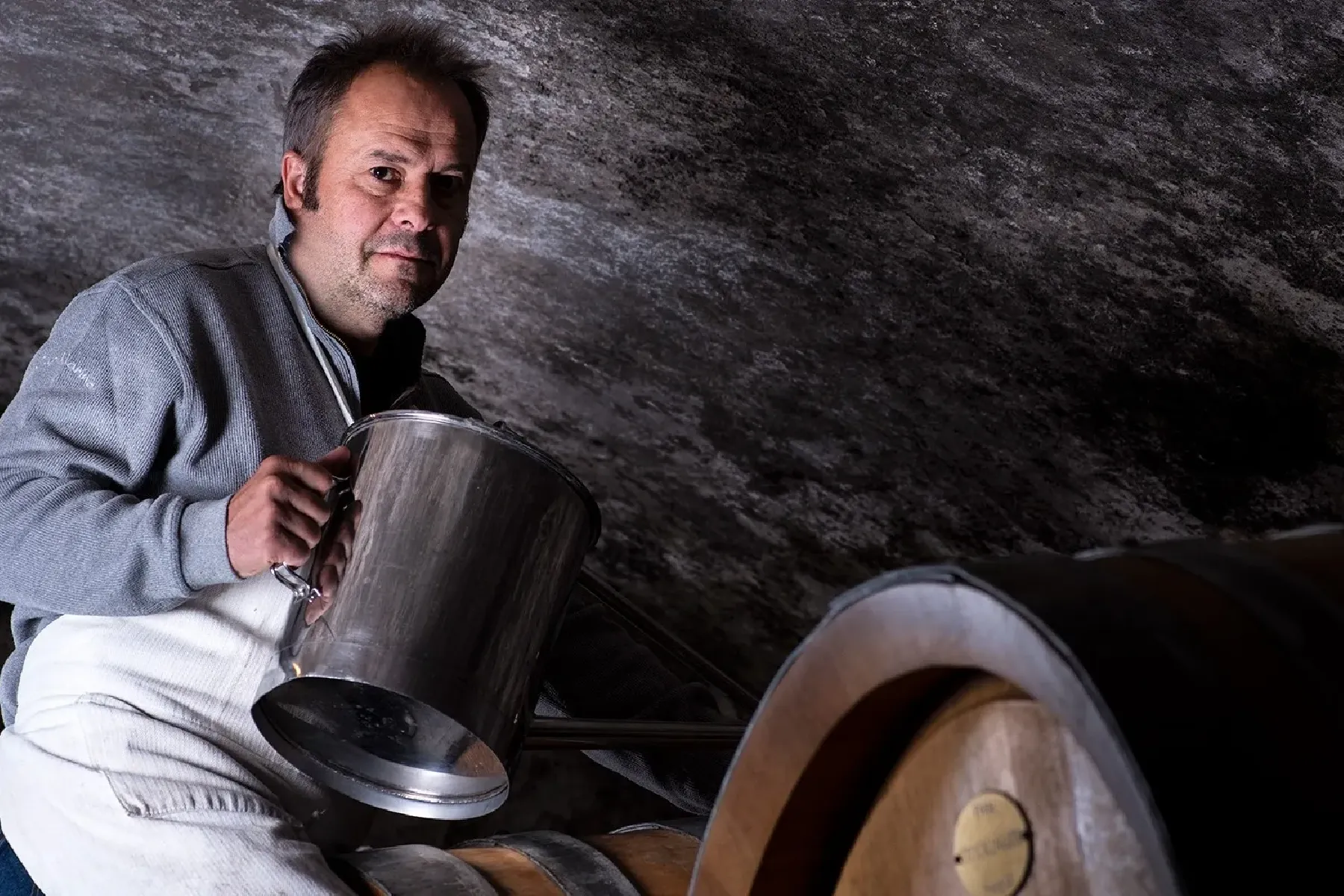
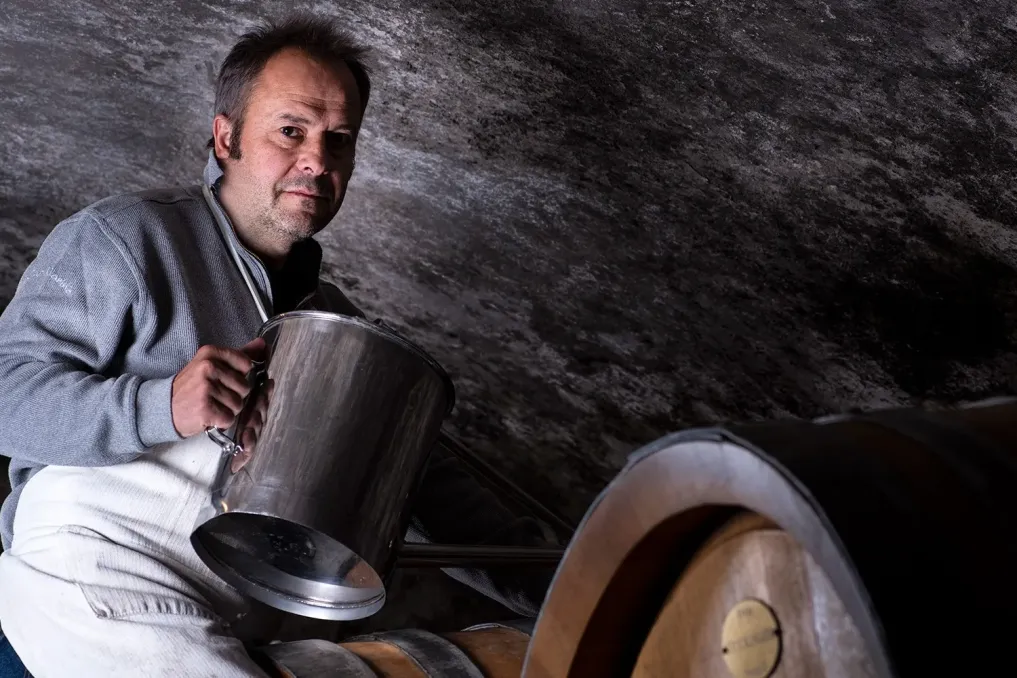
In the Champagne Geoffroy cellar

Atlas · Story · 5 episodes · 4 wineries

What the law allows and what they do

Each appellation’s rules are written by its own producers, which is why they set a floor and not an ideal. How some of them were born, and what the houses that depart from them do.

Atlas Vinaris · reviewed on 19/11/2026 · Photo: Champagne Geoffroy

Each appellation’s rules are drafted by a union of its own producers and approved by the State, so they set a minimum everyone can meet, not an ideal: fifteen months in the cellar for a non-vintage champagne, 80% fer in a Marcillac. What the label does not tell you is how far each house moves from that floor: Champagne Geoffroy ages its wines for three to eight years, and Domaine du Cros makes all its Marcillac from fer alone.

A label says what a wine may be called, not how it was made. “Brut”, “Grand Cru” or an appellation name guarantee that a set of rules, the cahier des charges, has been met, and each set of rules has its history: hardly any were written with the best possible wine in mind, but with what was needed for everyone inside to keep selling.

This story follows some of those rules in their place on the map: a grape price list that became a label in Champagne, a 1929 court ruling that left geology out of Chablis, the Aveyron valley that wrote its law so as not to disappear, the Burgundian sparkling wine that set itself above its own rules, and Bordeaux, where the law says not a word about barrels.

And it ends with four houses that move away from the floor, each in a different direction. This is not a ranking: meeting the minimum is not cheating, and going far beyond it does not guarantee a better wine. They are decisions with a cost.

The rule and what they do

what the rule requireswhat the house does

Champagne Geoffroy 15 months up to 8 years in the cellar before release: three to eight years
Domaine du Cros 80% 100% fer in its Marcillac wine
Louis Bouillot 9 months 108 months on the lees, its Les Trois Saints 2003 crémant

Each row on its own scale. The rule, from each cahier des charges; what each house does, from its website (Geoffroy), the Guide Hachette and Regal Wine (du Cros) and a 2013 tasting (Louis Bouillot).

How long the law took
Crémant de Bourgogne 155 years · 1820–1975 · from Rully’s first sparkling wine to the appellation 155 years · 1820–1975 · from Rully’s first sparkling wine to the appellation
Escala de Champaña 99 years · 1911–2010 · from grape price list to its end 99 years · 1911–2010 · from grape price list to its end
Chablis 18 years · 1920–1938 · from the lawsuits to the appellation 18 years · 1920–1938 · from the lawsuits to the appellation
Marcillac 29 years · 1961–1990 · from the growers’ union to the appellation 29 years · 1961–1990 · from the growers’ union to the appellation
In France 18001850190019502000 1911 · the Champagne cru scale is born1929 · the Auxerre ruling on Chablis1975 · Crémant de Bourgogne1990 · the Marcillac appellation2025 · Champagne admits a resistant grape

9 stops in 4 chapters. The map follows you as you read.

Chapter I

Who writes the law

Each appellation has a producers’ union, the defence and management body, which drafts its rules. INAO examines them, they go through a national opposition procedure and the ministry approves them by order. A certified control body then checks they are followed, with producers’ self-checks, union checks and external inspections; every set of rules ends with a table of points to be monitored.

From that procedure comes the idea that runs through this whole story: since the rules are written by the very people who must follow them, they set a minimum that everyone inside can meet, not an ideal. And when they tighten, they do so slowly, with transition periods.

Épernay · Champagne

A price list that became a label

1911 → 2010

In Champagne, “Grand Cru” does not tell you which plot or who made the wine: it tells you which village the grapes grew in. And it comes from a price list. The cru scale was born in 1911, after twenty years of negotiation, to set what was paid for each village’s grapes.

It was the year of the Champagne riots. The scale had eleven villages at one hundred per cent and a minimum of 22.55%: grapes from the lowest village were paid less than a quarter. A 1952 decree allowed “grand cru” and “premier cru” on the label, and in 1985 five villages were promoted, making today’s seventeen.

The mandatory price became indicative in 1990, the last scale was published in 2003, and the system ended with an 80% minimum, in 2010 according to Tom Stevenson, who calls it a “politically biased shopping list”. The label stayed: today “grand cru” is reserved for seventeen communes in the Marne and “premier cru” for forty-two.

The same “Grand Cru” champagne can come from the best plot in the village or the worst: what was classified was the commune, because what was being negotiated was the price per kilo, not the quality of the wine.

Sources: GuildSomm, Tom Stevenson · Cahier des charges Champagne 2025 · INAO, el control
Today’s Champagne rules require fifteen months in the cellar before a non-vintage champagne is sold, twelve of them on the lees, and thirty-six for a millésimé. They say nothing about malolactic fermentation. And since 2025 they admit a disease-resistant grape, voltis, up to 5% of the vineyard: that is how rules move, little by little.

Chapter II

A law cut to fit those already there

Delimiting an appellation means deciding who is inside, and science alone almost never decides that. In some places it was a court; in others, a handful of growers who needed a law so as not to disappear. Either way, the rules ended up describing what those inside were already doing.

In Chablis, a court decided who was inside.

Auxerre · Yonne

A ruling without geology

1920 → 1938 → 1978

Between 1920 and 1932 the growers of Chablis went to court over which land was entitled to the name, with Kimmeridgian soil among the arguments. In 1929 a ruling by the Auxerre court laid the foundations of the appellation, “without the geological reference”.

The 1938 appellation was based on that ruling. Geology came back in the 1970s, with the 1976–78 expansion: William Fèvre’s “Kimmeridgians” against Jean Durup’s “Portlandians”. The latter won. Petit Chablis, which had fallen to 113 hectares in 1981, now exceeds seven hundred.

Today’s rules group forty premier cru climats under seventeen names, and allow the main name of each group to “be given to the wines from all the climats making up the same group”. In other words, a wine from a small climat can be sold under the big one’s name, the one buyers recognise. The permission only runs that way.

It is almost a cliché today to say the 1938 law required Kimmeridgian soil to make Chablis. The rules themselves tell the opposite: the ruling that founded it left geology out.

Sources: Cahier des charges Chablis 2023 · Burgundy Report · Justerini & Brooks

In the Aveyron, a few growers wrote the law so as not to disappear.

Conques · Aveyron

The miners’ wine

918 → 1961 → 1990

The monks of the abbey of Conques already mention vines in the valley in charters from 918 to 1027. A thousand years later, on 18 December 1961, a hundred and twenty growers founded the union that would eventually win the Marcillac appellation, in 1990.

In the 19th century the customers were the miners of Decazeville. Between 1950 and 1960 frosts, down to twenty-eight below zero, and the closure of the mines nearly finished the vineyard off. Then came VDQS status, in 1965, and the terraces, around 1970. In 2008 there were some two hundred hectares and about sixty producers: fourteen private estates, one cooperative and one négociant.

The rules were written around the grape that had kept them going, fer, known there as mansois: it must be at least 90% of what is planted on each holding, but 80% is enough in the wine. The rest can be cabernet sauvignon, merlot or prunelard.

The soils are the rougiers of Marcillac, sandstones turned violet-red by iron oxide. The abbey of Conques and the valley villages were built from that same stone.

Sources: Cahier des charges Marcillac · Oficina de Turismo de Conques

A law written this way protects those who wrote it, but it leaves room: in Chablis, to put the big name on the label instead of the small one; in Marcillac, to top up the fer with other grapes. What each house does with that room the law no longer says.

Chapter III

Above the law, and where it says nothing

A set of rules can fall short, and then the very people who wrote it look for another way to stand out. And it can say nothing at all about something the buyer believes is regulated. Both happen in France’s two most famous regions.

In Burgundy, the collective ended up setting itself above its own rules.

Rully · Burgundy

The sparkling wine that set itself higher

1820 → 1943 → 1975

Sparkling wine was made in Rully from 1820, and later in Nuits and Chablis, from 1840; it was even made at Clos Vougeot and in Chambertin. The union came in 1939, the “Bourgogne mousseux” appellation in 1943 and Crémant de Bourgogne in 1975.

Its rules require nine months on the lees and twelve from bottling before sale to consumers. Yields are 78 hectolitres a hectare in dense vineyards and 74 in the rest, with a ceiling of 90. And each producer must declare before 31 March preceding the harvest which plots will go to crémant; anyone who does not can only declare it seventy-two hours before picking, and with the white Bourgogne yield if that is lower. That declaration gives grape buyers security: in March they know what they can count on.

By around 2011 there were some two thousand hectares and almost fifteen million bottles. To single out the best, the collective itself created two categories that are not in the rules: Éminent, with twenty-four months, and Grand Éminent, with thirty-six and only first pressings of pinot noir and chardonnay. They are a voluntary collective brand, with their own control body.

It is the clearest case in this whole story: the same producers who write the rules set themselves above them with a private brand, because tightening the law would bind everyone.

Sources: Cahier des charges Crémant de Bourgogne · Boisset, Éminent · Decanter

And in Bordeaux, what everyone associates with its wine is not even in the law.

Margaux · Médoc

Not a word about barrels

1980s → today

Bordeaux’s rules say nothing about barrels. Fronsac’s, for example, only requires the wine to be aged until 1 June after the harvest, and the word “wood” appears only when talking about pruning.

Each château decides on the wood. Château Margaux ages its wine in 100% new barrels and Lafite in around 90%, with its own cooperage; Palmer aged 30% of its 2020 in 2,900-litre foudres; Pontet-Canet has aged 35% in concrete amphorae since 2012, and L’Évangile cut new oak from 80% to 50%.

In the 1990s some boasted of “200% new oak”: the wine went through two new barrels in a row. According to Vinfolio, the brettanomyces problems of the 1980s and 1990s pushed producers towards new barrels, which are easier to keep clean.

The oaky taste many people take for “the taste of Bordeaux” is required by no law: it is a fashion, with its technical causes, that each château follows or abandons on its own.

Sources: Cahier des charges Fronsac 2024 · Vinfolio

What buyers often take as a guarantee —long ageing, barrels— is often a decision of each house, or a private brand. The law sets the floor; each house sets its own ceiling.

Chapter IV

Who lives it today

Moving away from the floor costs. Every extra month on the lees is cellar space taken and money tied up; every extra point of a single grape is a harvest that cannot be topped up with another when the year comes up short; putting a lesser-known name on the label means giving up selling better. That is why almost everyone works close to the minimum, and there is nothing wrong with that.

These four houses move away, each in its own direction: one that ages for more than twice the legal minimum and avoids what much of Champagne does, one that puts the small name on the label, one that does not use the leeway its rules allow, and a large crémant house that does both at once, the minimum and nine years.

In Champagne, a Cumières family does what the rules do not even mention.

Champagne

Champagne Geoffroy

15 months → 3 to 8 years

Champagne Geoffroy

Champagne Geoffroy avoids malolactic fermentation, “to preserve the original freshness” of the wine, when much of Champagne seeks it out to soften acidity. And its wines spend three to eight years in the cellar, where the law asks fifteen months.

The family has roots in Cumières going back to the 17th century. Roger and Julienne Geoffroy began making and selling their own bottles in the early 1950s; their son René took over early, because his father died young, and developed the brand with Bernadette. Jean-Baptiste arrived in the late 1980s and in 2008, with Karine, moved winemaking to a late-19th-century house in Aÿ. A new generation of five daughters already works in the house.

There are fourteen hectares in thirty-five plots, mostly in Cumières, with two traditional presses, musts moved by gravity and blends decided by tasting alone. Richard Juhlin says avoiding malolactic gives them “the nerve and aging potential that most Cumières Champagnes lack”.

According to its importer, after the war the family turned to its own champagne because the big houses would not buy its grapes in bad years. And they announced the 2026 harvest like this: “The earliest in fifty years!”, begun on 13 August, with chardonnays at 13% potential alcohol.

In the shop · Empreinte Extra Brut Blanc de Noirs 2016 → 54.90 € · 4 left

Sources: champagne-geoffroy.com · Skurnik · Flatiron Wines · the winery’s page at Vinaris

Champagne in the atlas →

In Chablis, a family uses the rules’ permission the opposite way to what pays.

Chablis · Burgundy

Domaine Oudin

Vaugiraut, not Vosgros

Domaine Oudin

Vaugiraut is a climat in the Vosgros group, in Chichée: the rules allow its wine to be sold under the Vosgros name, the better known one. Domaine Oudin is, according to bourgogne-info, “one of the few to put Vaugiraut on the label”.

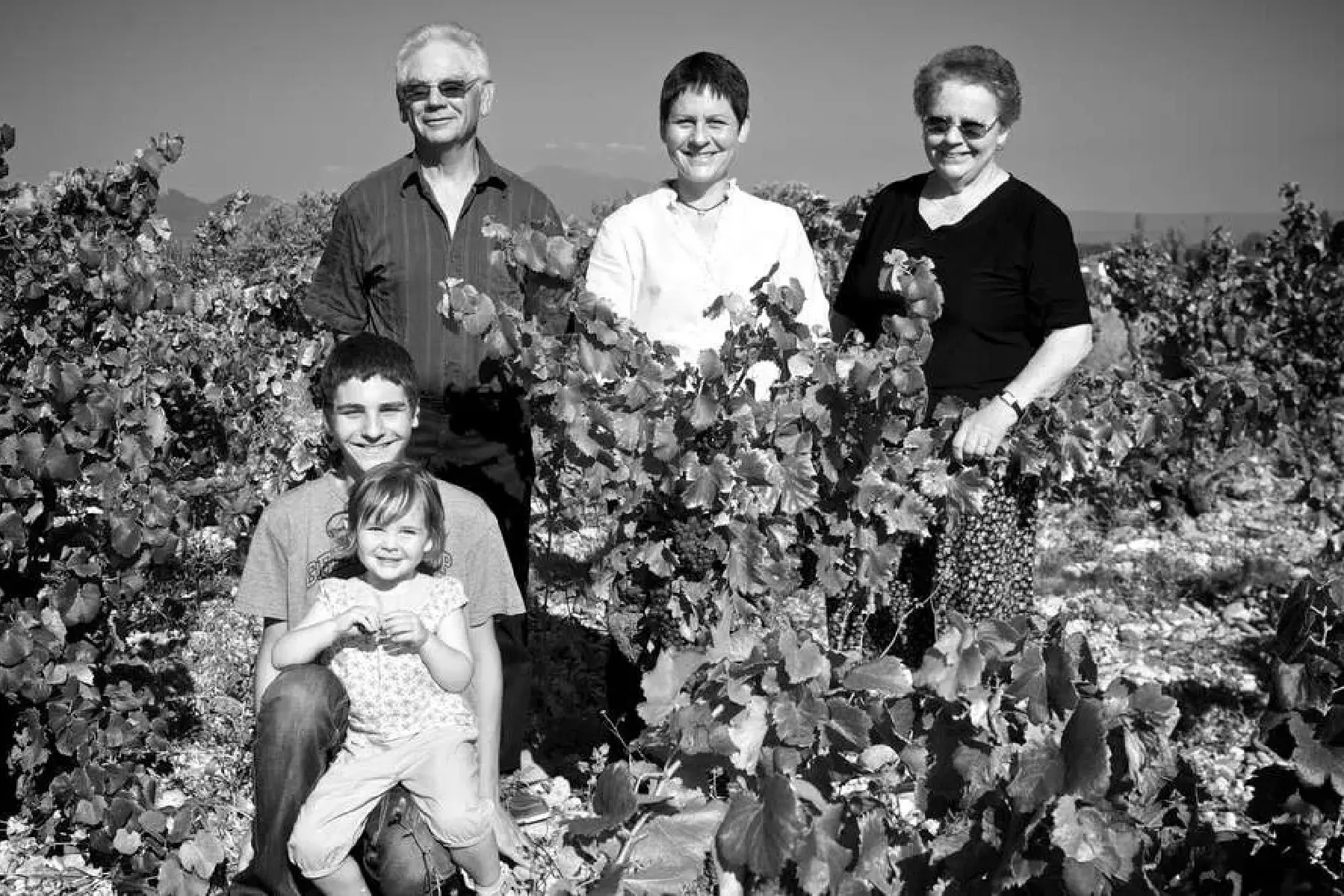
Jean-Claude and Christiane Oudin left Paris in the mid-1980s and started in Chichée with the two hectares of Christiane’s father, a stonemason who tended them at weekends. Jean-Claude kept working in Paris for about ten years and came back at weekends to drive the tractor. At first they sold all the grapes to négociants to pay for the equipment; after three years they began bottling a share.

Today their daughters run it. Nathalie, an oenologist, arrived in 2007: “I didn’t want to devote the rest of my life to a protein”. Isabelle, who had been secretary at another estate, divides her time between the office and the vineyard. A third of the vines are old massal selection, averaging about fifty years.

In 2016 frosts and two hailstorms left them seventeen hectolitres a hectare, against more than fifty. Nathalie came to the tasting in rain gear, straight from the vineyard: “we avoided oïdium!”. The Vaugiraut, they say, is “always very floral in character, with notes of lime tree blossom”.

In the shop · Vaugiraut 2018 · Chablis 1er Cru → 34.50 € · 5 left

Sources: bourgogne-info.eu · Burgundy Report · Inside Burgundy · the winery’s page at Vinaris

Chablis in the atlas →

In the miners’ valley, the largest independent house does not use the leeway its law allows.

Marcillac · Aveyron

Domaine du Cros

80% → 100% fer

Domaine du Cros

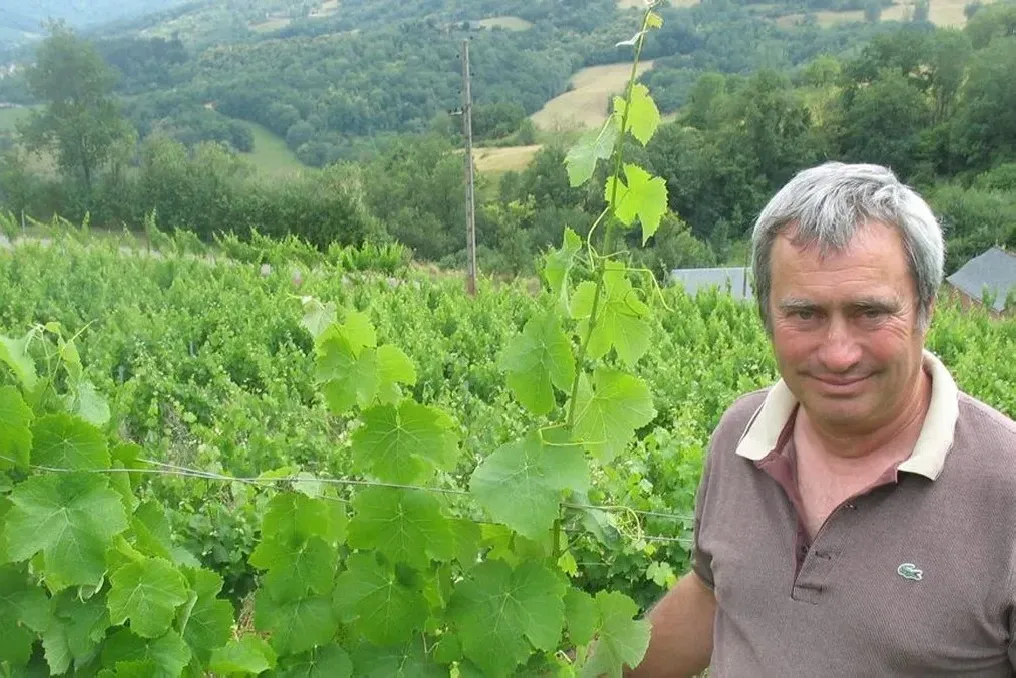
The Marcillac rules allow the wine to be topped up with 20% cabernet, merlot or prunelard. Domaine du Cros does not: all its wines are made from a single grape, fer.

When Philippe Teulier created it in 1984, the estate had one hectare and made some four thousand bottles a year; today it has thirty-three hectares, and his son Julien has worked with him since 2006. On setting up, Philippe bought a vineyard from 1912 that he vinifies and ages separately. The Vieilles Vignes is aged in large foudres, in a cellar dug into the rock that works by gravity.

Regal Wine calls it “the largest independent producer in the appellation”, and Gault&Millau “a bit of a boss of Marcillac”. With thirty-three hectares in an appellation of about two hundred, it farms around a sixth of all Marcillac.

Giving up the 20% of other grapes means giving up an insurance policy: in a year when fer comes up short or hard, the rules allow it to be softened with cabernet or merlot, and here they do not.

In the shop · Vieilles Vignes 2020 → 18.21 € · 2 left

Sources: Guide Hachette · Regal Wine · Gault&Millau · the winery’s page at Vinaris

And in Nuits, a crémant house shows that the minimum and the maximum can come from the same cellar.

Nuits-Saint-Georges · Burgundy

Louis Bouillot

9 months → 9 years

Louis Bouillot

Maison Louis Bouillot makes crémant at the legal minimum and crémant aged nine years. At a 2013 tasting, its entry cuvées had nine and ten months on the lees; its Les Trois Saints 2003, one hundred and eight.

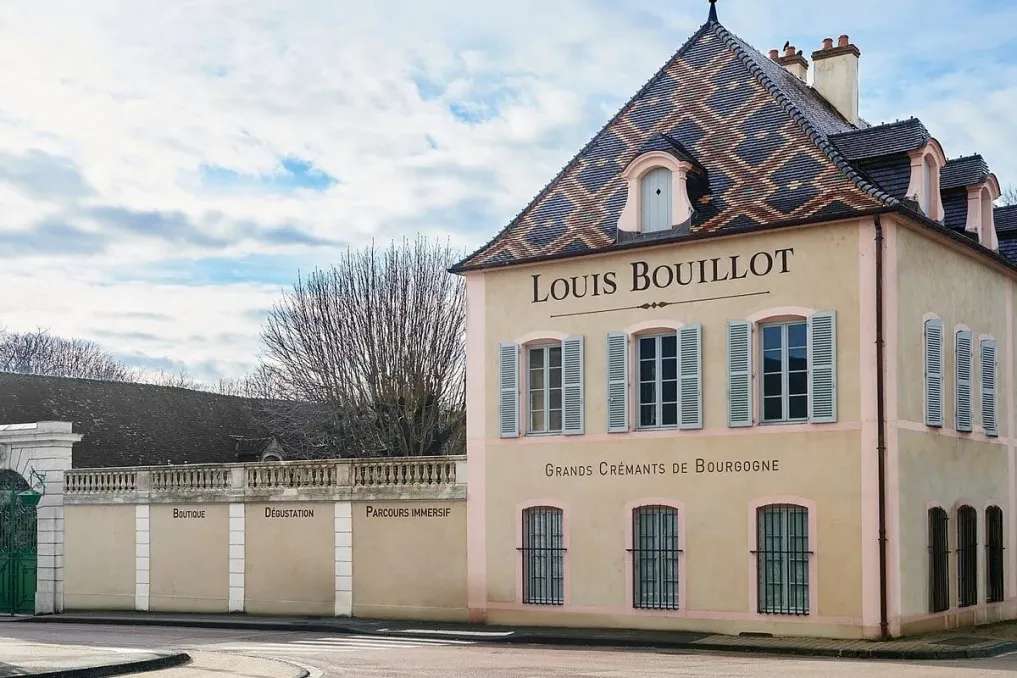
Louis Bouillot founded the house in Nuits-Saint-Georges in 1877 as a négociant specialising in sparkling wine, when crémant was still called “mousseux” and the appellation was almost a century away. Since 1997 it has belonged to the Boisset group, and it farms some one hundred and sixty hectares, a quarter of them organically.

Between the two extremes lies a whole ladder: eighteen months for Perle d’Ivoire and Perle de Nuit, forty for the 2008 Perle d’Or rosé, and between seventy-two and one hundred and eight for the Grands Terroirs, brut nature, with 1,452 bottles of the Trois Saints.

The wine at this stop, Perle de Vigne, is one of the minimum ones: ten months on the lees at that tasting. Meeting the law is not cheating; it is the base on which the same house builds its nine-year wines.

In the shop · Brut Perle de Vigne · Crémant de Bourgogne → 19.90 € · 1 left

Sources: La Passion du Vin (cata de 2013) · Guide Hachette · Boisset · the winery’s page at Vinaris

None of these decisions appears in large print on the label. You have to look for them on the back label, on the house’s page or by asking, and they are exactly what explains why two bottles from the same appellation do not cost the same.

How to read the label

The label guarantees the floor, and the floor was written by the producers themselves.

What lies above it —months, percentages, the name one chooses to print, what one avoids doing— is written in no set of rules. It is what each house decides, and pays for.

That is why two bottles from the same appellation do not cost the same, and why it is worth asking: not whether it meets the law, which they all do, but how far it moves from it.

Sources: each stop lists its own, and every fact is checked against them and against the winery’s page at Vinaris.

Ask acopas

More stories


I hereby confirm I am above 18 years old