-
France
-
Burgundy
- Chablis
- Chablis 1er Cru
- Volnay
- Mercurey 1er Cru
- Hautes Côtes de Nuits
- Montagny 1er Cru
- Recrue des Sens
- Volnay 1er Cru
- Maranges 1er Cru
- Chitry
- Crémant de Bourgogne
- Santenay 1er Cru
- Gevrey-Chambertin
- Petit Chablis
- Saint-Aubin 1er Cru
- Pernand-Vergelesses 1er Cru
- Beaune 1er Cru
- Fixin 1er Cru
- Santenay
- Savigny Les Beaune
- Chorey-Lès-Beaune
- Marsannay
- Rully
- Fixin
- Passetoutgrain
- Bordeaux
- Champagne
- Jura
- Rhône
- Alsace
- Loire
- Luberon
- Languedoc-Roussillon
- Sud-Ouest
- Beaujolais
-
Burgundy
-
Spain
- Millésime
- Sale On Sale
-
All
-
France
-
Burgundy
- Chablis
- Chablis 1er Cru
- Volnay
- Mercurey 1er Cru
- Hautes Côtes de Nuits
- Montagny 1er Cru
- Recrue des Sens
- Volnay 1er Cru
- Maranges 1er Cru
- Chitry
- Crémant de Bourgogne
- Santenay 1er Cru
- Gevrey-Chambertin
- Petit Chablis
- Saint-Aubin 1er Cru
- Pernand-Vergelesses 1er Cru
- Beaune 1er Cru
- Fixin 1er Cru
- Santenay
- Savigny Les Beaune
- Chorey-Lès-Beaune
- Marsannay
- Rully
- Fixin
- Passetoutgrain
- Bordeaux
- Champagne
- Jura
- Rhône
- Alsace
- Loire
- Luberon
- Languedoc-Roussillon
- Sud-Ouest
- Beaujolais
-
Burgundy
-
Spain
- Italy
- Portugal
- Germany
- Israel
- Hungary
- South Africa
- United States
- Argentina
- Chile
- Austria
- Sweden
- Morocco
- New Zealand
-
France


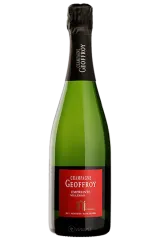
Champagne Geoffroy
We let you know when a new wine arrives or drops in price.
The Geoffroys have been in Cumières, in the Marne valley, since the early seventeenth century. The brand, by contrast, is recent: René Geoffroy and his wife Julienne created it in the early 1950s.
Jean-Baptiste, qualified in viticulture and oenology, took over at the end of the 1980s. In 2008 he and his wife Karine moved the winery to Aÿ, leaving the vineyard where it was.
Fourteen hectares on the slopes of Damery, Hautvillers, Fleury-la-Rivière and above all Cumières, a village classified Premier Cru, wedged between the river Marne and steep southeast-facing slopes. The split is 42% pinot noir, 39% meunier and 19% chardonnay.
Their most committing decision is to avoid malolactic fermentation. Much of Champagne encourages it for the opposite reason: it converts malic acid into lactic and softens the acidity, which is ever more tempting with warmer harvests.
Giving it up keeps the acidity, but it carries a cost that does not show on the label. If malolactic does not happen in the base wine, it may start during the second fermentation, already in the bottle, and that clouds the wine and is very hard to correct at that stage. Avoiding it means guarding against it for the whole life of the bottle.
Vinos de Champagne Geoffroy