

Vienne · the Roman city
Vitifera Vienna
1st → 3rd century
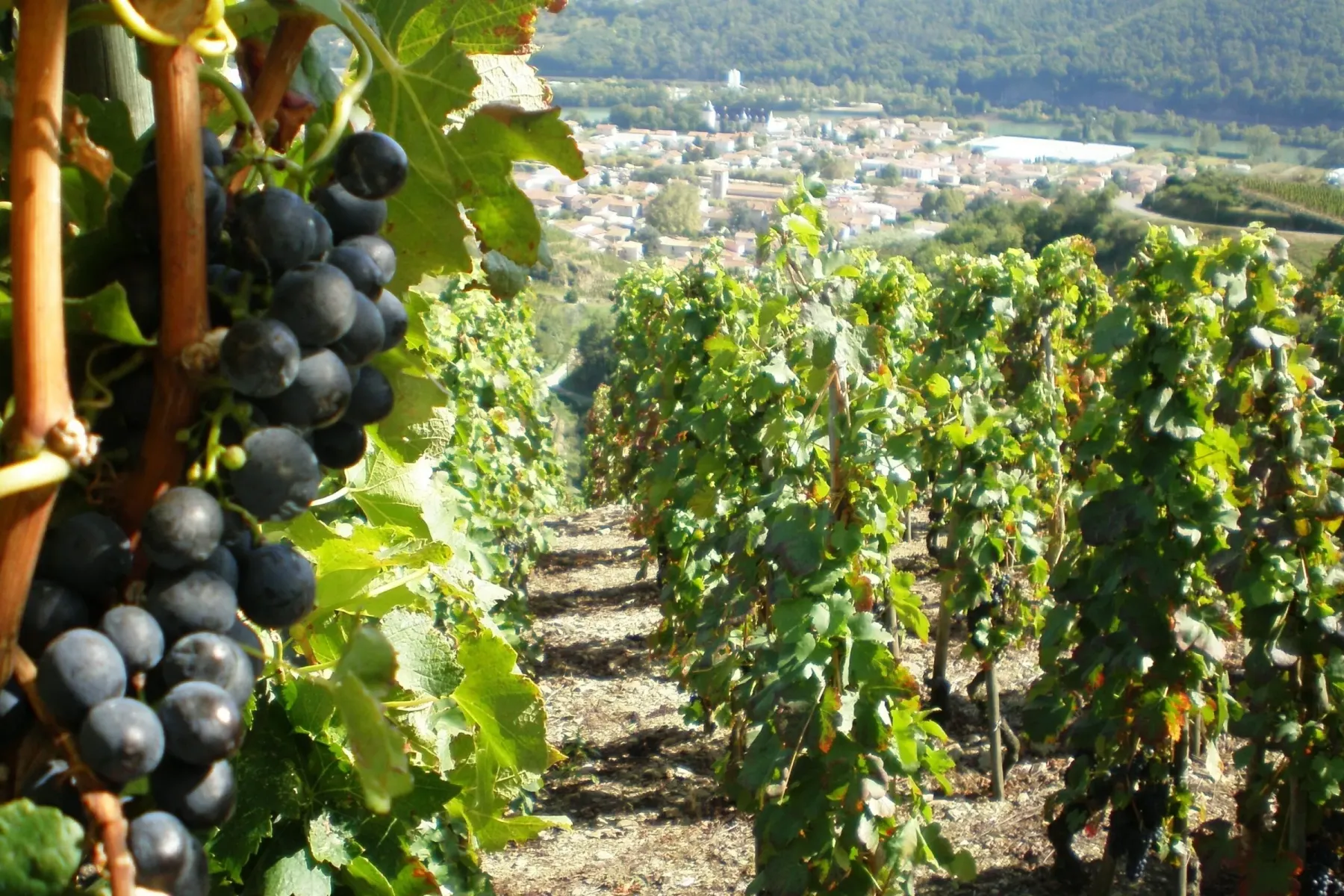
Pliny the Elder speaks of a vine that on its own gives wine a taste of pitch and makes the land of Vienne famous: “Viennensem agrum nobilitans”. Martial sends as a gift a pitched wine “de vitifera Vienna”, from Vienne of the vines.
Pliny also tells that this grape, the allobrogica, ripens with the frost and is black, and he leaves a scene: only the people of Vienne sell their pitched wines dear, and among themselves, out of love for their land. Columella writes that wine’s character changes with the region: a first-century idea of terroir.
The closest material evidence is at Saint-Romain-en-Gal, on the right bank: an early 3rd-century mosaic of the farming calendar, showing the harvest, grape treading and the pitching of a jar. That the Romans built the Côte-Rôtie terraces, as is often repeated, has no evidence.
An often-repeated line says that “Pliny the Younger” praised Côte-Rôtie’s violet bouquet. It appears nowhere in his texts, and it confuses the two Plinys.
Sources: Plinio, Naturalis Historia XIV · Marcial XIII, 107 · Columela III, 2 · Pliego de la AOC Côte-Rôtie, 2024