
Free shipping from €90 in Spain Mainland and Balearic Islands | 48-72h

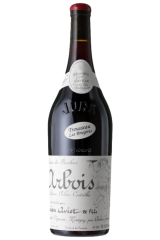

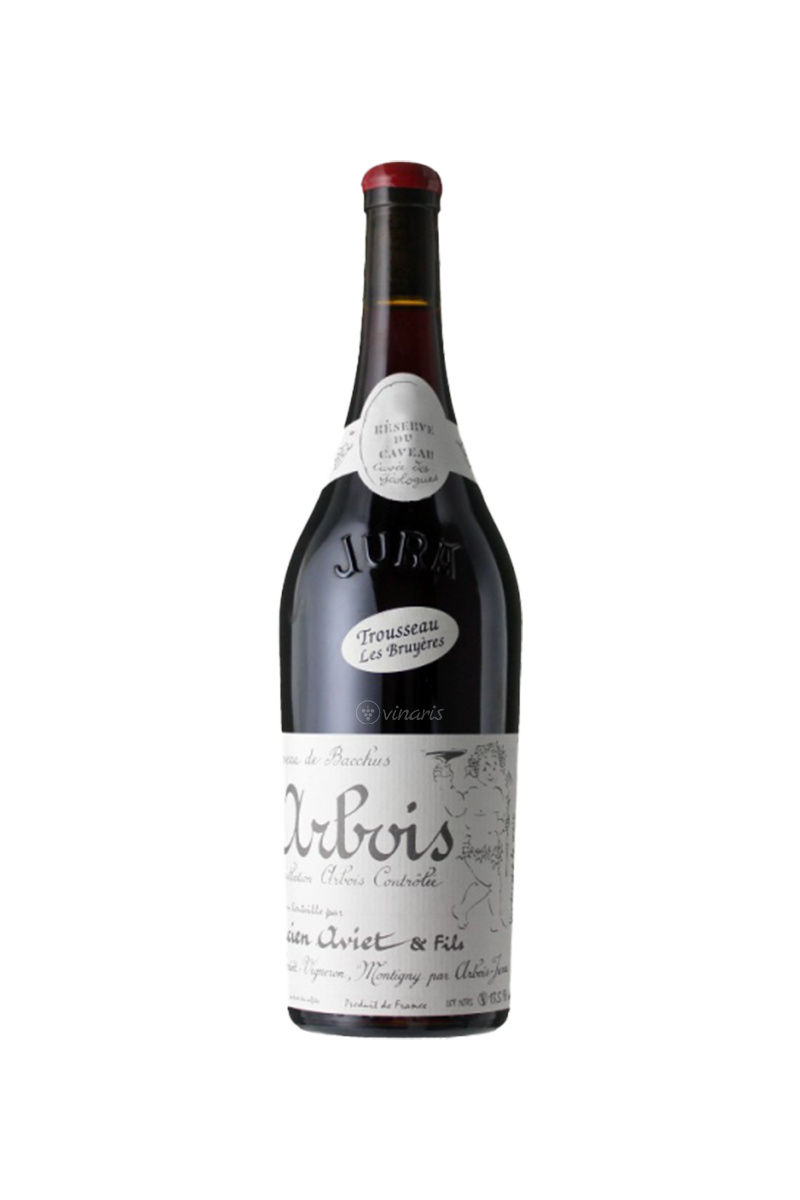
 Caveau de Bacchus, founded in 1960 by Lucien Aviet in Montigny-lès-Arsures — the Jura village recognised as the capital of Trousseau — works vineyards whose cultivation is documented as far back as 1447, when Cistercian monks first tended these slopes. In 1968, Lucien co-founded the Confrérie de Bacchus with geology and medicine students who helped during harvest, an unlikely friendship preserved in the label names: 'Géologues' for the richer Trousseau cuvées, 'Docteurs' for the lighter wines. His son Vincent joined in 1990 after training alongside Laurent Macle and now runs the 5–6 hectare estate; Lucien passed away in May 2021. Les Bruyères: Triassic Rhaetian shaly marls covered by a thin layer of colluvial runoff silt, south-facing clay-limestone slope.
 The 2023 is 100% Trousseau under the AOP Arbois appellation: fully destemmed, fermented spontaneously with indigenous yeasts through a 21-day skin maceration, then aged for 12 months in large oak foudres before light filtration and bottling with minimal sulphites. Around 3,000 bottles at 12.5% ABV.
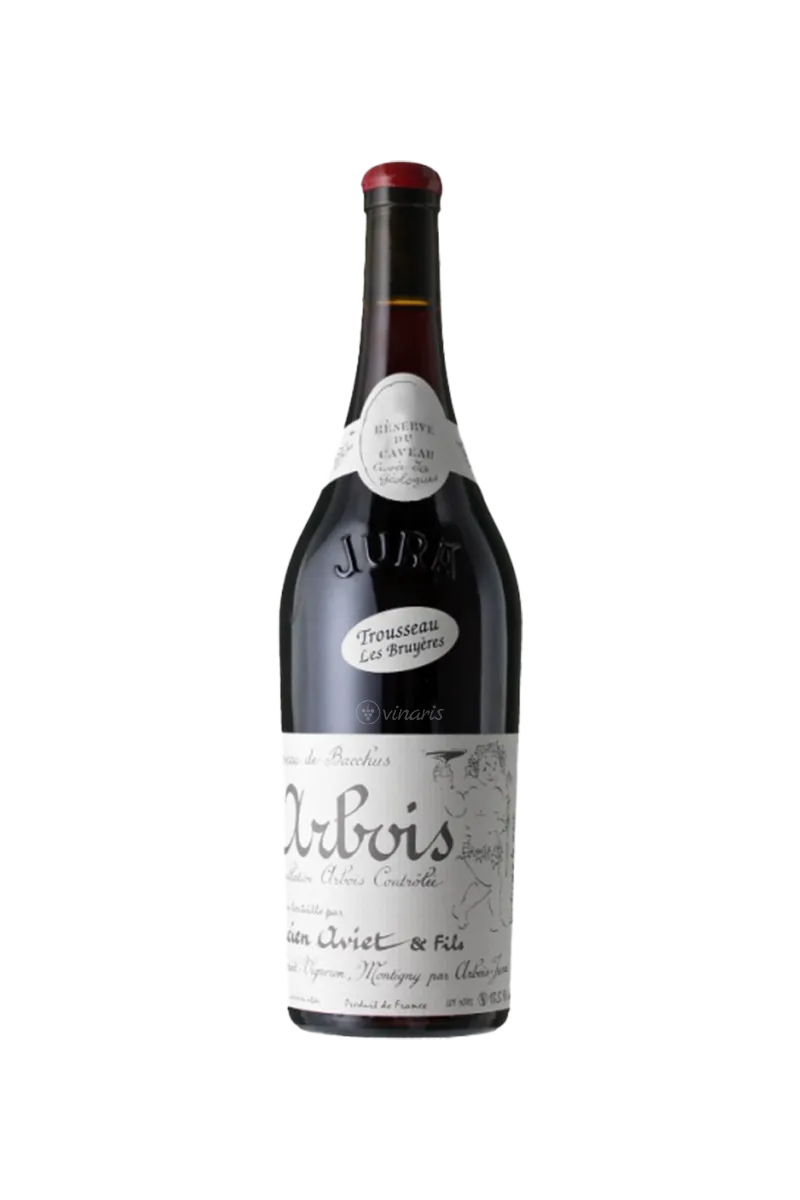
Trousseau Les Bruyères
Bodega: Caveau de Bacchus
Año: 2023
País y Región: Francia, Jura
Denominación/ Appelación: Arbois
Este vino es un Trousseau elaborado en el Jura francés por la bodega Caveau de Bacchus. Aunque no se proporcionan detalles específicos sobre su viñedo o clima, el Trousseau es una uva típica del área que aporta notas de frutas rojas y negras maduras, especias y un toque floral.
Puntuaciones y Comentarios:
El vino destaca por su equilibrio entre la frescura y la complejidad, ofreciendo una experiencia aromática rica en matices de frutas rojas y negras maduras, especias y notas florales sutiles. Su estructura es elegante con un final largo y persistente.
Características Generales:
El Trousseau Les Bruyères 2023 es un vino complejo que combina la frescura típica del Jura con sabores intensos de frutas rojas y negras, especias y notas florales. Ideal para acompañar carnes agridulces o platos con salsas cremosas.
Puedes encontrar más información sobre este vino en [este enlace](https://vinaris.es/es/arbois/831-trousseau-les-bruyeres-2023-caveau-de-bacchus-jura.html).
Descripción generada por IA con conocimiento WSET. Solo orientativa.
Caveau de Bacchus is the name carried by the Aviet family's vines in Montigny-lès-Arsures, the small village above Arbois that holds more Trousseau than any other commune in the Jura. Lucien Aviet — nicknamed Bacchus by his university friends — planted his first vines on returning from the Algerian War in 1960, though the family's documented connection to the vineyard dates back to 1447. In 1968 he founded the Confrérie de Bacchus with geologist friends from the University of Besançon, who organised harvests and scientific symposia around wine — hence the names of the cuvées. Lucien passed away in May 2021 at the age of 84; the estate is now run by his son Vincent and grandson Maxence.
The six hectares of the domaine grow on soils of extraordinary geological precision, mapped by Lucien alongside his scientist friends over decades: grey Liassic marls in paper-thin layers, encrinite limestone with fossilised oysters, clay with chailles (siliceous flint nodules) and limestone scree at the base of rock ledges. All vines — aged 30 to over 70 years — come from mass selection. Trousseau is planted on clay and chailles; Savagnin on foliated grey marls; Ploussard on iridescent Triassic marls; Melon à Queue Rouge on the fresher colluvial soils.
Winemaking is classically Jurassian: hand harvest, indigenous yeasts, 12 to 15 months in large old oak foudres, no new wood, and minimal sulphites added only to the must. The Trousseau wines are bottled as Cuvée des Géologues in separate single-parcel expressions (Nonceau, Les Bruyères, Ruzard, Poussot); the Ploussard and Melon à Queue Rouge form the Cuvée des Docteurs. The Savagnin ages under a flor yeast veil: four years for the Réserve du Caveau and six to eight for the Vin Jaune Cuvée de la Confrérie, in a 62 cl clavelin bottle. At the Paris Concours Général Agricole 2026, four of the estate's wines won medals, three of them gold; the Trousseau Nonceau appears year after year among the highest-rated wines in the Guide Hachette.
See all wines by Caveau de Bacchus →