
Free shipping from €90 in Spain Mainland and Balearic Islands | 48-72h



 12 hectares with 40-year-old dry-farmed, bush-trained vineyards in the municipalities of Villalba (Remedio and Encinas) and Torremontalbo (Barbarroja and Antoñana). The vineyards in the first two properties are located at an altitude between 550 and 650 meters very close to the Toloño mountain range, while the latter two are situated on gentle, south-facing slopes. The soil is clay with areas of pebbles. 85% Tempranillo, 10% Graciano, 5% Mazuelo.
 Hand-harvested in crates. After the selection process, the crushed grapes are gravity-fed into small wooden vats for cold maceration for several hours before undergoing alcoholic fermentation with native yeasts at a controlled temperature of 28-29 °C. Daily punch-downs and tastings are performed to determine the optimal racking time. Malolactic fermentation takes place in concrete tanks. Aged for 24 months in new and once-used French and American oak barrels. The barrels are racked every 8 months.

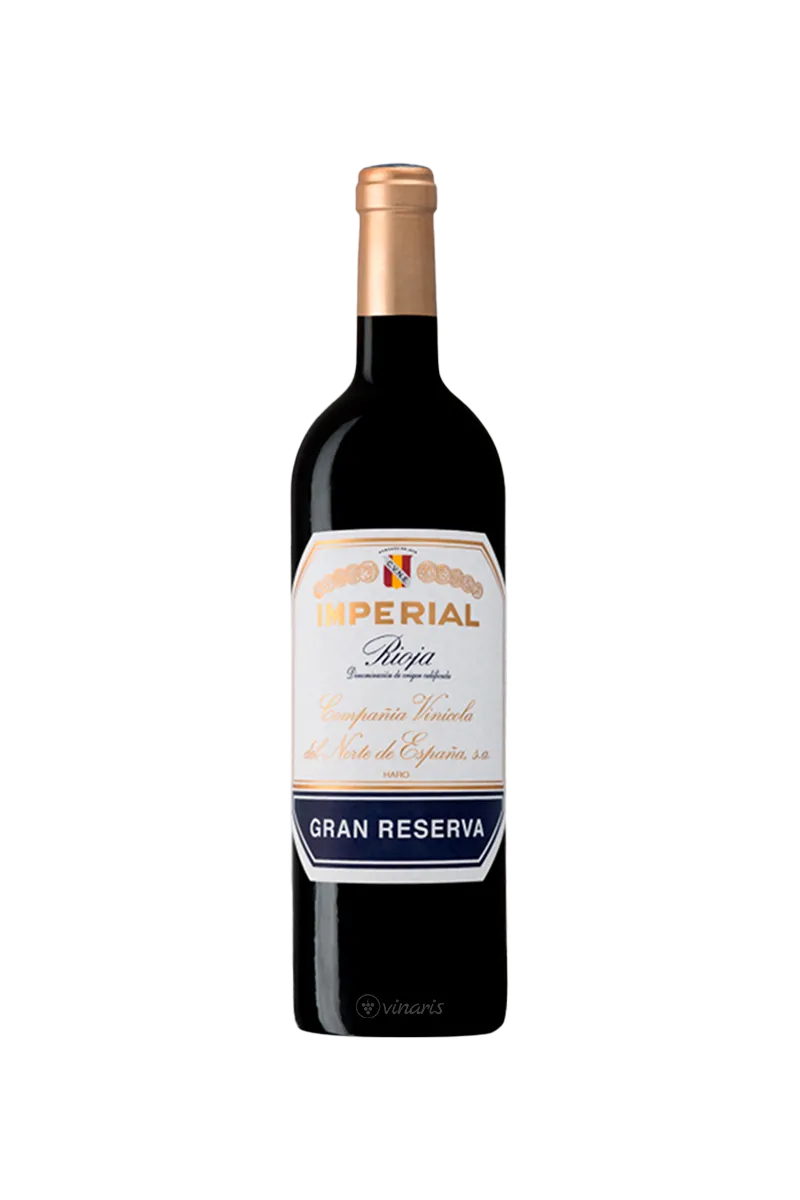
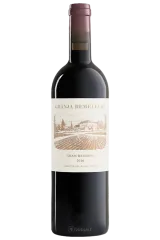
CVNE Imperial Gran Reserva 2018
Se trata de un tinto de la DOCa Rioja elaborado por la bodega CVNE, de la añada 2018. El vino es una mezcla compuesta por un 85% de uva Tempranillo, un 10% de Graciano y un 5% de Mazuelo.
La procedencia de la uva son 12 hectáreas de viñedos de secano de 40 años de edad, situados en los municipios de Villalba (fincas Remedio y Encinas) y Torremontalbo (fincas Barbarroja y Antoñana). Los viñedos de Villalba se ubican entre los 550 y 650 metros de altitud cerca de la sierra de Toloño, mientras que los de Torremontalbo se encuentran en suaves pendientes con orientación sur. El suelo es arcilloso con zonas de canto rodado.
El proceso de vinificación inicia con una vendimia manual en cajas. Tras la selección, la uva pasa por gravedad a pequeñas tinas de madera para una maceración en frío de varias horas antes de iniciar la fermentación alcohólica con levaduras propias a una temperatura controlada de 28-29 °C, realizando bazuqueos diarios y catas para decidir el momento del descube. La fermentación maloláctica se lleva a cabo en tanques de hormigón. La crianza se extiende por 24 meses en barricas de roble francés y americano, nuevas y de un solo uso, con un trasiego programado cada 8 meses.
En cuanto a la valoración crítica, The Wine Advocate le otorga 95 puntos. James Suckling le asigna 96 puntos y Tim Atkin también le da 95 puntos.
Descripción generada por IA con conocimiento WSET. Solo orientativa.
Compañía Vinícola del Norte de España was founded in Haro on 24 March 1879 by the brothers Eusebio and Raimundo Real de Asúa, in the Barrio de la Estación, when French merchants ruined by phylloxera were buying Rioja wine beside the railway line. Six years later, at the 1885 Antwerp World's Fair, it was already winning silver and bronze medals. The house remains in the hands of the founders' direct descendants, now in the fifth generation.
The ageing hall in the Barrio de la Estación, designed by Gustave Eiffel's studio and built between 1890 and 1909, holds up its roof with steel trusses and has not a single column. Inside the same premises works a small, independent winery devoted to one wine alone: Imperial.
Imperial has been made since the 1920s, and only in vintages the house judges exceptional. The name comes from a special bottling for the English market in a measure called the imperial pint. The winery keeps a lot of every vintage of Imperial Gran Reserva, back to the first, for vertical tastings.
Viña Real dates from the same decade, launched in 1920, with a new winery opened by King Juan Carlos I in 2004; Viñedos del Contino followed in 1973, created with the owners of the Laserna estate as Rioja's first château. Imperial Gran Reserva comes from twelve hectares of dry-farmed bush vines in Villalba and Torremontalbo, at the foot of the Toloño range, with 24 months in new or once-used French and American oak.
See all wines by CVNE →