
-
France
-
Burgundy
- Chablis
- Chablis 1er Cru
- Volnay
- Mercurey 1er Cru
- Hautes Côtes de Nuits
- Montagny 1er Cru
- Recrue des Sens
- Volnay 1er Cru
- Maranges 1er Cru
- Chitry
- Crémant de Bourgogne
- Santenay 1er Cru
- Gevrey-Chambertin
- Petit Chablis
- Saint-Aubin 1er Cru
- Pernand-Vergelesses 1er Cru
- Beaune 1er Cru
- Fixin 1er Cru
- Santenay
- Savigny Les Beaune
- Chorey-Lès-Beaune
- Marsannay
- Rully
- Fixin
- Passetoutgrain
- Bordeaux
- Champagne
- Jura
- Rhône
- Alsace
- Loire
- Luberon
- Languedoc-Roussillon
- Sud-Ouest
- Beaujolais
-
Burgundy
-
Spain
- Millésime
- Sale On Sale
-
All
-
France
-
Burgundy
- Chablis
- Chablis 1er Cru
- Volnay
- Mercurey 1er Cru
- Hautes Côtes de Nuits
- Montagny 1er Cru
- Recrue des Sens
- Volnay 1er Cru
- Maranges 1er Cru
- Chitry
- Crémant de Bourgogne
- Santenay 1er Cru
- Gevrey-Chambertin
- Petit Chablis
- Saint-Aubin 1er Cru
- Pernand-Vergelesses 1er Cru
- Beaune 1er Cru
- Fixin 1er Cru
- Santenay
- Savigny Les Beaune
- Chorey-Lès-Beaune
- Marsannay
- Rully
- Fixin
- Passetoutgrain
- Bordeaux
- Champagne
- Jura
- Rhône
- Alsace
- Loire
- Luberon
- Languedoc-Roussillon
- Sud-Ouest
- Beaujolais
-
Burgundy
-
Spain
- Italy
- Portugal
- Germany
- Israel
- Hungary
- South Africa
- United States
- Argentina
- Chile
- Austria
- Sweden
- Morocco
- New Zealand
-
France
Rewards
5%
Silver
10%
Gold
15%
Platinum
20%
Élite
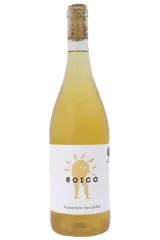
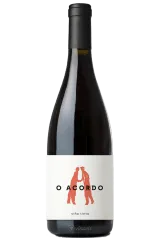
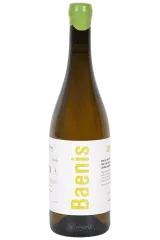
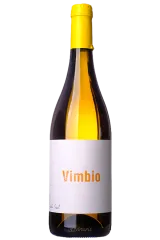
Adega do Vimbio
We let you know when a new wine arrives or drops in price.
Adega do Vimbio takes its name from the willow — vimbio in Galician — the branches that O Rosal farmers once used to tie their vines before wire and stakes existed. The name is a statement of intent: to make wine the way it was made before industrialisation, on one of the most unusual soils in Rías Baixas.
The story begins in 1985, when Martín's father Venancio Crusat bought a property in Goián and planted the first hectare of Albariño, before the DO existed. Martín, a biologist, and Patricia Elola, an environmental scientist, had been living abroad for a decade — three years in Vietnam, then Amsterdam — when his father fell ill and they returned to Galicia in 2012. They built the cellar themselves between their three parcels and made their first harvest that same year.
The 2.5 hectares sit at the southern tip of Galicia, on the Miño riverbank facing Portugal. While most of O Rosal rests on granite, Vimbio's plots sit on schist — a geological anomaly that produces wines with a sharper mineral tension and salinity unusual for the subzone. Vines of 30 to 40 years — Albariño, Caiño Blanco and Loureiro — are farmed without herbicides, using Atlantic seaweed as fertilizer and biodynamic preparations from local plant life. They cap their own yields at 5,000 kg per hectare, half of what the DO allows. In 2020 they chose to leave the Rías Baixas designation entirely, to gain freedom with indigenous varieties and their own methods.
In the cellar, intervention is minimal: indigenous-yeast fermentation, no temperature control, no fining, no filtration. Sulphur is kept to a minimum and absent entirely in several wines. The range runs from the Vimbio — a blend of all three white varieties — to the Landra, a Caiño Blanco and Albariño aged in used French barriques of which around 260 bottles are made. Wine Advocate's Luis Gutiérrez awarded every wine in the range 90 points or above.
Vinos de Adega do Vimbio
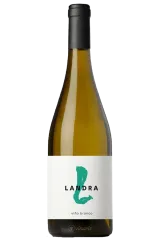
- On sale!
- -3.00 €
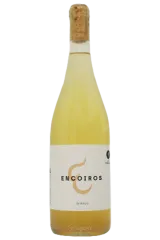
- On sale!
- -4.00 €