Free shipping from €90 in Spain Mainland and Balearic Islands | 48-72h


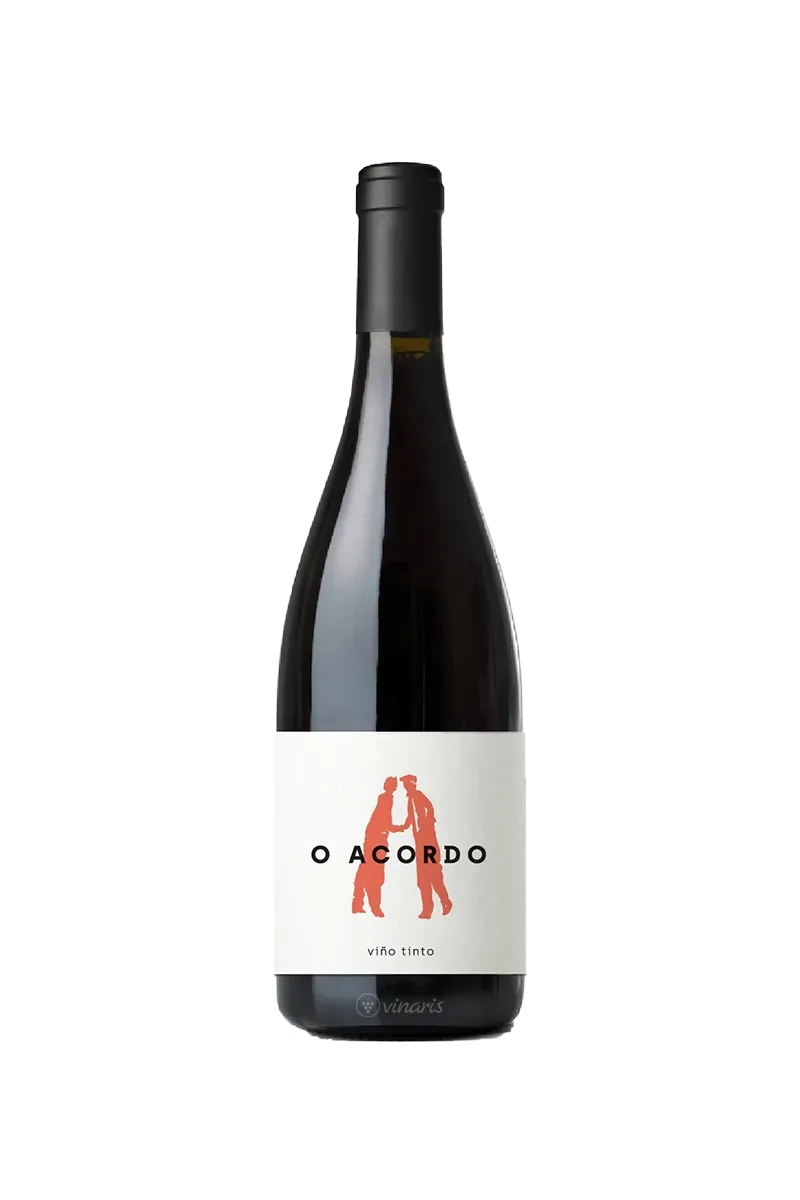
 Adega do Vimbio, Vino de Mesa (O Rosal, Tomiño, Galicia). O Acordo — 'the agreement' in Galician — is a red blending ~66% Albariño (30-year-old vines) with ~33% Sousón, grown on clay and schist soils near the Portuguese border. Labelled as Vino de Mesa since 2020 (voluntarily outside DO Rías Baixas).
 Co-fermented in stainless steel with indigenous yeasts. No added sulphur. Five months on lees with bâtonnage. Unfined and unfiltered.
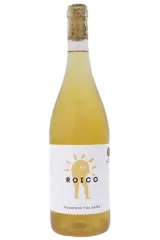
O Acordo 2022 – Adega do Vimbio
Esta producción de la bodega Adega do Vimbio, de la añada 2022, se elabora en Galicia, específicamente en las zonas de O Rosal y Tomiño. Aunque la zona pertenece a la DO Rías Baixas, desde 2020 este vino es, por decisión voluntaria, Vino de Mesa, fuera de la denominación. El nombre de la botella, O Acordo, alude al concepto de «el acuerdo» en gallego.
La composición de la uva une aproximadamente un 66% de Albariño procedente de viñas de unos 30 años con un 33% de Sousón. Los viñedos se sitúan sobre suelos de arcilla y esquisto, muy cerca de la frontera con Portugal.
La elaboración sigue una filosofía de mínima intervención. Las dos uvas cofermentan en tanques de acero inoxidable utilizando levaduras indígenas, sin añadir dióxido de azufre. Tras la fermentación, el vino reposa cinco meses sobre lías con la técnica del bâtonnage, evitando posteriormente cualquier proceso de clarificación o filtración. Es un tinto natural.
Se trata de una propuesta que destaca por la convivencia de variedades blancas y tintas en una estructura que prioriza la pureza del fruto y la gestión de las lías, ofreciendo un perfil distinto al estándar de la región por la inclusión de la uva Sousón y su envejecimiento en contacto con sus propias lías.
Descripción generada por IA con conocimiento WSET. Solo orientativa.
Adega do Vimbio takes its name from the willow — vimbio in Galician — the branches that O Rosal farmers once used to tie their vines before wire and stakes existed. The name is a statement of intent: to make wine the way it was made before industrialisation, on one of the most unusual soils in Rías Baixas.
The story begins in 1985, when Martín's father Venancio Crusat bought a property in Goián and planted the first hectare of Albariño, before the DO existed. Martín, a biologist, and Patricia Elola, an environmental scientist, had been living abroad for a decade — three years in Vietnam, then Amsterdam — when his father fell ill and they returned to Galicia in 2012. They built the cellar themselves between their three parcels and made their first harvest that same year.
The 2.5 hectares sit at the southern tip of Galicia, on the Miño riverbank facing Portugal. While most of O Rosal rests on granite, Vimbio's plots sit on schist — a geological anomaly that produces wines with a sharper mineral tension and salinity unusual for the subzone. Vines of 30 to 40 years — Albariño, Caiño Blanco and Loureiro — are farmed without herbicides, using Atlantic seaweed as fertilizer and biodynamic preparations from local plant life. They cap their own yields at 5,000 kg per hectare, half of what the DO allows. In 2020 they chose to leave the Rías Baixas designation entirely, to gain freedom with indigenous varieties and their own methods.
In the cellar, intervention is minimal: indigenous-yeast fermentation, no temperature control, no fining, no filtration. Sulphur is kept to a minimum and absent entirely in several wines. The range runs from the Vimbio — a blend of all three white varieties — to the Landra, a Caiño Blanco and Albariño aged in used French barriques of which around 260 bottles are made. Wine Advocate's Luis Gutiérrez awarded every wine in the range 90 points or above.
See all wines by Adega do Vimbio →