
Do Ferreiro Adina 2020 | Val do Salnés
29.65 €
Price
Free shipping from €90 in Spain Mainland and Balearic Islands | 48-72h


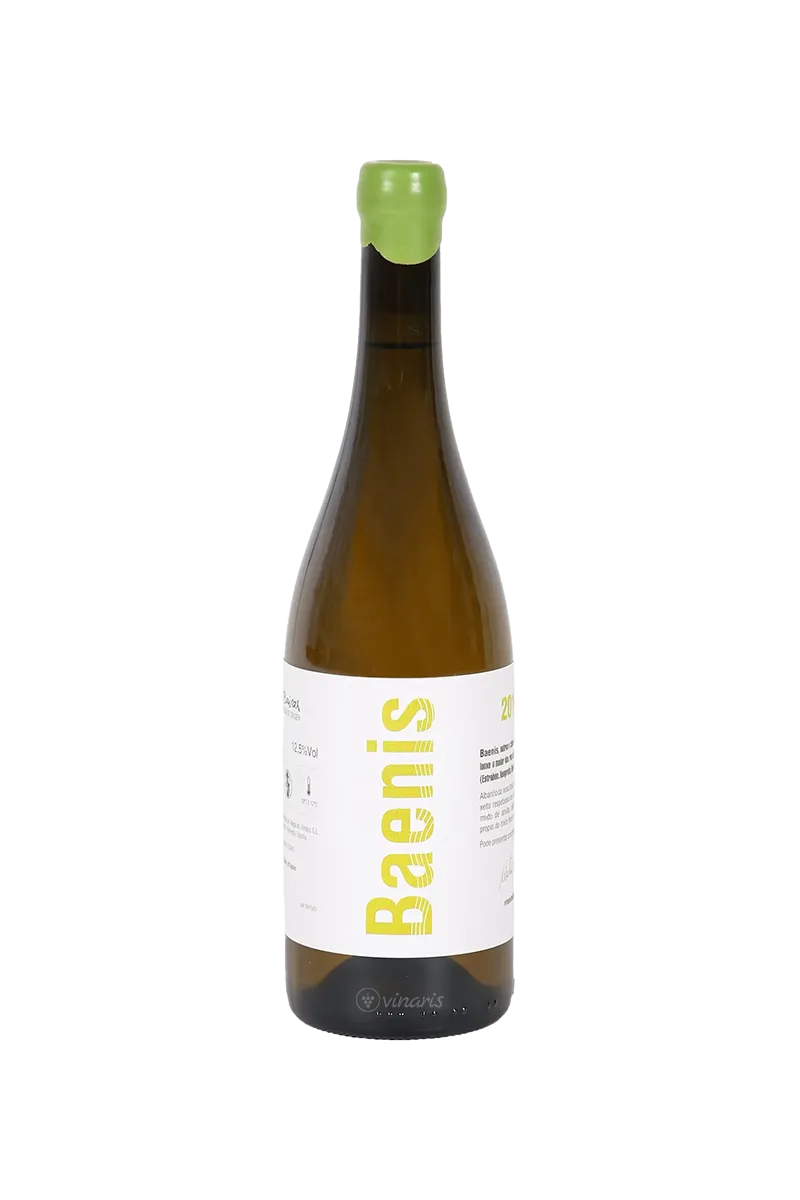
 Adega do Vimbio, Vino de Mesa (O Rosal, Tomiño, Galicia). Field blend of Albariño and Caiño Blanco co-planted in Campo Casendo. 0.5 ha of 30-year-old vines on schist, clay and river-polished Miño pebbles. O Rosal subzone, on the final bend of the Miño before Portugal. Organic farming.
 Spontaneous fermentation with indigenous yeasts in stainless steel. Eight months on fine lees. Unfined and unfiltered. Minimal SO₂. Production: ~2,000 bottles.
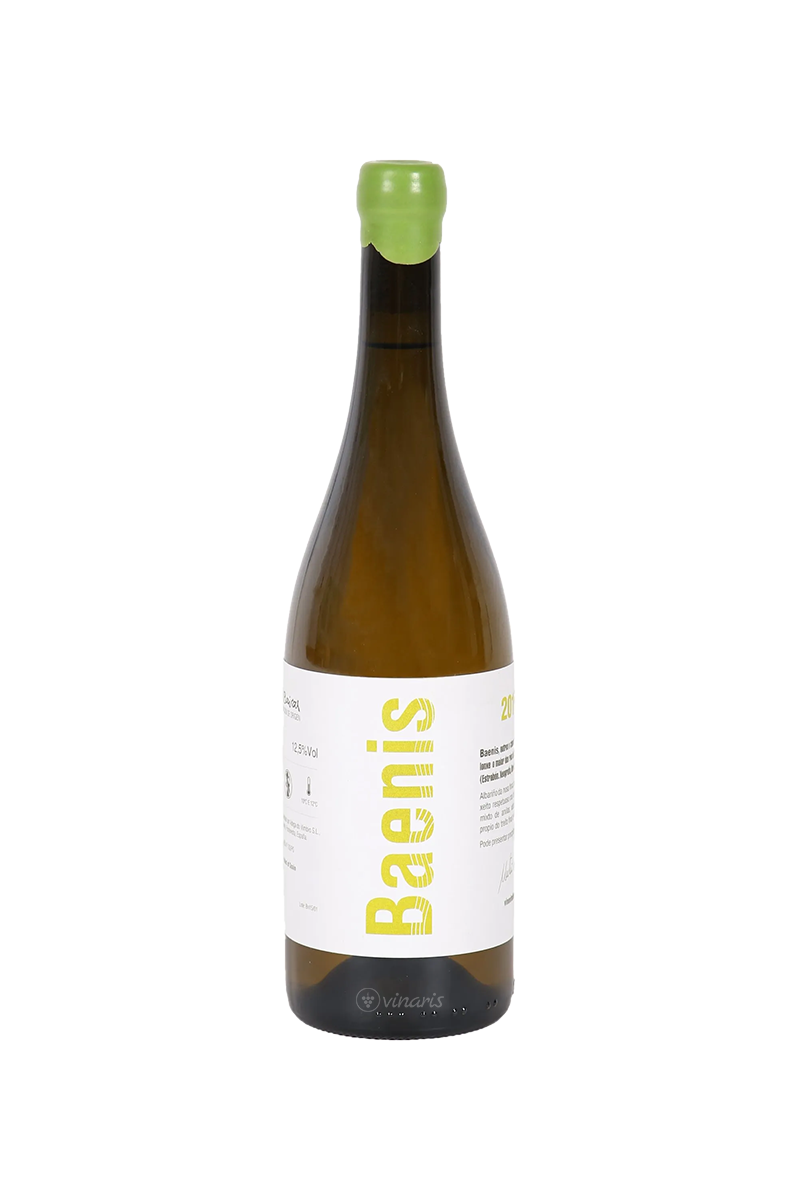
Baenis
Bodega: Adegan do Vimbio
Año de elaboración: 2022
Región: Galicia, España
Denominación de Origen Protegida (DOP): Rías Baixas
Uva: Caiño blanco
Este vino es un reflejo del terroir gallego, cultivado en la finca Campo Casendo bajo prácticas ecológicas. Se elabora con uvas de la variedad Caiño blanco, que aportan frescura y acidez al vino.
Perfil esperado:
El Baenis presenta aromas cítricos y frutados, notas de pomelo y limón, junto con un toque floral. En boca es fresco y equilibrado, con una buena estructura y final largo. La acidez refrescante se complementa con sabores sutiles a hierbas aromáticas.
Puntuaciones y comentarios:
El vino destaca por su complejidad y frescura, siendo un ejemplo representativo de la variedad Caiño blanco cultivada en Rías Baixas.
Descripción generada por IA con conocimiento WSET. Solo orientativa.
Adega do Vimbio takes its name from the willow — vimbio in Galician — the branches that O Rosal farmers once used to tie their vines before wire and stakes existed. The name is a statement of intent: to make wine the way it was made before industrialisation, on one of the most unusual soils in Rías Baixas.
The story begins in 1985, when Martín's father Venancio Crusat bought a property in Goián and planted the first hectare of Albariño, before the DO existed. Martín, a biologist, and Patricia Elola, an environmental scientist, had been living abroad for a decade — three years in Vietnam, then Amsterdam — when his father fell ill and they returned to Galicia in 2012. They built the cellar themselves between their three parcels and made their first harvest that same year.
The 2.5 hectares sit at the southern tip of Galicia, on the Miño riverbank facing Portugal. While most of O Rosal rests on granite, Vimbio's plots sit on schist — a geological anomaly that produces wines with a sharper mineral tension and salinity unusual for the subzone. Vines of 30 to 40 years — Albariño, Caiño Blanco and Loureiro — are farmed without herbicides, using Atlantic seaweed as fertilizer and biodynamic preparations from local plant life. They cap their own yields at 5,000 kg per hectare, half of what the DO allows. In 2020 they chose to leave the Rías Baixas designation entirely, to gain freedom with indigenous varieties and their own methods.
In the cellar, intervention is minimal: indigenous-yeast fermentation, no temperature control, no fining, no filtration. Sulphur is kept to a minimum and absent entirely in several wines. The range runs from the Vimbio — a blend of all three white varieties — to the Landra, a Caiño Blanco and Albariño aged in used French barriques of which around 260 bottles are made. Wine Advocate's Luis Gutiérrez awarded every wine in the range 90 points or above.
See all wines by Adega do Vimbio →