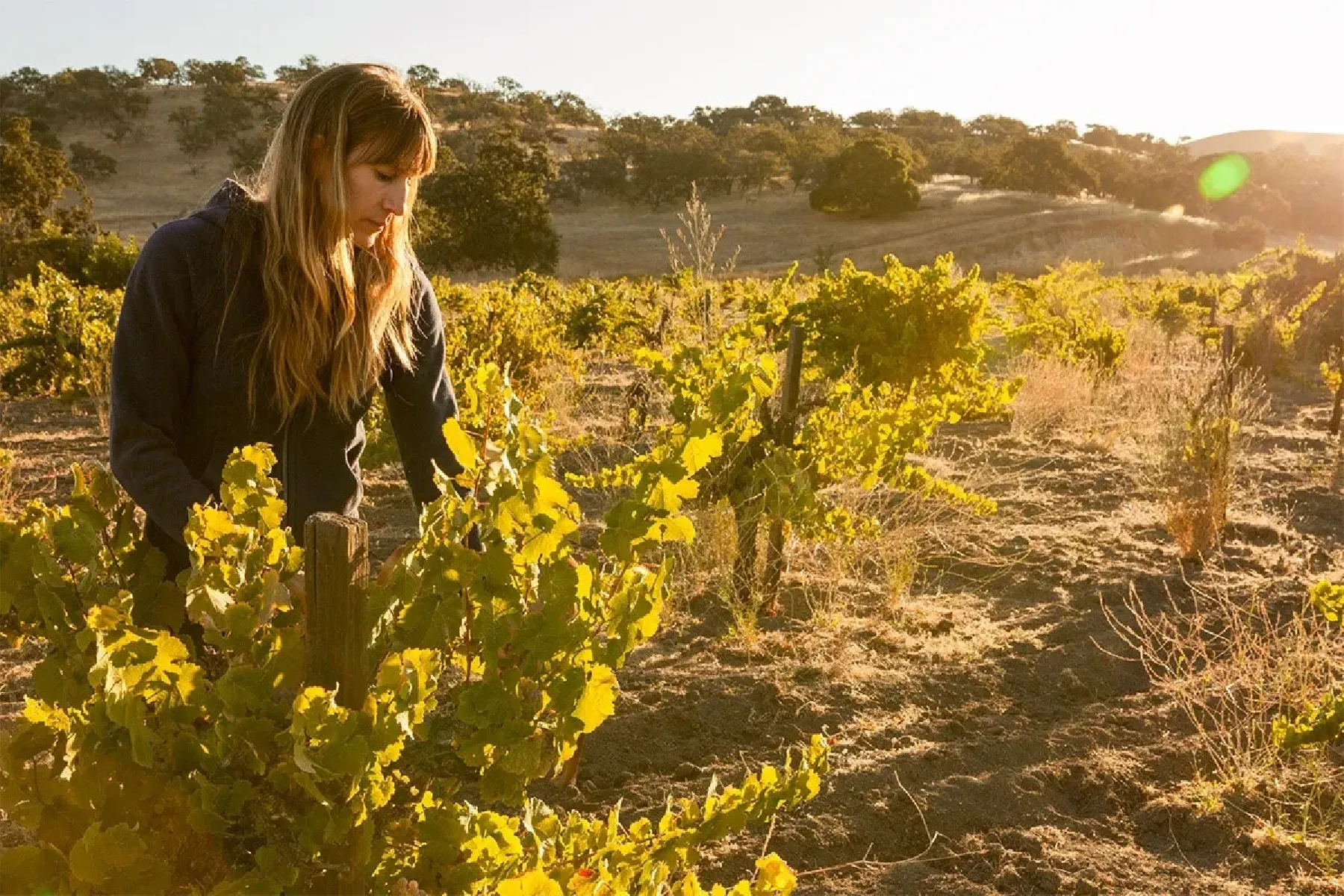
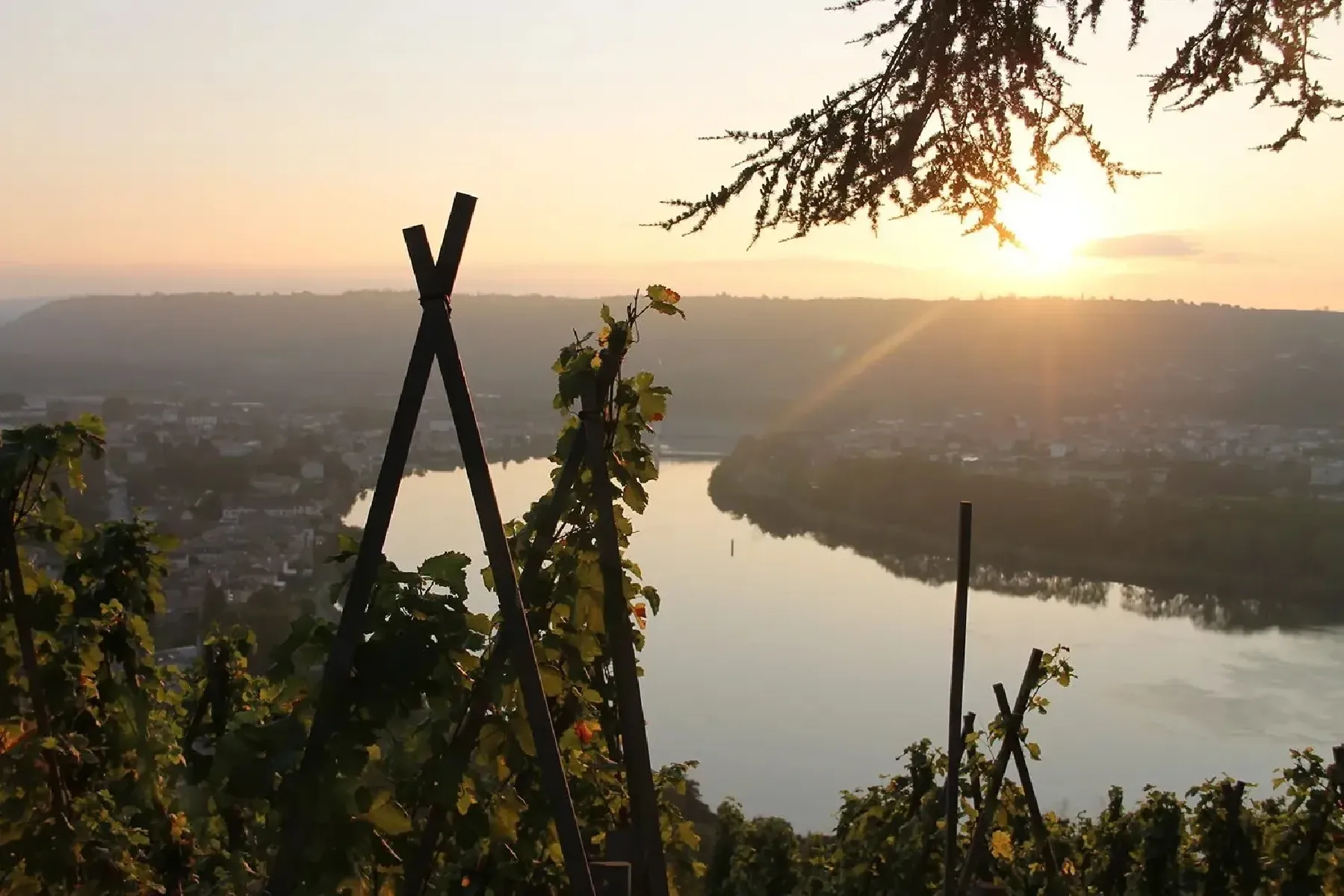
A vineyard slope above the Rhône at sunset

Atlas · France · Northern Rhône · 10 episodes · 4 wineries

Cornas

A thousand years of written fame, a century of decline and a revival: the story of the village that went from selling its wine in bulk to being one of syrah’s great names.

Atlas Vinaris · reviewed on 19/11/2026 · Photo: Domaine J. Denuzière

Cornas is the northern Rhône appellation made from syrah alone, contained entirely within a single commune on the right bank of the Rhône opposite Valence. Its wine was already famous in 1816, but until the 1950s it was bought and bottled by the négoce; the vineyard fell to 53 hectares around 1971 and today, with 162 and some sixty estates, it is one of the valley’s most sought-after reds.

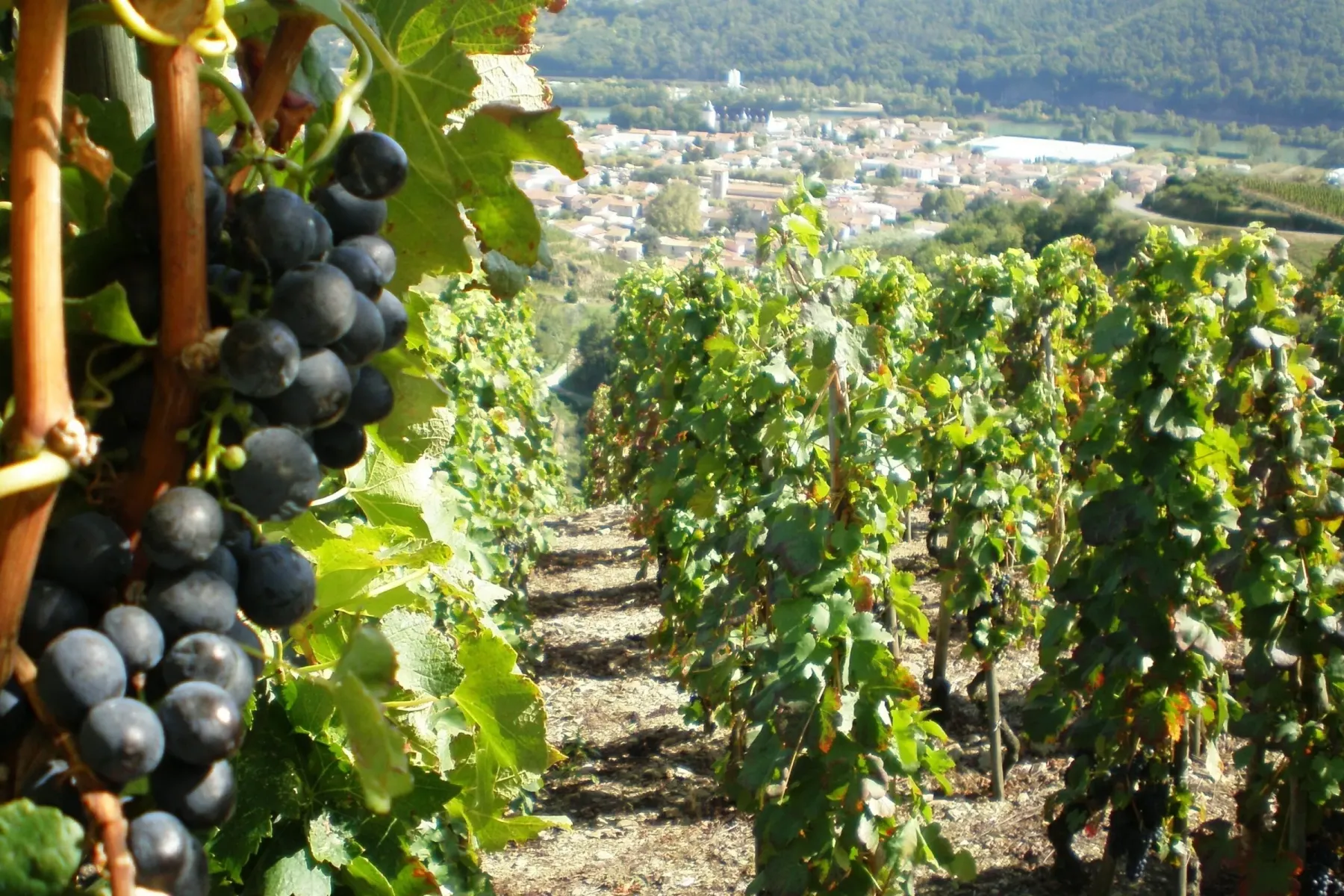
Cornas fits in a commune of 8.33 square kilometres, and its vineyard is under three kilometres from north to south. It is a granite amphitheatre open to the south, sheltered from the north wind by the limestone massif of Les Arlettes, on the right bank of the Rhône opposite Valence. Only red is made there, and only from syrah.

Its story has two halves. The first is an old fame that left scenes in the archives: a vineyard donated around the year 1000, a barrel given to a lieutenant, a ship lost off Genoa, a writer who in 1816 claimed these wines were kept for twenty years. The second is a fall and a revival: a village that sold its wine to the négoce trucks, a vineyard that shrank to 53 hectares, and a few families who began bottling under their own names.

This page follows those episodes on the village map —the muleteers’ road, the Rhône, the terraces of Reynard, the Valence station, Sabarotte, Les Mazards— and ends with four houses from the shop that each tell a part of that story.

Hectares of vines in Cornas
1854 128 ha
1866 “100 hectares de vignes”
1971 53 ha, the low point
1995 84 ha
2005 102 ha
2025 162 ha

Logarithmic scale. Sources: the AOC growers’ union (1854), Larousse as quoted in the official specification (1866), John Livingstone-Learmonth (1971 and 2005), the union (1995) and Inter Rhône (2025). Some count planted area and others declared area: they are not identical series.

How long it lasted
La caída 117 years · 1854–1971 · from 128 to 53 hectares 117 years · 1854–1971 · from 128 to 53 hectares
Noël Verset 70 years · 1931–2001 · from joining the vineyard at twelve to selling Sabarotte 70 years · 1931–2001 · from joining the vineyard at twelve to selling Sabarotte
La vuelta 54 years · 1971–2025 · from 53 to 162 hectares 54 years · 1971–2025 · from 53 to 162 hectares
In Cornas 1850190019502000 1816 · Jullien: “dix-huit à vingt ans”1938 · the appellation1955 · the first estate bottles1971 · the low point: 53 hectares2007 · Les Mazards is saved

14 stops in 5 chapters. The map follows you as you read.

Chapter I

A thousand years of written fame

There are two versions of the name. Tradition, which the appellation’s own specification repeats with a cautious “perhaps”, says that in Celtic Cornas means “burnt earth”, for the heat of its slopes. Toponymists propose an older form, Cornate, related to “horn” or to a root meaning height. The legend of Charlemagne tasting this wine “in 840”, which circulates in official sheets, is impossible: he died in 814.

What there is, is paper. The appellation’s official specification gathers a small collection of archive scenes, from the year 1000 to 1893, describing a wine that travelled far and fetched good money.

Road to the Velay

Wine for wheat

year 1000 → 1461

The first written evidence of vines in Cornas is in the cartulary of the abbey of Saint-Chaffre, at Le Monastier, in the Velay: “An 1000 : mention du don d’une vigne à un chanoine”.

The abbey lies some 65 kilometres to the west, beyond the mountains, and that is exactly the direction in which the wine left. Until 1461 the Rhône was a real frontier, because the Dauphiné, on the other bank, was not yet part of France.

So the wine of the Vivarais went inland on muleback, towards the Gévaudan, the Velay and Auvergne. According to the appellation specification, there “le vin sert alors de monnaie d’échange contre le blé de ces contrées”.

Wine was the currency for buying mountain wheat. Nine hundred years later, as we will see, wheat would end up worth more than wine.

Sources: Pliego de la AOC Cornas, 2024
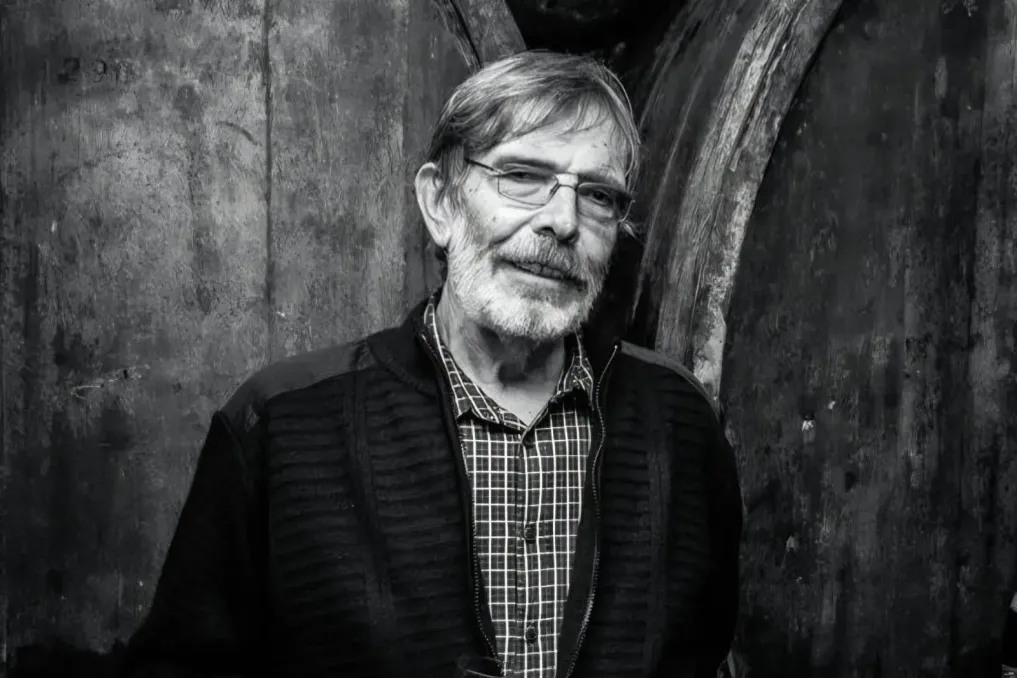
Across the river, Cornas wine was already a prestigious gift.

Bourg-lès-Valence

Twenty livres for a cask

17th century

The municipal accounts of Bourg-lès-Valence, on the opposite bank, record “20 livres pour une pièce de vin de Cornas” given to the lieutenant of the citadel, Monsieur La Condamine.

The papers continue. In 1781 the inventory of a canon of Saint-Bernard, Jacques-Philippe de Robert de Latour, mentions “vin de Cornas” in his cellars. The naturalist Saussure wrote that its vines, “exploitées au soleil levant, sur la pente de la montagne, produisent un vin rouge foncé qui a aussi de la réputation”.

To reach Paris the wine had to pay heavy duties in Lyon and Mâcon, until at the end of the 18th century the Briare canal opened another route. By then it was already being exported to the Dauphiné, the land across the river.

A barrel of Cornas as a gift for the officer in command of the citadel: four centuries ago this village’s wine was already the thing to give.

Sources: Pliego de la AOC Cornas, 2024
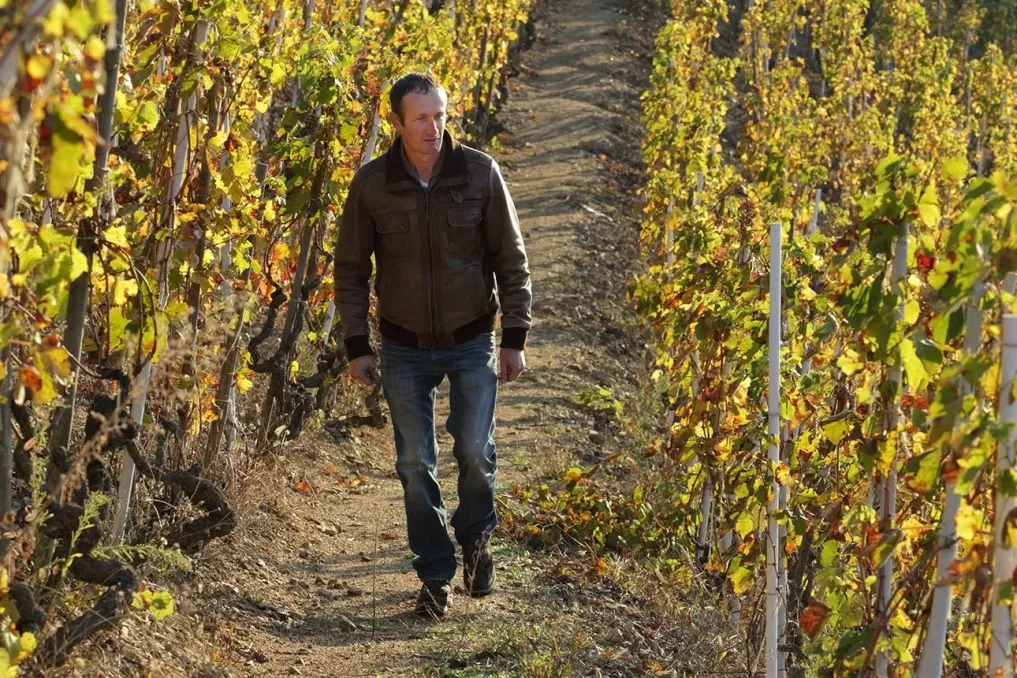
In the early 19th century the river carried the wine much further.

The Rhône

Eighteen or twenty years

1809 → 1816

In 1816 André Jullien placed Cornas in the first class of the Ardèche reds: wines rich in colour and full-bodied, close to the second wines of Hermitage. “On les garde souvent dix-huit à vingt ans, et alors ils deviennent exquis”.

And he added: “Le nord tire beaucoup de ces vins, qui gagnent de la qualité lorsqu’on les transporte dans des pays froids”. It is worth not overstating it: in his general ranking of French reds, as quoted by Jules Guyot, Cornas sat in the third class, alongside Saint-Julien, Saint-Estèphe, Tavel or the clos de la Nerthe. “Cette troisième classe est donc une bien bonne compagnie”, Guyot remarked.

Larousse counted a hundred hectares of vines in 1866, and Littré, in 1886, defined it as “vin estimé d’un cru entre Saint-Péray et Tournon”.

Count Camille de Tournon, prefect of Rome from 1809 to 1814, wrote in a letter: “Je viens d’apprendre que le bâtiment qui portait mon vin de Cornas s’était perdu sur la Côte de Gênes”. In another he asked to be sent 200 bottles of Cornas and Saint-Péray: “ces vins ont du succès ici”.

Sources: Jullien 1816 (facsímil) · Pliego de la AOC Cornas, 2024 · Guyot, Étude des vignobles de France

In 1821 Cornas had 1,038 inhabitants, its peak. Larousse counted a hundred hectares of vines in 1866, and an 1877 magazine called its wine “l’élite des grands vins fins de la côte du Rhône”. Then phylloxera came.

Chapter II

Terraces, négoce and a law

There is no documented date for phylloxera’s arrival in Cornas, but in the Ardèche the crisis of the 1880s destroyed almost the whole vineyard. What there is, is a witness: Pierre Clape says the village’s vines almost disappeared and were replanted straight away, already grafted.

The slope that now yields the most sought-after wines was rebuilt after the plague.

Reynard

The terraces of Reynard

around 1890 – 1900

The terraces of Reynard, in the middle of the amphitheatre, date from around 1890-1900 and still hold vines of that age. According to Pierre Clape, their walls were rebuilt with a harder granite brought from further away.

The slopes require, says the appellation specification, “pour maintenir en place les arènes granitiques, la culture sur de petites terrasses séparées par des murets traditionnellement de pierres sèches”: the chaillées. That the Romans built them, as some websites claim, has no evidence at all.

Replanting was extensive: at the start of the First World War Cornas made some 12,000 hectolitres a year, according to Clape, whereas today a very good year yields 4,000 to 5,000. Before phylloxera there was only syrah; afterwards some alicante bouschet and grand noir were added.

The population tells the decline better than any text: from 1,038 inhabitants in 1821 to 528 in 1946. Cornas also lost more than twenty young men in the Great War.

Sources: Matt Walls, entrevista a Pierre Clape · Pliego de la AOC Cornas, 2024 · Wikipedia FR, Cornas

In 1938 the village managed to protect its name.

Cornas · the village

Three fathers for an appellation

5 August 1938

The Cornas appellation came by decree on 5 August 1938, less than a year after Côtes du Rhône. The official specification names its three “founding fathers”: F. Michel, then mayor; H. Astruc, director of the Gard oenology station; and Baron Le Roy.

Le Roy is the same Châteauneuf-du-Pape baron who had written the rules that became the model for every appellation in France. According to the growers’ union, the decree limited Cornas to red wine from the commune, from syrah alone, and left out the alluvial plots of the plain.

But the wine was still in other hands. “A cette époque, les vins sont surtout vinifiés par le négoce local (Maison Delas, et Verilhac)”, says the specification: Verilhac was a small bottler in the village that bought much of Clape’s harvest until the 1960s.

The town hall gives 1936 as the year of the appellation; INAO and the specification say 1938. 1936 is probably the date of neighbouring Saint-Péray.

Sources: Pliego de la AOC Cornas, 2024 · aoc-cornas.fr · Rare Wine Co.
With the 1938 law, the name of Cornas was protected. But the wine still left the village in bulk, and people were starting to leave.

Chapter III

Rock bottom and the bottle

After the Second World War, the rebuilding of Valence drew people off the slopes. The terraces take no tractor or horse, they were worked with winch ploughs, and the wine was sold cheaply to négociants for blending well into the 1970s.

Pierre Clape’s father summed it up in 1949 with a sum: a kilo of wheat from the plain cost more than a litre of wine from the slope.

To live off the vines, you had to work at something else.

Valence · the station

Wagons by day, vines in the evening

1968 → 1976

Between 1968 and 1976 Noël Verset, one of the village’s great growers, unloaded parcels from railway wagons in Valence and tended his vines the rest of the day.

Around 1971 the vineyard hit rock bottom: 53 hectares, according to John Livingstone-Learmonth. “Cornas nearly vanished, its young men preferring industrial jobs to working its rocky slopes by hand”, wrote the Rare Wine Co. Some sites, such as Les Eygats, had already been abandoned in the 1940s.

Verset had started in the vineyard in 1931, aged twelve, alongside his father, and in 1948 he bought the Domaine de Sabarotte, 1.3 hectares planted in 1903. He made a single cuvée, from whole bunches trodden by foot: “The wine ages more slowly, and just has more time”.

Verset had a family explanation for his health: “My father lived to be 100, and we say in the family that wine replaces penicillin”.

Sources: Vinfolio · World of Fine Wine (JLL) · Rare Wine Co., 2013 (PDF)

Every autumn, the village’s wine left by the northern road.

The Tain road

The autumn trucks

1950s and 1960s

“Each autumn, growers as great as Auguste Clape, Noël Verset, Marcel Juge and René Balthazar watched as the trucks of Jaboulet, Chapoutier and countless other negociants took away their juice to make anonymous village blends”.

Bottling under one’s own name was the way out, and the first date is disputed. The official specification says the first bottle from a private estate came in 1952, without saying whose. Saveur and the Rare Wine Co. credit Auguste Clape with a first sale in bottle in 1955; Wine Spectator says he was the first, in 1957. Joseph Michel bottled in 1956, and Verset had his own label from 1943, from a rented vineyard.

What can be said is that Clape was among the first, in the mid-1950s, and that by around 1968 he no longer sold anything to the négoce, according to the Rare Wine Co. Pierre Clape lists those who held out after the war: Joseph Michel, the Voge family, Marcel Juge, Auguste Clape and Jean Lionnet.

Marcel Juge, the icon of the traditionalists in the 1970s and 1980s, put it his own way: “I don’t muck around with bought yeasts—you just end up with Bordeaux”.

Sources: Rare Wine Co., 2013 (PDF) · Pliego de la AOC Cornas, 2024 · Saveur · Wine Spectator

In the 1980s came those who were not from winegrowing families.

Chaillot

Clearing Chaillot

1981 → 1987

Thierry Allemand started in May 1981 with Joseph Michel: “I joined him in May 1981, and he died in 1985, but he set me on my way”. He built his estate by clearing scrub and big trees from abandoned slopes.

That same year, 1982, Jean-Luc Colombo arrived from Marseille and opened a pharmacy and an oenology laboratory. Destemming, new oak and a Bordeaux bottle: “it all ruffled feathers in the small appellation back in the mid-’80s”, writes James Molesworth, who wonders whether Colombo was simply ahead of his time. His Les Ruchets, from old Chaillot vines, dates from 1987.

The underlying fight was about cleanliness, not terroir. “It’s not goût de terroir… it’s a problem of cleanliness”, says Albéric Mazoyer, of the Voge estate. No quote from a named traditional grower against Colombo has been found: the story of the scandal comes from journalists and importers.

Olivier Clape defends Cornas’s roughness: “if you want to understand Cornas, you need to taste other wines before. It’s not completely round and charming”.

Sources: Rare Wine Co., 2013 (PDF) · Wine Spectator, 2010 · Matt Walls, timatkin.com · iDealwine

By 1980 some twenty producers were making and bottling their own wine. What remained to defend was the land itself.

Chapter IV

Defending the slope

Once Cornas started to be worth something, its vineyards became coveted, by other growers and by the developers of Valence. As early as the 1970s Jacques Eydaleine, grand master of the wine brotherhood, warned that “la construction envahit allègrement le domaine viticole bien exposé”.

When Verset retired, his vines were shared out like a map of the village.

Sabarotte

Verset’s inheritance

around 2001

Sabarotte, “one hill south of Reynard”, was to go to the négoce house Tardieu-Laurent. But “an agricultural commission blocked it”, and the plot ended up split between Clape and Courbis, who paid four times its valuation of six years earlier.

The rest of the inheritance also went to neighbours: Reynard, to Thierry Allemand in the late 1980s; half a hectare of 1912 Chaillot vines, to his nephew Franck Balthazar. The date of the Sabarotte sale varies by source, between 1998 and 2002.

Today the upper part of Sabarotte belongs to Courbis and the lower part to Clape. Above there is granite and sand; below, more clay.

A 1999 Verset now goes for over £400. A Tardieu-Laurent Vieilles Vignes from the same vintage, which contained two of his barrels, cost under £40.

Sources: Rare Wine Co., Berk · Vinfolio · Flatiron Wines

The most serious threat came through the village’s own town plan.

Les Mazards

Les Mazards is saved

2005 → 2007

The Cornas town plan sought to open some 3.4 hectares of appellation vineyard in Les Mazards and Les Chaillots – La Côte to building. It affected a dozen growers.

The growers’ union opposed it from October 2005. Deputy Olivier Dussopt questioned the government on 25 September 2007, and on 6 November the agriculture minister, after consulting INAO, gave an unfavourable opinion to preserve the integrity of the appellation. How the plan finally ended has not been found.

Earlier, according to the Rare Wine Co., Robert Michel had stood up to developers together with Auguste Clape and Alain Voge, “and the vineyards survived”.

Les Mazards is a flat stretch below Chaillot and Reynard, next to the village houses. The plots the plan wanted to build on are the very ones that produce great wines.

Sources: Assemblée nationale, QE 5599 · Chroniques vineuses · aoc-cornas.fr

The 2024 specification acknowledges it: “la proximité de l’agglomération Valentinoise génère une pression forte sur le foncier mais les vignerons s’organisent et redoublent d’effort”.

Chapter V

Who lives it today

In 2025 Cornas had 162 hectares and yielded 3,871 hectolitres, at 24 per hectare, the smallest crop in Inter Rhône’s series. A hectare fetches about 500,000 euros, the second most expensive in the valley after Côte-Rôtie. There are some sixty estates, but the négoce has not gone: in the 2024/25 season half the wine left the cellars as grapes or in bulk, and négociants held more Cornas than the growers themselves.

Harvest now begins in the second half of August, and the heat that was once an advantage is becoming a risk. In 2026 Andrew Jefford declared Cornas’s reputation for “toughness and rusticity” to be “historic”. These four houses each tell a part of the story.

The family that was among the first to bottle is still on the village road.

Cornas · the main road

Auguste Clape

1949 → today

Auguste Clape

Auguste Clape, from a family of Languedoc growers, married Ariette Frugier in 1949; she had inherited some three hectares of vines in Cornas. He was among the first in the village to bottle under his own name, in the mid-1950s, and became its mayor.

He died in 2018, aged 93. His son Pierre-Marie, who had given up teaching engineering to work with him, died on 28 June 2025, and today his grandson Olivier, there since 2002, runs the house. There are about six hectares in Cornas: Reynard, Tézier, La Côte, La Geynale, Pied de la Vigne, from 1890, and the lower part of Sabarotte, bought from Verset.

Whole bunches, no destemming, concrete and old foudres. Of the 2019 Cornas, Jeb Dunnuck gave 98 points and Vinous 97, according to retailers’ sheets; of the 2018, the Guide Hachette wrote: “Un vin sans compromis, bâti pour une longue vie”.

Olivier Clape describes his concrete vats as made of “the same stuff they use to make gravestones”.

In the shop · Cornas 2019 → 159.50 € · 4 left

Sources: Wine Spectator · Jeb Dunnuck · Sommelier Academy · Guide Hachette · the winery’s page at Vinaris

And the Michel family’s vines passed to the next generation.

Les Peyrouses · Cornas

Domaine Vincent Paris

1997 → today

Domaine Vincent Paris

Vincent Paris created his estate in 1997 with one hectare left to him by his grandfather. He made his first two vintages with his uncle, Robert Michel, of the family that bottled in 1956.

His cuvées are named after the slope: “The numbers refer to the gradient slope of the vineyards”. Granit 30 comes from the lower part of the slope, at about 300 metres and some 30 degrees, fully destemmed and aged twelve months in old oak; Granit 60, from vines of about ninety years at 400-450 metres. La Geynale, at the top of Reynard, has vines his great-grandfather planted in 1910.

He farms sustainably, with native yeasts and ageing without sulphur. Of the 2012 Granit 30, Jeb Dunnuck wrote in Wine Advocate, with 93 points, of herbs, leather, garrigue and redcurrant, and gave it a 2014 to 2024 window: today it is a mature wine.

Paris maintains that the woods surrounding the appellation “must remain wild and uncultivated”: not all the hillside has to become vineyard again.

In the shop · Granit 30 2012 → 45.70 € · 2 left

Sources: iDealwine · Polaner Selections · Australian Wine Review · Berry Bros & Rudd · the winery’s page at Vinaris

From the neighbouring village to the north, a family replanted what had been abandoned.

Châteaubourg

Domaine Courbis

1982 → today

Domaine Courbis

The Courbis family, from Châteaubourg, bought in Cornas in 1982. In 1991 they replanted Les Eygats, a site abandoned in the 1940s, and their 2010 earned 99 points from Robert Parker.

Dominique and Laurent Courbis have run the house since the late 1980s. They are the village’s modern wing: full destemming, steel tanks and barrels. Champelrose, at the foot of the slope and almost among the village houses, blends vines from 1919 with younger ones, about two hectares; their highest plot is the upper part of Sabarotte, planted in 1947 and partly bought from Verset.

They make the wine in Châteaubourg, within the zone where the specification allows winemaking, but the grapes must come from Cornas. Of the 2020 Champelrose, according to retailers’ sheets, Vinous gave 95 points and Wine Advocate 94, “bursting with blackberries and licorice”.

Les Eygats had been abandoned because it was so hard to work. Fifty years later, the same slope produced one of the village’s highest-scoring wines.

In the shop · Champelrose 2020 → 41.45 € · 5 left

Sources: Rare Wine Co., 2013 (PDF) · K&L Wines · Guide Hachette · JJ Buckley · the winery’s page at Vinaris

And a wine that bore out what Jullien wrote in 1816.

Towards the southern Rhône

Xavier Vignon

2001 vintage → bottled 2022

Xavier Vignon

Xavier Vignon’s 2001 Cornas is a “back vintage”: hand-picked syrah, vinified with whole bunches and aged for a long time in large casks, then bottled in 2022, more than twenty years later.

Vignon, a consultant oenologist to many Rhône estates, started this programme when, at a client’s home, he found a barrel almost fifty years old, a 1972 Châteauneuf, and bottled it. Since then other producers have offered him their reserve wines. His house does not disclose which vineyard or producer the 2001 Cornas comes from.

On CellarTracker, two enthusiasts give it an average of 94 points: “Very fine tannins and surprisingly primary considering its age. A very noble Syrah that is almost Burgundian”.

“On les garde souvent dix-huit à vingt ans, et alors ils deviennent exquis”, wrote Jullien. This Cornas waited more than twenty years before going into the bottle.

In the shop · Cornas 2001 → 114.89 € · 2 left

Sources: xaviervignon.com, Cornas 2001 · K&L Wines · CellarTracker · the winery’s page at Vinaris

From wine that travelled by mule to wine that travels in a bottle with its own name: a thousand years on, what has changed in Cornas is not the wine but who signs it.

8 wines · 6 wineries in the shop

See the 8 wines of Cornas Open the field notebook →

Not in the shop yet: Thierry Allemand, Franck Balthazar, Domaine du Coulet.

What it says about the bottle

A Cornas costs what it does because it comes from terraces no machine can work and from land that fifty years ago hardly anyone wanted.

Behind every bottle there is a granite slope worked by hand, a few families who decided to bottle when the négoce took the wine away in bulk, and a village that had to defend its vines from the houses of Valence.

And there is an old idea that still holds: Jullien wrote in 1816 that these wines were kept for twenty years. A good Cornas still asks for time.

Sources: each stop lists its own, and every fact is checked against them and against the winery’s page at Vinaris.

Ask acopas

More stories


I hereby confirm I am above 18 years old