

Free shipping from €90 in Spain Mainland and Balearic Islands | 48-72h



 Pepe Mendoza, DO Alicante (Alto Vinalopó). Vineyard at 650 metres altitude. Sandy-limestone soils. 100% Monastrell.
 Manual and gentle maceration with indigenous yeasts from the vineyard. Fermentation with 30% whole bunches. Aged 12 months in used 500-litre French oak barrels. Production: 12,000 bottles.

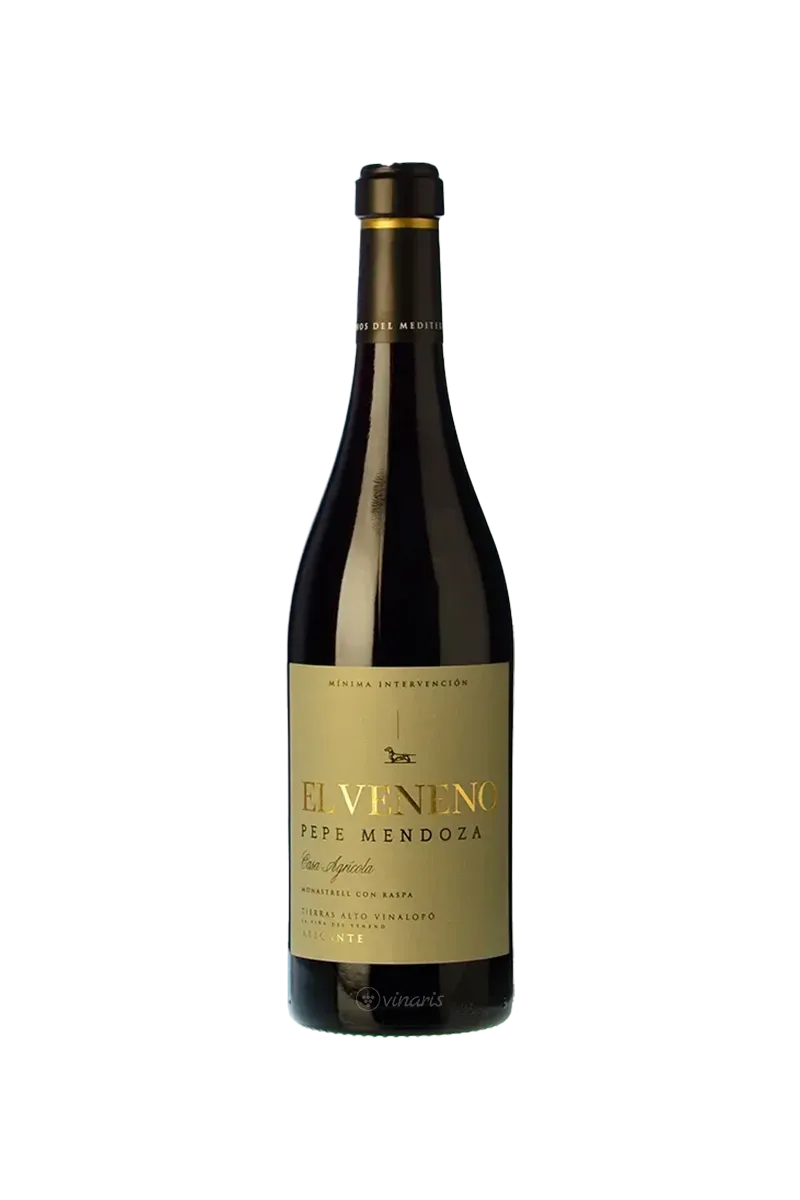
El Veneno is a red wine produced by Pepe Mendoza in the Alicante Denominación de Origen, specifically from the Alto Vinalopó sub-region within the Comunidad Valenciana of Spain. This 2021 vintage is crafted exclusively from Monastrell grapes, reflecting the producer’s commitment to traditional viticulture and winemaking practices in this historic Spanish region.
The vineyards are situated at an altitude of 650 meters, providing a cool climate influence that helps preserve acidity and freshness in the fruit. The soils are described as sandy-limestone, which contributes to the wine’s structure and minerality. With a production limited to 12,000 bottles, El Veneno represents a focused, small-batch approach to winemaking.
In the cellar, the grapes undergo manual and gentle maceration using indigenous yeasts sourced directly from the vineyard. The fermentation process includes 30% whole clusters, adding complexity and aromatic intensity to the final blend. Following fermentation, the wine matures for 12 months in used French oak barrels of 500-liter capacity. This extended aging in neutral wood allows the wine to develop texture and integration without imposing strong oak flavors, letting the character of the Monastrell and terroir shine through.
The wine has received notable acclaim from respected critics. The Guía Peñín awarded it a score of 94, while The Wine Advocate (Parker) and Tim Atkin both gave it a rating of 95. These high scores indicate a wine of significant quality and concentration.
Overall, El Veneno presents as a refined expression of Alicante’s Monastrell, balancing power with elegance. Its sandy-limestone terroir and careful vinification result in a wine that is both structured and approachable, showcasing the potential of Spanish Monastrell when handled with precision and respect for tradition.
Descripción generada por IA con conocimiento WSET. Solo orientativa.
The cellar was raised in 1900 on top of a riurau, the rural structure of Arab origin used in the Marina Alta to dry grapes into raisins. This strip of coast lived off raisins before it lived off wine; the wine came to the same building afterwards.
Pepe Mendoza trained at the family winery, Enrique Mendoza, and has been making wine for more than twenty-five years; in the nineties he worked in Chile, New Zealand and Argentina. He set up Casa Agrícola because he wanted to do something that did not fit the kind of winery he came from: recovering the varieties of the Levante and a dry-farmed agriculture, without the scale or the style of the family house.
He works two zones that barely resemble each other. Inland, the Alto Vinalopó near Villena, with twenty hectares of monastrell, garnacha tintorera and macabeo. On the coast, the Marina Alta, with moscatel, merseguera and giró — a clone of garnacha particular to this strip. The distance is short and the result opposite: inland brings altitude and cold nights; the coast, sea humidity.
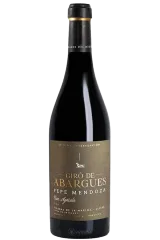
Finca de Abargues is there, in Pla de Lliber: two and a half hectares of bush-trained giró planted in 1943, at 300 metres, on iron-rich clays and limestone stone. Organically and dry-farmed, on terraces. That a vine of that date is still standing in a district that tore out vineyard for other crops is the reason that wine exists at all.
El Veneno comes from the other end: monastrell at 650 metres on sandy-limestone soils, fermented with yeasts from the vineyard itself, with 30% whole bunches and twelve months in used 500-litre barrels. Twelve thousand bottles.
See all wines by Pepe Mendoza Casa Agrícola →