

Free shipping from €90 in Spain Mainland and Balearic Islands | 48-72h

We let you know when a new wine arrives or drops in price.
The cellar was raised in 1900 on top of a riurau, the rural structure of Arab origin used in the Marina Alta to dry grapes into raisins. This strip of coast lived off raisins before it lived off wine; the wine came to the same building afterwards.
Pepe Mendoza trained at the family winery, Enrique Mendoza, and has been making wine for more than twenty-five years; in the nineties he worked in Chile, New Zealand and Argentina. He set up Casa Agrícola because he wanted to do something that did not fit the kind of winery he came from: recovering the varieties of the Levante and a dry-farmed agriculture, without the scale or the style of the family house.
He works two zones that barely resemble each other. Inland, the Alto Vinalopó near Villena, with twenty hectares of monastrell, garnacha tintorera and macabeo. On the coast, the Marina Alta, with moscatel, merseguera and giró — a clone of garnacha particular to this strip. The distance is short and the result opposite: inland brings altitude and cold nights; the coast, sea humidity.
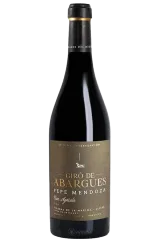
Finca de Abargues is there, in Pla de Lliber: two and a half hectares of bush-trained giró planted in 1943, at 300 metres, on iron-rich clays and limestone stone. Organically and dry-farmed, on terraces. That a vine of that date is still standing in a district that tore out vineyard for other crops is the reason that wine exists at all.
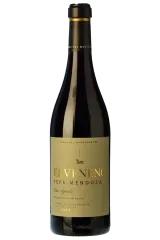
El Veneno comes from the other end: monastrell at 650 metres on sandy-limestone soils, fermented with yeasts from the vineyard itself, with 30% whole bunches and twelve months in used 500-litre barrels. Twelve thousand bottles.