Free shipping from €90 in Spain Mainland and Balearic Islands | 48-72h



 Luis Seabra, DOC Vinho Verde (Minho, Melgaço). Vineyards on granite soils at 50–150 metres altitude. 100% Albariño.
 Grapes are selected and pressed; the must ferments spontaneously with native yeasts in 1,000- and 2,000-litre casks, in contact with the lees and without added sulphur.

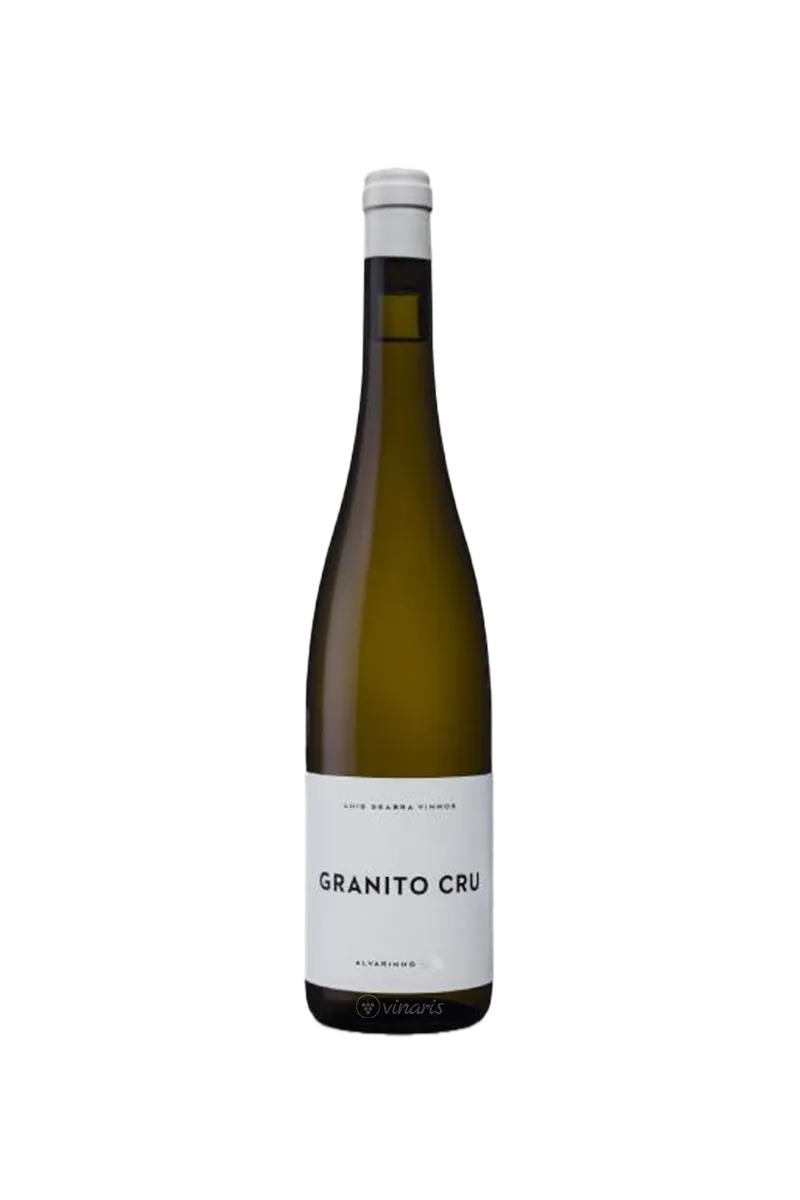
Granito Cru 2022 by Luis Seabra
Luis Seabra’s Granito Cru is a white wine from Portugal’s Vinho Verde region, specifically within the Minho area and the Melgaço subzone. Produced exclusively from Albariño grapes, this vintage represents a focused expression of the variety grown in the northern Portuguese climate.
The vineyards are situated at altitudes between 50 and 150 meters above sea level. The soil composition is predominantly granite, which imparts a distinct mineral character to the fruit. Harvested Albariño grapes are carefully selected before pressing. The winemaking process emphasizes natural intervention; the must undergoes spontaneous fermentation using indigenous yeasts. This fermentation takes place in large foudres holding 1,000 and 2,000 liters. Crucially, the wine remains in contact with its lees throughout this period to add texture and complexity. No sulfur is added during fermentation.
Visually and aromatically, Granito Cru exhibits the typical elegance of Albariño. The granite soils contribute crisp acidity and stony minerality, while the lees contact adds body and depth. The spontaneous fermentation preserves primary fruit characteristics, offering notes of white stone fruits, citrus zest, and floral hints. On the palate, the wine is structured yet approachable, with a clean finish that reflects its low-intervention philosophy.
James Suckling awarded this wine a score of 96, highlighting its quality and precision. This rating underscores the success of Seabra’s meticulous approach to viticulture and vinification in Melgaço.
Overall, Granito Cru 2022 is a refined white wine that balances power with finesse. It stands as a testament to the potential of Albariño when grown in granite soils and handled with minimal interference. The combination of granite soils, native yeasts, and lees contact creates a wine that is both distinctive and representative of its terroir.
Descripción generada por IA con conocimiento WSET. Solo orientativa.
Luis Seabra does not come from a wine family: he was born into a coffee-farming family in Angola and returned to Portugal in the 1970s, though his father's family came from the Douro. He studied viticulture at the university of Vila Real, in the heart of the Alto Douro, and made his name as Niepoort's winemaker before leaving in 2013 to set up on his own.
His stated aim on going independent was blunt: to make the wines he wanted to make, without thinking about what the market wants. In practice that means native-yeast fermentations, one hundred per cent whole bunches for the reds and macerations of up to thirty days with gentle extraction.
The names of his ranges are a map of soils, and they play on two meanings: in Portuguese cru means raw, and in wine vocabulary it means the site. Granito Cru works through the granite areas variety by variety; Xisto Ilimitado is his village wine, a survey of schist soils across several subzones; and Xisto Cru are single-soil field blends from the best parcels.
He works in three regions at once —Douro, Vinho Verde and Dão— which lets him apply the same thinking across different geological materials.
See all wines by Luis Seabra →