-
France
-
Burgundy
- Chablis
- Chablis 1er Cru
- Volnay
- Mercurey 1er Cru
- Hautes Côtes de Nuits
- Montagny 1er Cru
- Recrue des Sens
- Volnay 1er Cru
- Maranges 1er Cru
- Chitry
- Crémant de Bourgogne
- Santenay 1er Cru
- Gevrey-Chambertin
- Petit Chablis
- Saint-Aubin 1er Cru
- Pernand-Vergelesses 1er Cru
- Beaune 1er Cru
- Fixin 1er Cru
- Santenay
- Savigny Les Beaune
- Chorey-Lès-Beaune
- Marsannay
- Rully
- Fixin
- Passetoutgrain
- Bordeaux
- Champagne
- Jura
- Rhône
- Alsace
- Loire
- Luberon
- Languedoc-Roussillon
- Sud-Ouest
- Beaujolais
-
Burgundy
-
Spain
- Vintage
- Sale On Sale
-
All
-
France
-
Burgundy
- Chablis
- Chablis 1er Cru
- Volnay
- Mercurey 1er Cru
- Hautes Côtes de Nuits
- Montagny 1er Cru
- Recrue des Sens
- Volnay 1er Cru
- Maranges 1er Cru
- Chitry
- Crémant de Bourgogne
- Santenay 1er Cru
- Gevrey-Chambertin
- Petit Chablis
- Saint-Aubin 1er Cru
- Pernand-Vergelesses 1er Cru
- Beaune 1er Cru
- Fixin 1er Cru
- Santenay
- Savigny Les Beaune
- Chorey-Lès-Beaune
- Marsannay
- Rully
- Fixin
- Passetoutgrain
- Bordeaux
- Champagne
- Jura
- Rhône
- Alsace
- Loire
- Luberon
- Languedoc-Roussillon
- Sud-Ouest
- Beaujolais
-
Burgundy
-
Spain
- Italy
- Portugal
- Germany
- Israel
- Hungary
- South Africa
- United States
- Argentina
- Chile
- Austria
- Sweden
- Morocco
- New Zealand
-
France
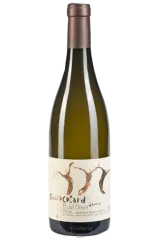
Clos de l'Ecotard
We let you know when a new wine arrives or drops in price.
Michel Chevré was vineyard manager at Domaine des Roches Neuves, where he led the conversion to organic farming. In 2011 he started his own place in Courchamps, south of Saumur, and by 2017 the family estate was up and running, with his son Thibaud in it.
Thibaud runs the domaine today and Michel stays on as its oenologist.
There are 14.62 hectares under organic certification, at the western edge of the Paris Basin, where limestone rules. Some plots are ploughed by horse and they have planted fruit trees among the vines.
Clos de l'Ecotard comes from a two-hectare parcel of chenin blanc planted between 2009 and 2013, on clay-limestone with outcrops of tuffeau, at 8,000 vines per hectare.
It is pressed slowly and ferments with indigenous yeasts: it starts in stainless steel and moves to foudre halfway through, with no malolactic fermentation. It ages nine to ten months on fine lees in foudres and sandstone jars, with very little new oak and measured bâtonnage. It is bottled in spring.
Vinos de Clos de l'Ecotard