
Free shipping from €90 in Spain Mainland and Balearic Islands | 48-72h

We let you know when a new wine arrives or drops in price.
In the 1970s the Val do Salnés was pulling up its old red vines. Albariño was more productive and in fashion, and the local varieties — caíño, espadeiro, loureiro — were in the way. Francisco Méndez, a blacksmith in Meaño, did the opposite: around 1980 he planted them, against everyone's advice. Eight years later he was among those who got the Rías Baixas denomination off the ground.
That trade ended up naming two wineries. The village knew the family as the blacksmith's — ferreiro in Galician — which gives both his son Gerardo Méndez's house, Do Ferreiro, and his grandson's: Forjas do Salnés.
That grandson is Rodrigo Méndez, fifth generation, who went into the vineyard at twelve alongside his grandfather and set up his own winery in a garage in 2005. He set out to do something Rías Baixas did not do: make red wine in a region defined by its whites. He sought out Raúl Pérez to manage it — he still advises the house — and the vines his grandfather had planted against the tide turned out to be the raw material. The reds are bottled as Goliardo, from caíño tinto, loureiro, sousón and espadeiro.
Twelve hectares across Meaño, Sanxenxo and Barro, on granite and sand, farmed organically. The method looks backwards on purpose: yeasts from the vineyard itself, sulphur kept to a minimum, foot-treading, skin contact on the whites too, and ageing in large foudres and in chestnut — formats that predate the Bordeaux barrel.
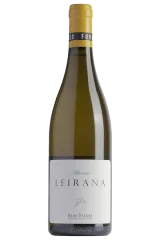
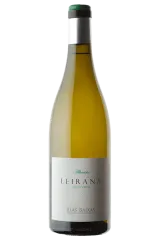
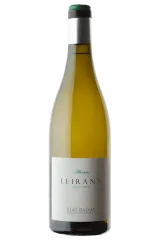
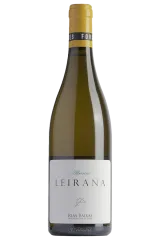
Finca Genoveva, in Barro, holds albariño and red caíño around one hundred and eighty years old on granite. It yields a single-vineyard white: spontaneous fermentation in foudre without temperature control and twelve months on its lees in fifth- and seventh-fill foudres. Five thousand bottles. Leirana, blended from several parcels of forty- to seventy-year-old vines, spends eight months on lees with no bâtonnage and no malolactic.