

Free shipping from €90 in Spain Mainland and Balearic Islands | 48-72h


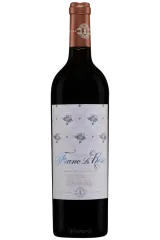
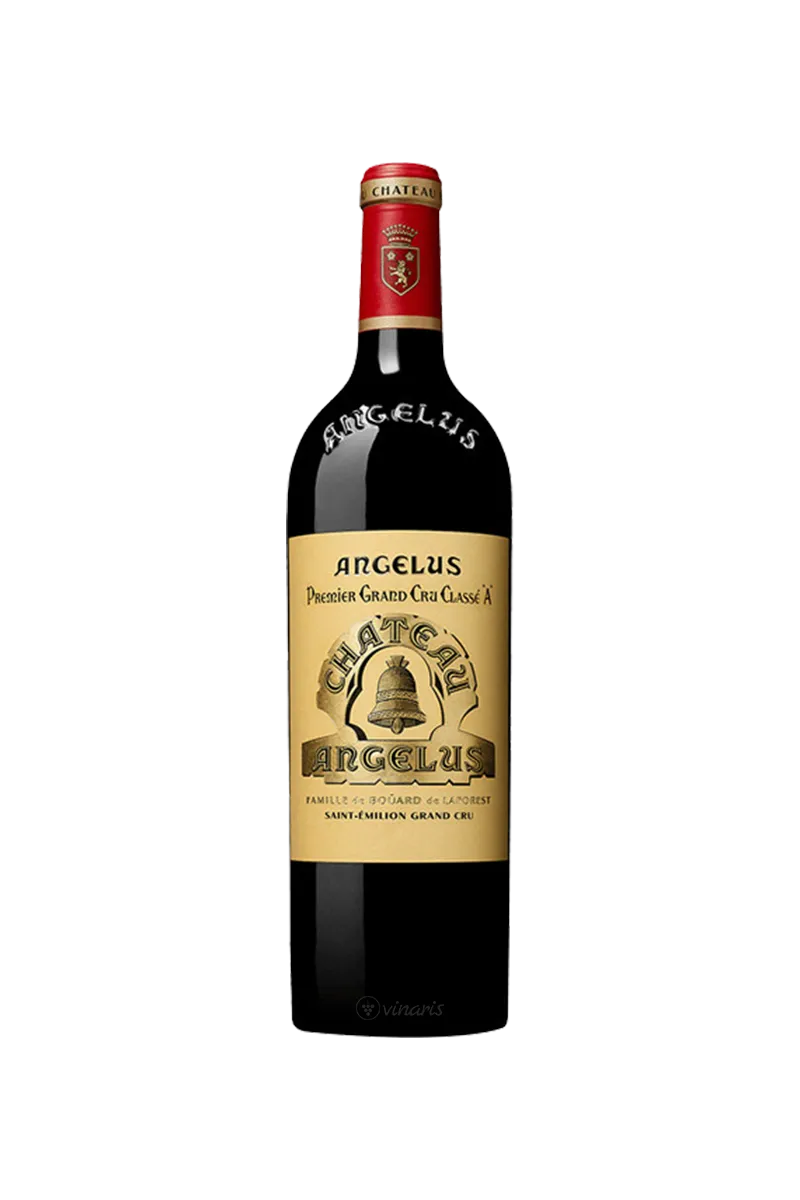
 Château Angélus, AOP Saint-Émilion Grand Cru, Bordeaux. In 2010 it was a Premier Grand Cru Classé B; it was promoted to A in 2012 and withdrew from the classification in 2022. 27 hectares on the southern slope of Saint-Émilion, at the famous foot of the slope. Clay-limestone soils at the top; clay-sand-limestone on the slope. 6,500–8,500 vines/ha depending on soil; average vine age 38 years. 55% Merlot, 45% Cabernet Franc.
 Vinification differentiated by variety: wooden and stainless steel vats for Merlots; concrete vats for Cabernet Franc. Pre-fermentation cold maceration at 8°C in selected vats for 4 days to 1 week. Alcoholic fermentation up to 28°C. Post-fermentation maceration at 28–30°C for 1–3 weeks. Aged 20–22 months: in new fine-grain French oak barrels with medium toast for Merlots and part of the Cabernet Franc; in 30-hl foudres for selected Cabernet Franc lots chosen for the particular subtlety of their aromas.
El Château Angélus 2010 es un vino tinto de la región de Burdeos, Francia, procedente de la denominación Saint-Émilion Grand Cru. Château Angélus ascendió a Premier Grand Cru Classé A en la clasificación de 2012 y salió de ella en 2022.
La finca abarca 27 hectáreas situadas en la ladera sur de Saint-Émilion, al pie de la ladera. El suelo presenta una composición arcilloso-calcárea en la parte alta y arcilloso-arenoso-calcárea en la ladera. La densidad de plantación oscila entre 6.500 y 8.500 cepas por hectárea, con una edad media de las viñas de 38 años. La composición de la uva es un 55% de Merlot y un 45% de Cabernet Franc.
La vinificación se realiza de forma diferenciada según la variedad: los Merlots se elaboran en cubas de madera y acero inoxidable, mientras que los Cabernets Franc lo hacen en cubas de hormigón. El proceso incluye una maceración prefermentativa a 8°C en algunas cubas durante 4 días a una semana, seguida de una fermentación alcohólica que alcanza los 28°C. La maceración posfermentativa se mantiene a temperaturas de 28-30°C durante 1 a 3 semanas. Para la crianza, se emplean 20-22 meses en barricas nuevas de roble francés de grano fino y tostado medio para los Merlots y parte de los Cabernets Franc. Los Cabernets Franc seleccionados por la sutileza de sus aromas maduran en foudres de 30 hectolitros.
En cuanto a su valoración crítica, el 2010 Angélus ha obtenido una puntuación de 99+ puntos de The Wine Advocate y 99 puntos por James Suckling. Las notas de The Wine Advocate describen el vino como una "bomba atómica" de aromas frutales intensos, con notas de zarzamoras, ciruelas cocidas, licor de casis y matices de alquitrán, anís estrellado, moca y tabaco. La estructura se define como rica, potente y con taninos firmes y frescos, y en su cata recomendaba esperar aún de 3 a 5 años antes de abrirlo y beberlo a lo largo de más de 40 años.
PARKER: 99+
The deep garnet colored 2010 Angélus is an atomic bomb of powerful fruit scents from the moment the cork is pulled! Boysenberries, stewed plums, blackcurrant cordial and black raspberries all burst from the glass, followed up by nuances of tar, star anise, mocha and unsmoked cigars plus a waft of camphor. The big, rich, full-bodied palate is built like a brick house, featuring super firm, ripe, grainy tannins and tons of freshness to support the taut, muscular black fruits, finishing very long and savory. It's starting to enter its drinking window, but based on this tasting, I would recommend waiting another 3-5 years before broaching and then drinking it over the next 40+ years.
The de Boüard de Laforest family has owned the property since 1782. Stéphanie de Boüard-Rivoal, who runs it today, is the eighth generation.
The name comes from the Angelus, the prayer that marked the day with the ringing of a bell. The label has always carried a bell, and in time the bell became the emblem of the house.
It was made Grand Cru Classé in 1955 and in September 2012 was raised to Premier Grand Cru Classé A, the top rank of Saint-Émilion.
And here something needs explaining that old labels do not say. In January 2022 Angélus withdrew from the Saint-Émilion classification. It was not alone: Cheval Blanc and Ausone had done so in July 2021. Of the four Premier Grand Cru Classé A estates recognised in the 2012 classification, three left and only Château Pavie remains within it. The house argued that the system had become a source of antagonism and instability.
In other words: a bottle from before 2022 carries on its label a mention the property no longer puts itself forward for. The wine is the same; what changed was the ranking.
A little over forty hectares, of which some twenty-seven held the A classification. They are planted with 50% merlot, 47% cabernet franc and 3% cabernet sauvignon: that share of cabernet franc is very high even for Saint-Émilion.
See all wines by Château Angélus →