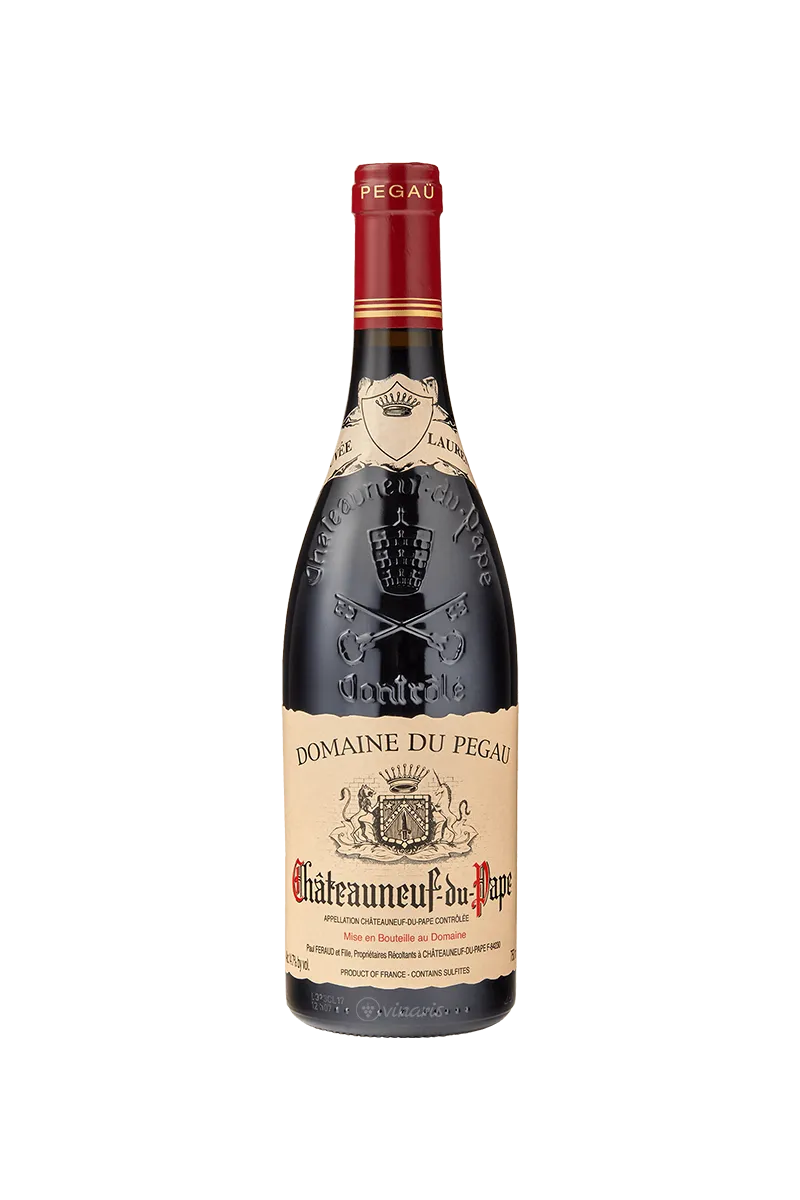




 Soils covered with pebbles, clay and a mix of limestone, iron and sand. 80% Grenache, 6% Syrah, 4% Mourvèdre, 10% other varieties.
 Manual harvest without destemming. Native yeasts. Spontaneous fermentation in concrete tanks, 12-day maceration. Aged 4 years in old 50-hL oak foudres.

Wine Identification
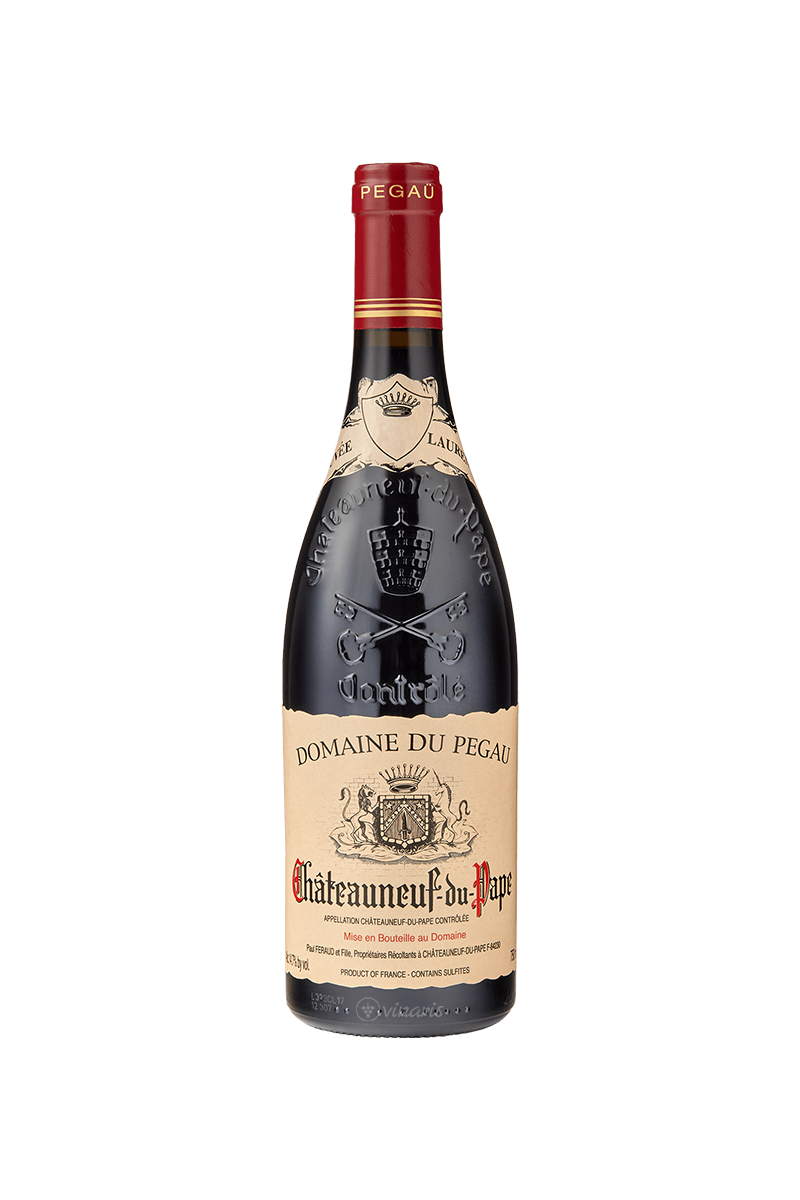
The Domaine du Pegau Cuvée Laurence is a red wine from the 2019 vintage. Produced by the renowned estate in Châteauneuf-du-Pape, located within the Rhône Valley of France, this cuvée represents one of the winery’s most celebrated offerings.
Origin and Winemaking
The vineyards are characterized by soils composed of pebbles, clay, and a mixture of limestone with iron and sand. The wine is a blend dominated by Grenache at 80%, supported by 6% Syrah and 4% Mourvèdre, with the remaining 10% attributed to other varieties. Harvesting is conducted manually without destemming to preserve the integrity of the grapes. Fermentation is spontaneous, with native yeasts, in concrete vats. The must undergoes a maceration period of twelve days before being transferred for aging. The wine matures for four years in old 50-hectoliter oak foudres, which impart minimal oak influence while allowing the fruit to develop complexity through slow, gentle oxygen exchange.
Tasting Profile
The composition suggests a full-bodied red with significant structure. The high proportion of Grenache typically contributes ripe red fruit character and body, while the Syrah and Mourvèdre add depth, spice, and tannic backbone. The extended aging in large, neutral oak foudres likely emphasizes the wine’s natural terroir expression—highlighting the mineral notes from the pebbly and limestone soils—without masking the primary fruit flavors with woody aromas.
Critical Reception
The 2019 vintage has received exceptional acclaim from major critics:
The Wine Advocate: 98 points
James Suckling: 98 points
Overall Character
The Domaine du Pegau Cuvée Laurence 2019 is a benchmark Châteauneuf-du-Pape, defined by its traditional vinification methods and extended barrel aging. With 98-point scores from two leading critics, it stands as a powerful wine that showcases the classic style of the southern Rhône with precision and elegance.
Descripción generada por IA con conocimiento WSET. Solo orientativa.
The Féraud family has cultivated vines in Châteauneuf-du-Pape since 1670, though for three centuries all production went to négociants. It was Paul Féraud who in 1964 bottled wine under his own name for the first time. His daughter Laurence returned from studying in Paris in 1987, persuaded her father to formalise the project, and together they registered the name Pégau that same year — taken from the ancient 14th-century Provençal earthenware jug discovered during excavations of the Avignon Papal Palace, an image that roots the estate in the papal era that gave Châteauneuf-du-Pape its name. Laurence has directed the domaine since the 2005 harvest.
The 23 hectares in the appellation are spread across eleven parcels in Courthézon, Bédarrides and Châteauneuf, with an average vine age of over 60 years. The estate's finest holding is La Crau, the plateau of siliceous sand, red clay and galets roulés — the Quaternary river stones carried down from the Alps by the ancient Rhône — where the oldest vines, planted in 1902 and now over 120 years old, are the exclusive source of the Cuvée da Capo. The domaine cultivates all 13 grape varieties authorized in the appellation; Grenache accounts for around 80% of red plantings.
The winemaking is unchanged since Paul's time: 100% whole-cluster fermentation, never destemmed, indigenous yeasts, fermentation in concrete without temperature control, 12-day maceration, and ageing in old 50-hectolitre oak foudres — some nearly 90 years old, Russian oak — with no new oak, no fining and no filtration. Robert Parker described these as "wines made with no concession to modern-day tastes, of the sort made in the forties and fifties." The Cuvée Réservée ages 24 months; the Cuvée Laurence is the same base wine with 40 months of total ageing — an approximation of how the Réservée will taste after a decade in bottle.
See all wines by Domaine du Pégau →