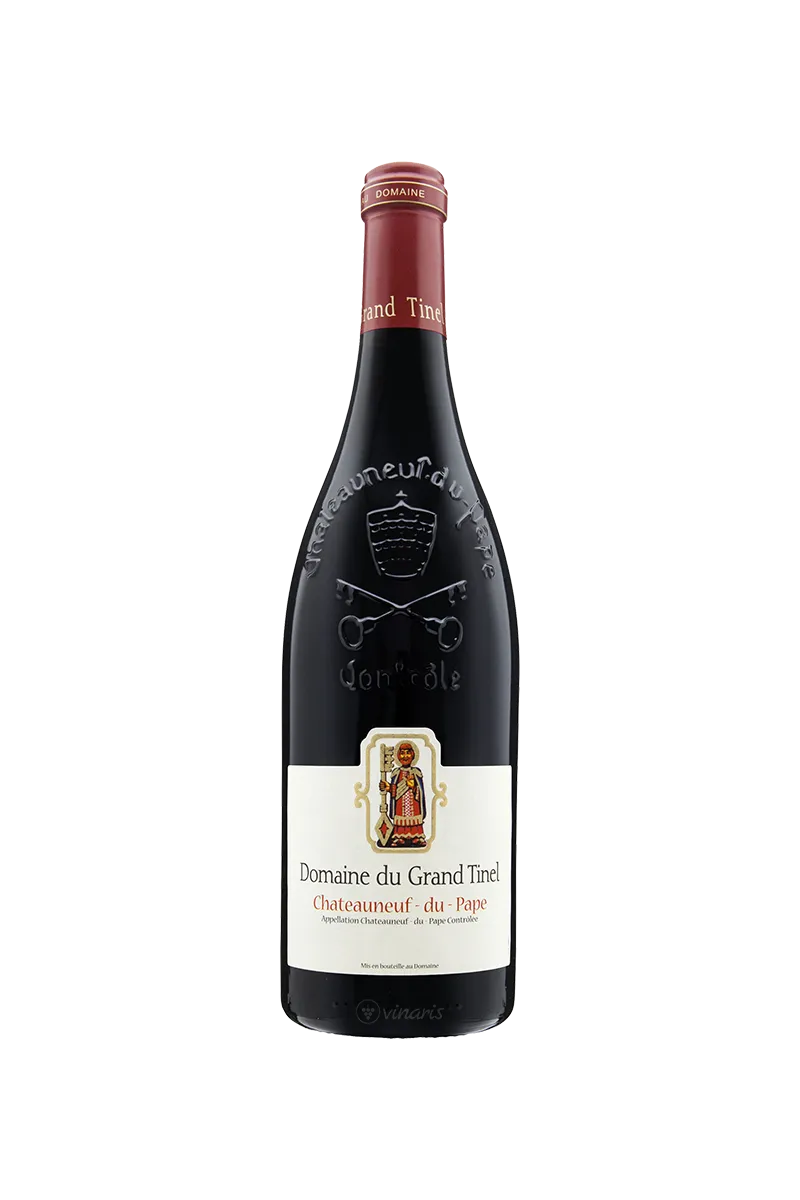




 The Jeune-Establet family makes this Châteauneuf-du-Pape with the oenologist Philippe Cambie (who died in 2021) as consultant. Soils of galets roulés, sand and clay. Blend of Grenache (83%), Syrah, Mourvèdre and Counoise. Century-old vines.
 Hand-harvested and fully destemmed. Aged 12 to 16 months in old oak foudres.
Wine Identification
The Domaine du Grand Tinel Châteauneuf-du-Pape is a red wine from the 2016 vintage, produced by the Jeune-Establet family in France’s Rhône region. The appellation is strictly defined as Châteauneuf-du-Pape, located within the broader Rhône valley.
Origin and Winemaking
This estate vinifies its grapes with the guidance of the late Philippe Cambie. The vineyards feature a diverse terroir composed of galets roulés (large rounded stones), sands, and clays. The vines are described as centenarian, contributing to the depth of the fruit. Harvesting is conducted manually, followed by complete destemming during vinification.
The blend relies heavily on Grenache, which constitutes 83% of the cuvée. It is supported by Syrah, Mourvèdre, and Counoise. The wine undergoes an ageing period of 12 to 16 months in old oak foudres.
Tasting Profile
The 2016 vintage is characterized by a medium to full body with silky tannins. On the nose, it exhibits notes of sun-warmed stones, black cherries, and raspberries. The profile avoids over-ripeness or sur-maturité, maintaining a balance that reflects the generosity of the year. The finish is lingering, revealing shades of dried herbs and licorice.
Critical Reception
The Wine Advocate (Parker) awarded this wine 91 points. The review described it as an 80-20 blend of Grenache and Syrah raised in a mix of different-sized wood and tanks. He highlighted the wine's reflection of the vintage’s sun and generosity, noting its structured yet approachable nature.
Descripción generada por IA con conocimiento WSET. Solo orientativa.
PARKER: 91
The 2016 Chateauneuf du Pape is an 80-20 blend of Grenache and Syrah, raised in a mix of different-sized wood and tanks. One the nose, it nicely reflects the sun and generosity of the year, showing hints of sun-warmed stones, black cherries and raspberries, yet never tips over into sur-maturité. It's medium to full-bodied, with silky tannins and a lingering finish that picks up shadings of dried herbs and licorice. It should drink well for a decade.
Alexis Establet bought the first vines in 1846. The house was not called Grand Tinel until 1972: before that it was Petit Gardiole, and before that it went by another name still.
The one that stuck has a nice twist. Tinel was the word used in Italy and the south of France for the refectory, the common dining hall. It comes from late Latin tinellum, and that from tina: vat. The name ends up pointing back to the vessel the wine ferments in.
In the 1960s Elie Jeune married into the family and shaped the winery as it stands. His children Christophe, Béatrice and Isabelle run it today.
Fifty-six hectares of vines in Châteauneuf-du-Pape, on an unusually mixed set of soils — sand, clay, limestone and the galets roulés — with vines over a century old and organic farming.
See all wines by Domaine du Grand Tinel →