-
France
-
Burgundy
- Chablis
- Chablis 1er Cru
- Volnay
- Mercurey 1er Cru
- Hautes Côtes de Nuits
- Montagny 1er Cru
- Recrue des Sens
- Volnay 1er Cru
- Maranges 1er Cru
- Chitry
- Crémant de Bourgogne
- Santenay 1er Cru
- Gevrey-Chambertin
- Petit Chablis
- Saint-Aubin 1er Cru
- Pernand-Vergelesses 1er Cru
- Beaune 1er Cru
- Fixin 1er Cru
- Santenay
- Savigny Les Beaune
- Chorey-Lès-Beaune
- Marsannay
- Rully
- Fixin
- Passetoutgrain
- Bordeaux
- Champagne
- Jura
- Rhône
- Alsace
- Loire
- Luberon
- Languedoc-Roussillon
- Sud-Ouest
- Beaujolais
-
Burgundy
-
Spain
- Millésime
- Sale On Sale
-
All
-
France
-
Burgundy
- Chablis
- Chablis 1er Cru
- Volnay
- Mercurey 1er Cru
- Hautes Côtes de Nuits
- Montagny 1er Cru
- Recrue des Sens
- Volnay 1er Cru
- Maranges 1er Cru
- Chitry
- Crémant de Bourgogne
- Santenay 1er Cru
- Gevrey-Chambertin
- Petit Chablis
- Saint-Aubin 1er Cru
- Pernand-Vergelesses 1er Cru
- Beaune 1er Cru
- Fixin 1er Cru
- Santenay
- Savigny Les Beaune
- Chorey-Lès-Beaune
- Marsannay
- Rully
- Fixin
- Passetoutgrain
- Bordeaux
- Champagne
- Jura
- Rhône
- Alsace
- Loire
- Luberon
- Languedoc-Roussillon
- Sud-Ouest
- Beaujolais
-
Burgundy
-
Spain
- Italy
- Portugal
- Germany
- Israel
- Hungary
- South Africa
- United States
- Argentina
- Chile
- Austria
- Sweden
- Morocco
- New Zealand
-
France


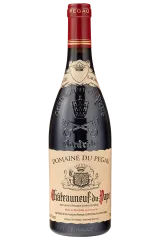
Domaine du Pégau
We let you know when a new wine arrives or drops in price.
The Féraud family has cultivated vines in Châteauneuf-du-Pape since 1670, though for three centuries all production went to négociants. It was Paul Féraud who in 1964 bottled wine under his own name for the first time. His daughter Laurence returned from studying in Paris in 1987, persuaded her father to formalise the project, and together they registered the name Pégau that same year — taken from the ancient 14th-century Provençal earthenware jug discovered during excavations of the Avignon Papal Palace, an image that roots the estate in the papal era that gave Châteauneuf-du-Pape its name. Laurence has directed the domaine since the 2005 harvest.
The 23 hectares in the appellation are spread across eleven parcels in Courthézon, Bédarrides and Châteauneuf, with an average vine age of over 60 years. The estate's finest holding is La Crau, the plateau of siliceous sand, red clay and galets roulés — the Quaternary river stones carried down from the Alps by the ancient Rhône — where the oldest vines, planted in 1902 and now over 120 years old, are the exclusive source of the Cuvée da Capo. The domaine cultivates all 13 grape varieties authorized in the appellation; Grenache accounts for around 80% of red plantings.
The winemaking is unchanged since Paul's time: 100% whole-cluster fermentation, never destemmed, indigenous yeasts, fermentation in concrete without temperature control, 12-day maceration, and ageing in old 50-hectolitre oak foudres — some nearly 90 years old, Russian oak — with no new oak, no fining and no filtration. Robert Parker described these as "wines made with no concession to modern-day tastes, of the sort made in the forties and fifties." The Cuvée Réservée ages 24 months; the Cuvée Laurence is the same base wine with 40 months of total ageing — an approximation of how the Réservée will taste after a decade in bottle. The domaine has accumulated six 100-point scores from Wine Advocate, all from the Cuvée da Capo.
Vinos de Domaine du Pégau