

Free shipping from €90 in Spain Mainland and Balearic Islands | 48-72h

We let you know when a new wine arrives or drops in price.
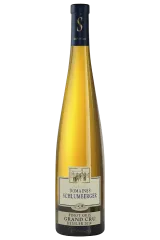
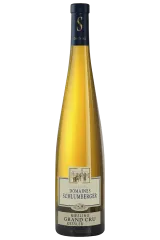
Domaines Schlumberger has been run by the same family for seven unbroken generations in Guebwiller, in southern Alsace. Nicolas Schlumberger acquired the estate's first parcels in 1810 — lands from the Abbey of Murbach, hence the name Les Princes Abbés for the entry-level range. From 1911 onward, Ernest Schlumberger rebuilt a vineyard devastated by phylloxera, reassembling over 2,500 abandoned plots and raising the 50 kilometres of dry-stone walls that hold the terraced slopes — some as steep as 60% — still defining the landscape today. Thomas and Séverine Schlumberger now lead the seventh generation.
At 140 hectares, Schlumberger is Alsace's largest domaine and its biggest Grand Cru holder, with some 70 classified hectares across Guebwiller's four Grands Crus. Kitterlé (20 ha, 60% slopes, Vosges sandstone, three aspects) is the most dramatic; Kessler (22 ha, documented since 1394) forms a natural bowl that produces slow, even ripening; Saering (20 ha) has Jurassic marine strata that give its Rieslings a precise saline minerality; Spiegel, on clay-sand soils, yields exceptional Pinot Gris in great vintages. The dry, sunny microclimate of Guebwiller, sheltered by the Vosges, allows full ripening while cool nights preserve acidity.
The winemaking is resolutely non-interventionist: spontaneous fermentations lasting up to twelve weeks in 120 old oak casks chosen because they impart no wood flavour; eight to nine months on fine lees; twelve to eighteen months in tank before bottling. Viticulture is fully sustainable, with 30 hectares under biodynamic management since 2006. The Riesling Grand Cru Kitterlé scored 96 points from Decanter (2022) and 96 from James Suckling (2019); the Clos Saint-Léger, a monopole within Kitterlé since its first vintage in 2017, earned 97 points from James Suckling and 96 from Vinous. At the sweet wine apex, the Cuvée Anne — a Sélection de Grains Nobles from Gewurztraminer — is the estate's iconic wine, produced only in exceptional years.