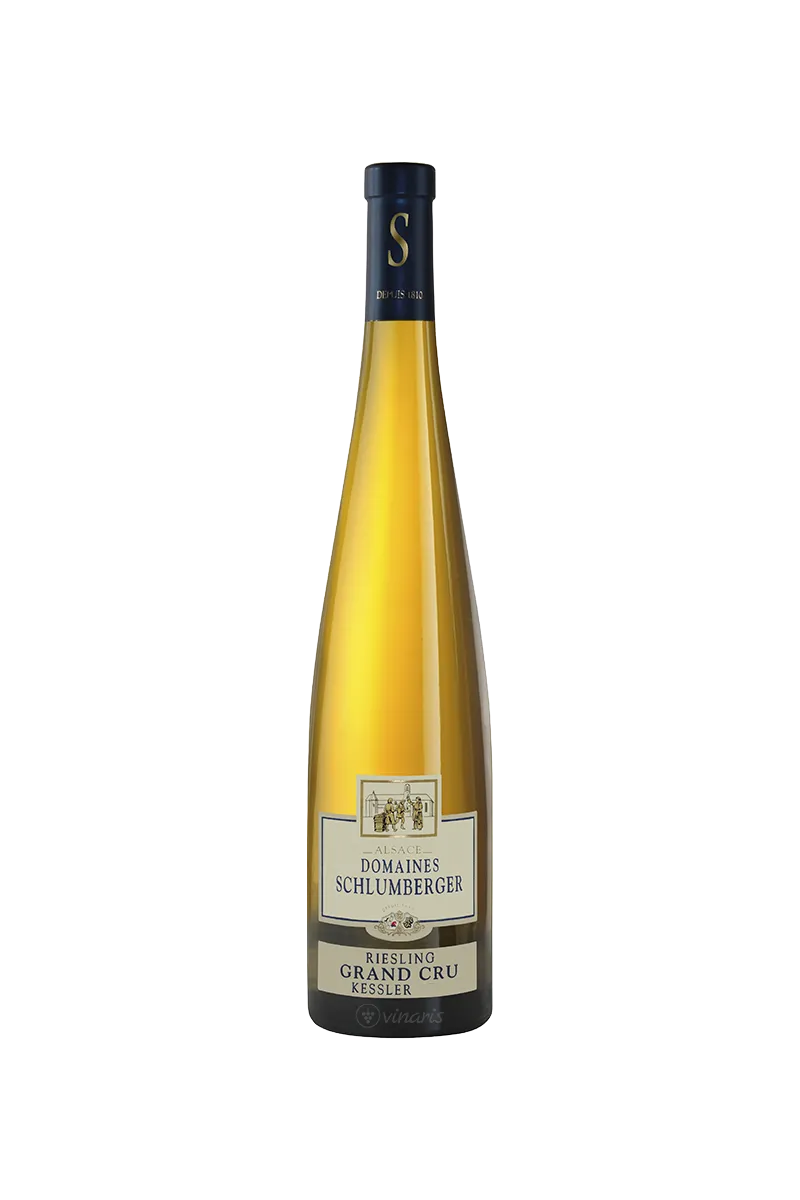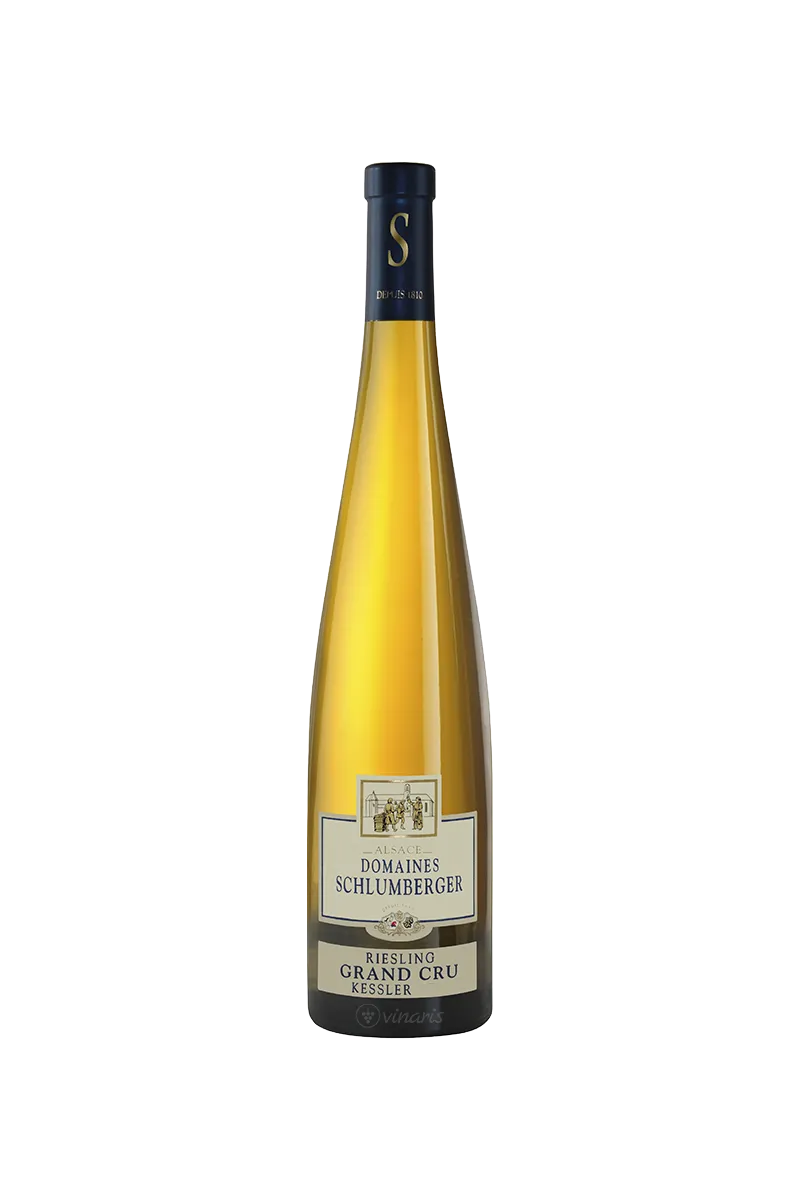

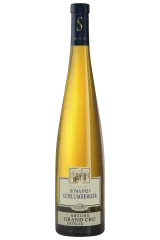



 Domaines Schlumberger, Alsace Grand Cru Kessler. Sandstone soils; valley facing east-southeast, sheltered from north winds and cold air streams from the Guebwiller valley. A natural extension of Grand Cru Kitterle: reddish subsoils over Vosgean sandstone bedrock; at its base, a limestone outcrop results in clay soils. 100% Riesling.
 Hand-harvested. Whole-grape pressing with static racking. Fermentation in temperature-controlled vats for 1 to 4 months. Aged on fine lees for 8 months.

Wine Identification
The Domaines Schlumberger Riesling Kessler 2018 is a white wine from Alsace, France. Produced by the renowned Domaine Schlumberger, this vintage hails from the prestigious Kessler Grand Cru appellation. The wine is crafted exclusively from Riesling grapes, reflecting the house’s dedication to this signature variety of the region.
Origin and Winemaking
The vineyards are situated in a valley oriented toward the east-southeast, which provides natural protection against northern winds and cold air currents flowing down the Guebwiller valley. The terroir is characterized by sandstone soils, with a reddish subsoil overlying Vosges sandstone. At the base of the slope, limestone outcrops generate clayey soils, contributing to the complexity of the wine. This site is considered a natural extension of the neighboring Grand Cru Kitterle.
Vinification begins with manual harvesting to ensure optimal grape quality. The grapes undergo whole-cluster pressing followed by static settling. Fermentation takes place in temperature-controlled vats over a period ranging from one to four months. Following fermentation, the wine rests on fine lees for eight months, a process that adds texture and depth to the final blend.
Tasting Profile and Character
The winemaking approach suggests a structured and complex Riesling. The extended contact with fine lees typically contributes to a creamy mouthfeel and enhanced aromatic persistence. The sandstone and limestone soils of the Kessler Grand Cru generally impart mineral precision and elegance to the wine’s profile.
Critical Reception
James Suckling awarded this wine a score of 94, indicating high critical acclaim for this particular vintage.
Overall Character
The Schlumberger Riesling Kessler 2018 represents a classic expression of Alsace Grand Cru winemaking. Through careful vinification and aging on lees, it aims to showcase the distinct mineral character of its sandstone and limestone terroir, supported by the protective microclimate of its eastern-facing slopes.
Descripción generada por IA con conocimiento WSET. Solo orientativa.
vinaris: 93
Delicious Riesling Grand Cru, transmits seriousness, complex on the nose and very fresh on the palate. Beautiful vintage 2018 in Alsace, I think that since 2014 we did not have a similar one. Domain to follow.
Domaines Schlumberger has been run by the same family for seven unbroken generations in Guebwiller, in southern Alsace. Nicolas Schlumberger acquired the estate's first parcels in 1810 — lands from the Abbey of Murbach, hence the name Les Princes Abbés for the entry-level range. From 1911 onward, Ernest Schlumberger rebuilt a vineyard devastated by phylloxera, reassembling over 2,500 abandoned plots and raising the 50 kilometres of dry-stone walls that hold the terraced slopes — some as steep as 60% — still defining the landscape today. Thomas and Séverine Schlumberger now lead the seventh generation.
At 140 hectares, Schlumberger is Alsace's largest domaine and its biggest Grand Cru holder, with some 70 classified hectares across Guebwiller's four Grands Crus. Kitterlé (20 ha, 60% slopes, Vosges sandstone, three aspects) is the most dramatic; Kessler (22 ha, documented since 1394) forms a natural bowl that produces slow, even ripening; Saering (20 ha) has Jurassic marine strata that give its Rieslings a precise saline minerality; Spiegel, on clay-sand soils, yields exceptional Pinot Gris in great vintages. The dry, sunny microclimate of Guebwiller, sheltered by the Vosges, allows full ripening while cool nights preserve acidity.
The winemaking is resolutely non-interventionist: spontaneous fermentations lasting up to twelve weeks in 120 old oak casks chosen because they impart no wood flavour; eight to nine months on fine lees; twelve to eighteen months in tank before bottling. Viticulture is fully sustainable, with 30 hectares under biodynamic management since 2006. The Riesling Grand Cru Kitterlé scored 96 points from Decanter (2022) and 96 from James Suckling (2019); the Clos Saint-Léger, a monopole within Kitterlé since its first vintage in 2017, earned 97 points from James Suckling and 96 from Vinous. At the sweet wine apex, the Cuvée Anne — a Sélection de Grains Nobles from Gewurztraminer — is the estate's iconic wine, produced only in exceptional years.
See all wines by Domaines Schlumberger →