Free shipping from €90 in Spain Mainland and Balearic Islands | 48-72h



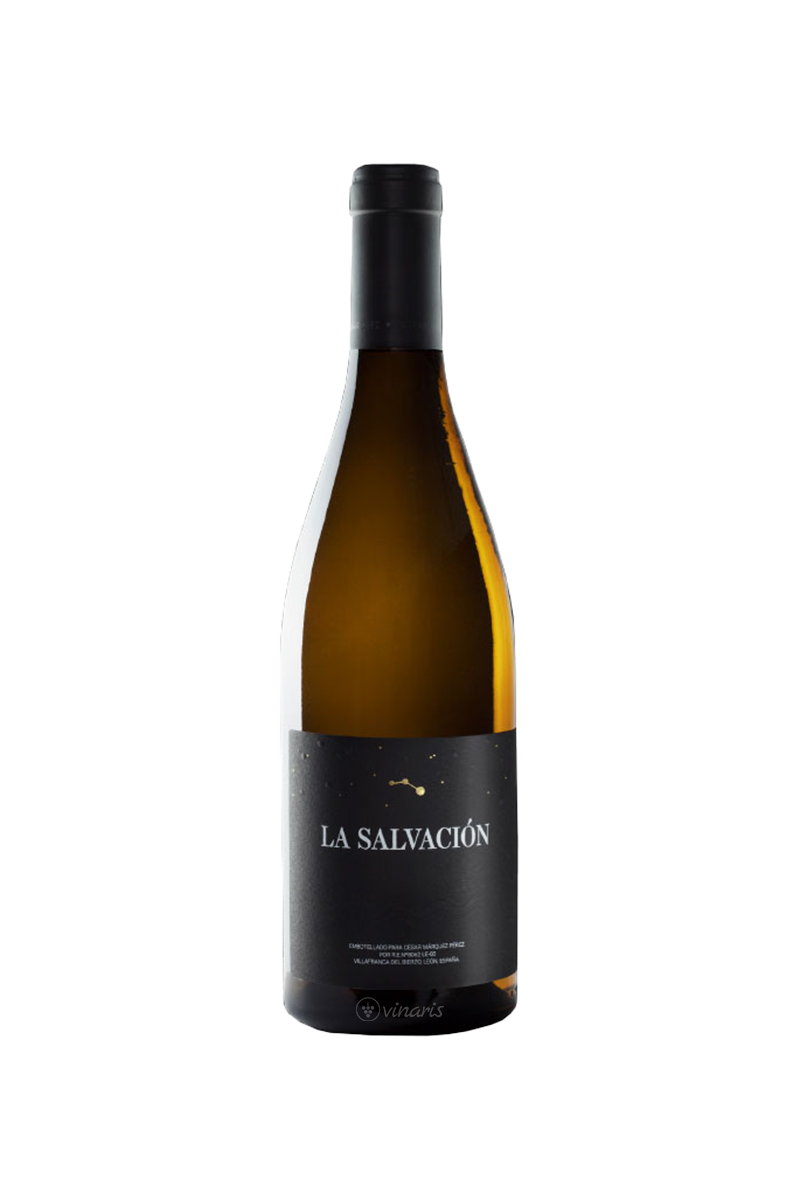
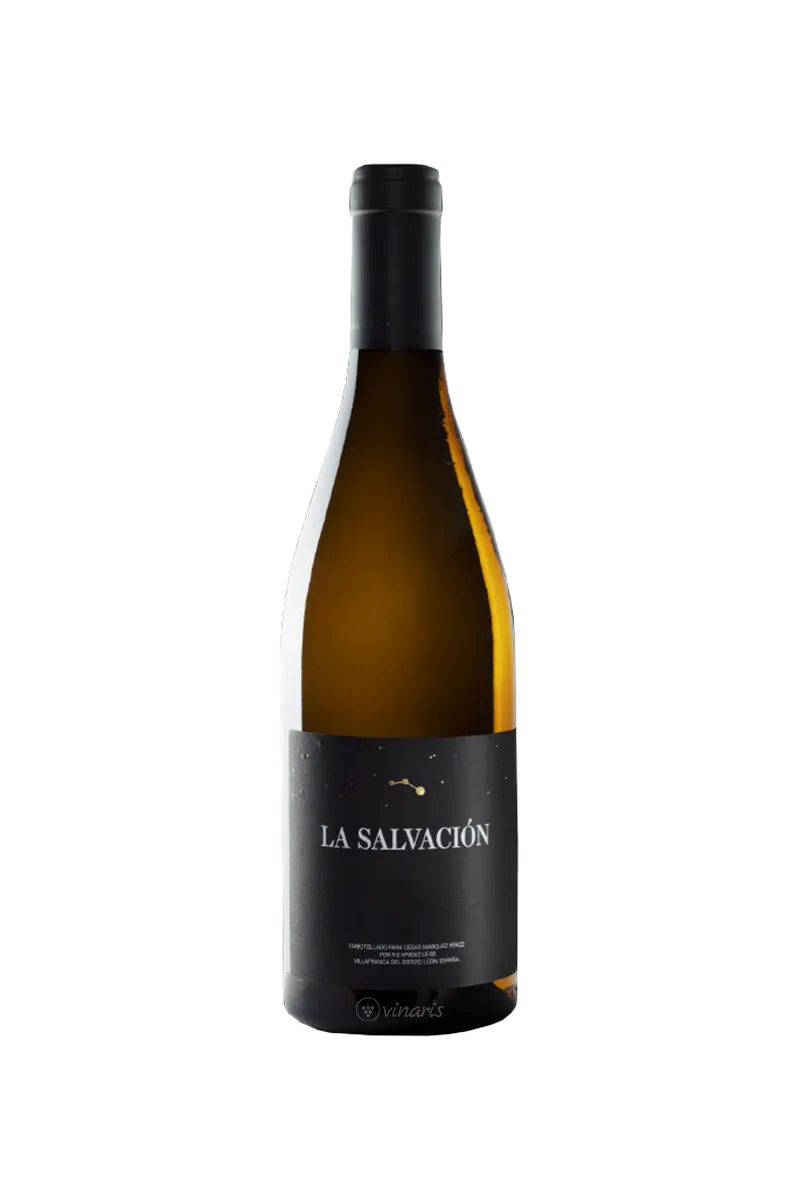
 Three centenarian parcels: one in the municipality of Villafranca del Bierzo, another in Arganza in the north of the region at 650 metres altitude; and a new parcel in San Clemente, north-facing at 710 metres, with clay and sandy soils. 100% Godello.
 Manual harvest. Grapes are destemmed and pressed, then settled for 24 hours. Fermentation in barrels with no pumping over, no temperature control, and no added yeasts. Aged 12 months in 500-litre French oak barrels.

Ficha del Vino: La Salvación
Este vino es un 100% Godello procedente de tres parcelas centenarias ubicadas en diferentes puntos del Bierzo. La uva proviene de Villafranca del Bierzo, Arganza (a 650 metros de altitud) y San Clemente (a 710 metros con suelo arcilloso). La vendimia se realiza manualmente, seguida por un despalillado y prensado que permite la decantación durante 24 horas. La fermentación ocurre en barricas de roble francés de 500 litros sin remontado ni control de temperatura, añadiendo levaduras naturales del viñedo. Posteriormente, el vino realiza una crianza de 12 meses en las mismas barricas.
El La Salvación presenta notas frescas y minerales con un bouquet complejo que recuerda a frutas tropicales maduras como la piña y el mango, junto con toques florales. En boca es equilibrado, con una acidez viva y un final largo y persistente.
Este vino ha recibido altas puntuaciones de críticos reconocidos: 95 puntos según Parker y 96 puntos por Tim Atkin.
En general, La Salvación es un vino elegante y expresivo que destaca por su complejidad y frescura.
Descripción generada por IA con conocimiento WSET. Solo orientativa.
César Márquez Pérez represents the ninth generation of a family rooted in Valtuille de Abajo since 1752, the date of the earliest surviving property documents. His family founded Castro Ventosa in 1990, but César took his own path: he studied oenology in Requena, spent seven years learning with his uncle Raúl Pérez at La Vizcaína (Bierzo) and completed a harvest with the Michelini brothers in Valle de Uco before launching his own project in 2015 with just over 1,300 bottles across four single-parcel wines. In 2017 he also became technical director of Castro Ventosa, running both projects in parallel.
César Márquez's Bierzo is a collection of micro-parcels of old vines — 60 to 120 years old, some ungrafted centenarians — farmed organically and sourced from elderly growers who can no longer work alone. The dominant variety is Mencía, co-planted with Garnacha Tintorera and native white varieties. Each parcel has its own logic: El Rapolao is a north-northeast slope at 500 m in Valtuille on iron-rich clay; Sufreiral, in Toral de los Vados at 620 m, sits on limestone — exceptionally rare in the Bierzo — which gives it a minerality and texture unmatched in the appellation; Pico Ferreira, in Corullón at 710 m on steep slate and schist, is the most extreme parcel and the flagship wine. The whites — La Salvación and El Val — come from century-old Godello in Valtuille.
In the cellar, transparency of origin is the guiding principle: spontaneous fermentation, partial whole-bunch inclusion (up to 65% depending on parcel and vintage), long macerations of 35 to 60 days, twelve months in used 500-litre French barrels and gravity bottling with no heavy filtration. The result is wines of 12.5–13.5% alcohol — fresh, tense and built to age. Pico Ferreira 2024 earned 100 points from Guía Peñín — the first perfect score ever given to a Bierzo wine in that guide — and 96 from Wine Advocate; El Val 2023 reached 96 points in both publications. Tim Atkin MW named him Bierzo Winemaker of the Year 2025, and Decanter places him among Spain's ten best winemakers.
See all wines by César Márquez →