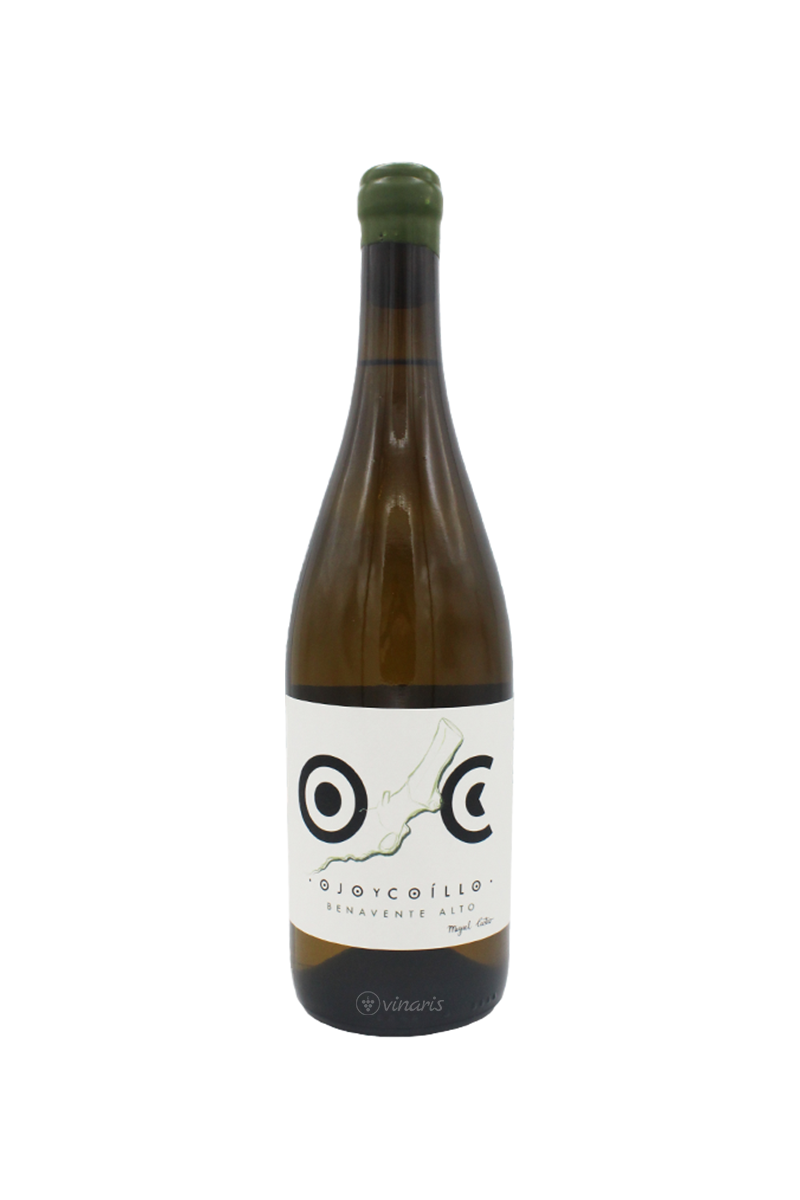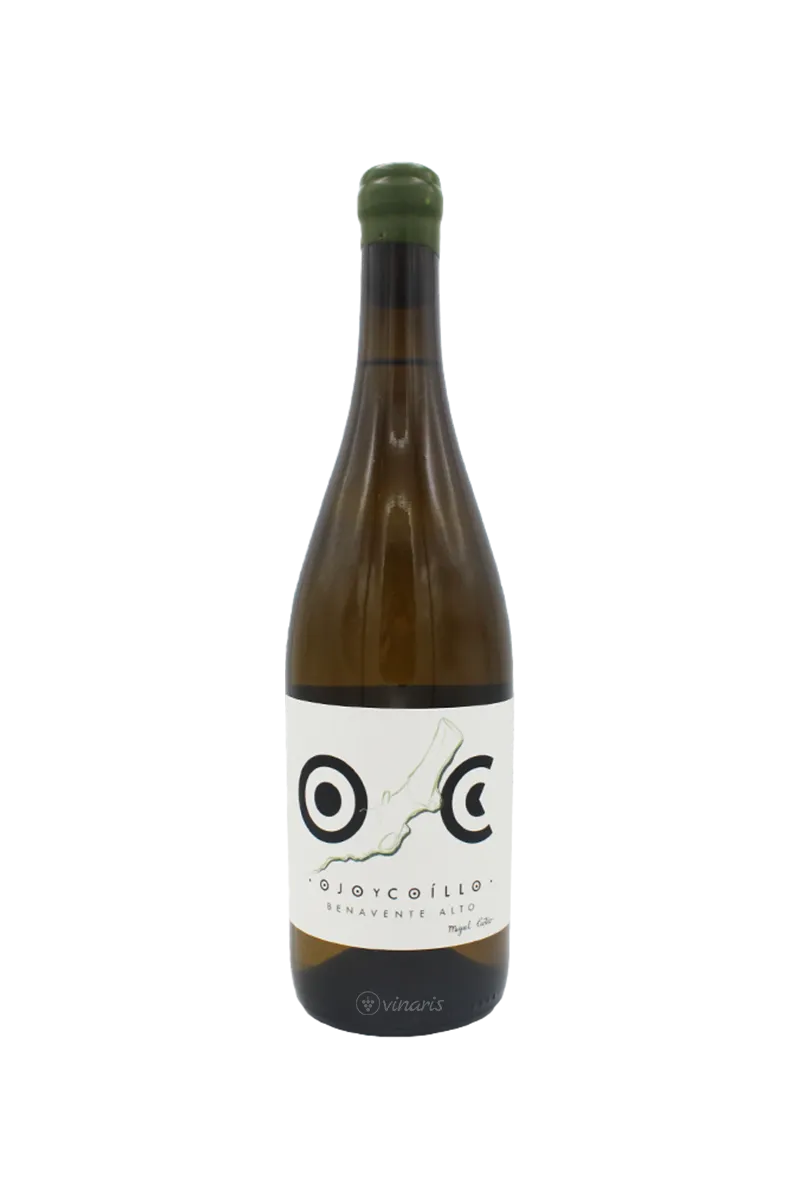

 Vineyards between 40 and 80 years old located in the Vereda del Cerro Macho region, specifically in the Benavente Alto area, with bush vines, southeast and northeast orientation, and albariza soil, a lumpy and very calcareous marl, with a great capacity for moisture retention and gradual release to the plant. 90% Pedro Ximénez and 10% other minor native varieties.
 Hand-harvested. Fermented in old barrels. Then it rests on its lees under a veil of flor. After a few months, the fermentation lees are removed and aging continues until the next harvest. Finally, it is transferred to a stainless steel tank where it rests for another month before bottling.

Ojo y Coíllo Benavente Alto 2023 by Miguel Castro Maíllo
This white wine hails from the Montilla-Moriles appellation in Andalucía, Spain. Produced by Miguel Castro Maíllo, the 2023 vintage is sourced from vineyards located in the specific locality of Benavente Alto, within the broader area known as La Vereda del Cerro Macho. The estate’s vines are between 40 and 80 years old, trained in the traditional vaso (bush) system. They benefit from southeast and northeast exposures and are planted in albariza soil, a crumbly, highly calcareous marl known for its excellent moisture retention and gradual release of water to the vines.
The blend is composed of 90% Pedro Ximénez, with the remaining 10% consisting of other minor native varieties. The grapes are harvested manually to ensure quality control at the source. In the cellar, fermentation takes place in old botas (wooden casks). Following fermentation, the wine undergoes an extended aging process on its lees under a protective veil of flor yeast until the next harvest. After several months, the fermentation lees are removed, but the wine continues to mature under the influence of the flor. Finally, it is racked into stainless steel tanks where it rests for one additional month before bottling.
The winemaking style suggests a wine with the saline, yeasty character typical of Montilla-Moriles whites aged under flor. The use of old wood and extended lees contact likely contributes to a structured, nuanced profile with mineral depth derived from the calcareous soils. This is a serious expression of Pedro Ximénez, reflecting the terroir’s unique climatic and geological conditions through meticulous, traditional winemaking techniques.
Descripción generada por IA con conocimiento WSET. Solo orientativa.
Miguel Castro Maíllo grew up among the vineyards of the Sierra de Montilla but chose to study Enology in Cádiz and train in the Marco de Jerez before returning to his family's land. His project, launched in 2018, is built on one simple, radical idea: to prove that Pedro Ximénez — the iconic variety of Montilla-Moriles, reduced for decades to raisins and sweet wine — can produce precise, age-worthy dry whites.
The stage is Cerro Macho, a ridge that splits the Sierra de Montilla into two albariza-clad slopes — that white, porous, cooling limestone that stores winter moisture and releases it slowly through the summer drought. To the east, Riofrío Alto, shaded in the afternoon: tighter, more saline wines with marked acidity. To the west, Benavente Alto, open to the sun: broader, more vinous in character. Each parcel ferments and ages separately in old Fino barrels, on its lees and under a veil of flor, until the following harvest. The vines are fifty to sixty years old and are pruned in the traditional ojo y coíllo style: the ojo is the productive bud for the current year, the coíllo the spur that will yield next year's shoot.
The wines bear no resemblance to the export-sweet of the past: taut, mineral, with a lees texture and a salinity that speak of the inland sea Andalucía once was. Small production — very small.
See all wines by Miguel Castro Maíllo →