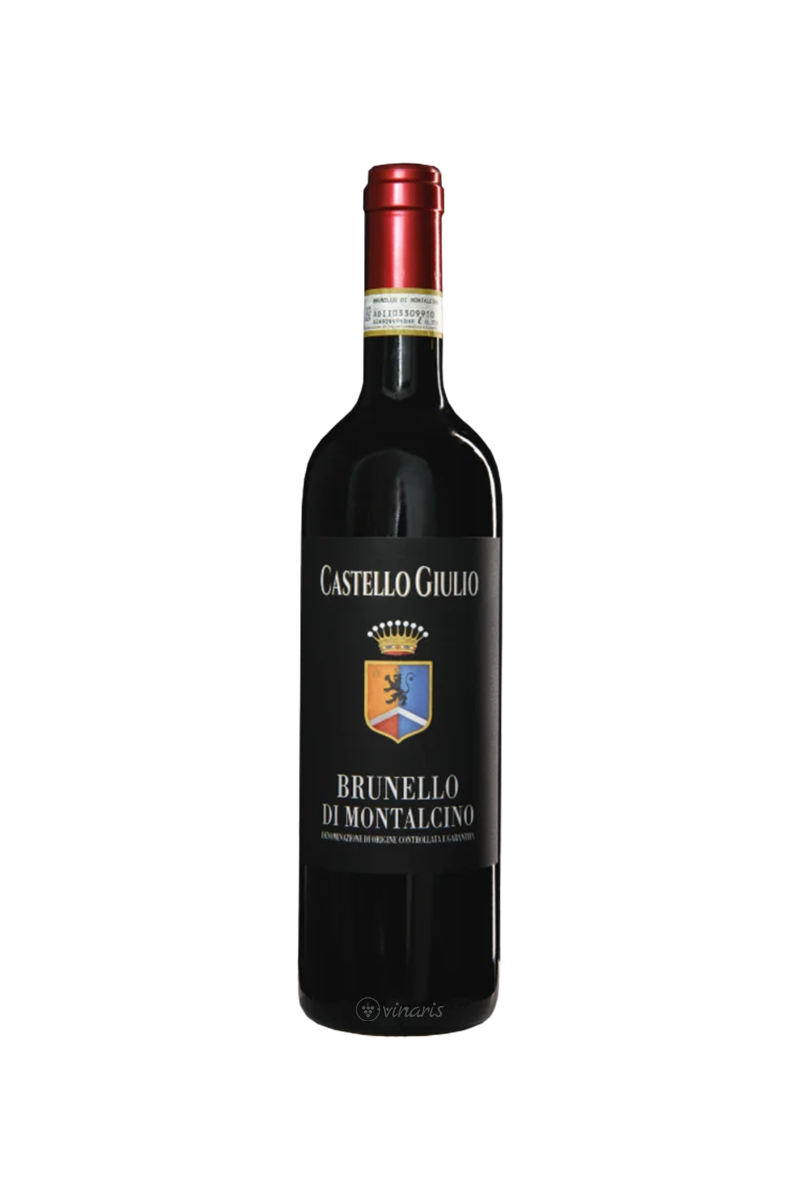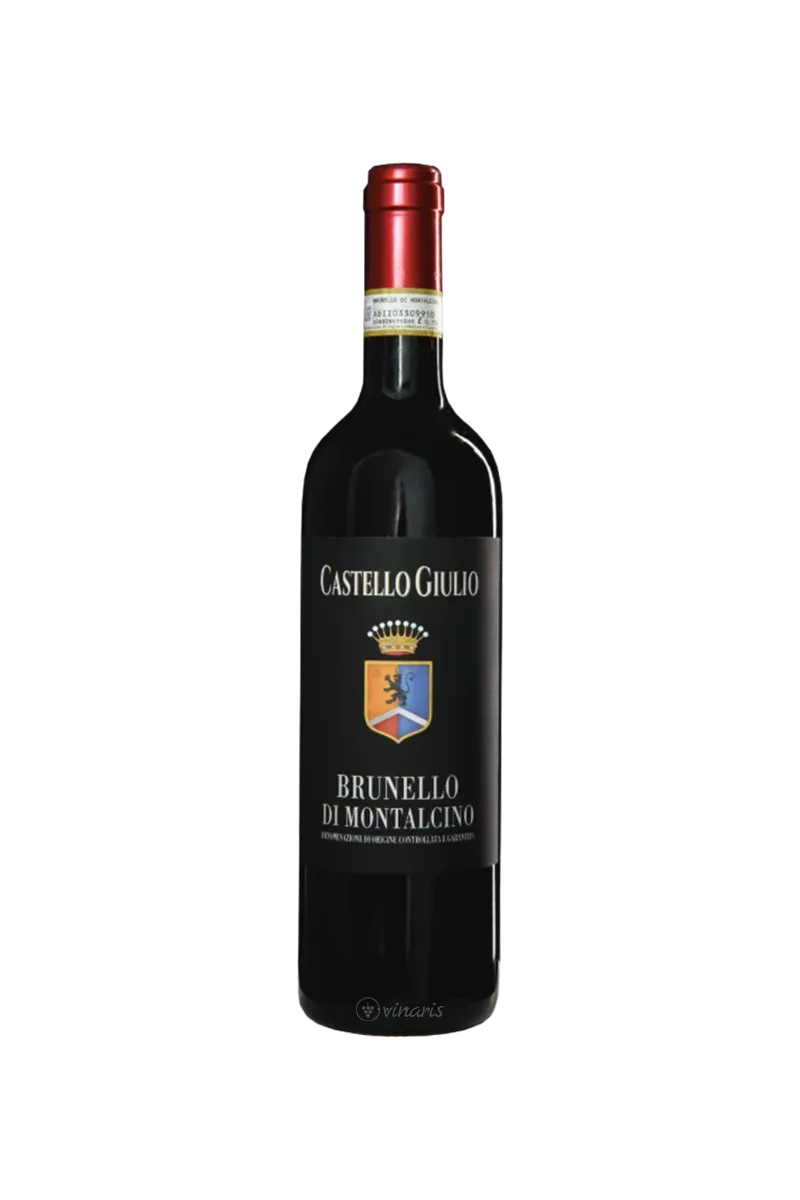



 Castello Giulio, DOCG Brunello di Montalcino (Villa Santa Restituta zone, southern Montalcino). Federico Nannetti, continuing the family project founded by Cesare Castelli. Vineyards at 400–480 m, south and south-west facing, on poor, stony silicate and limestone soils refreshed by altitude breezes. Vines 20–30 years old. 100% Sangiovese.
 Hand-harvested in the first decade of October. Fermented at controlled temperatures not exceeding 24–26 °C. Aged in large oak vessels — botti grandi — meeting the DOCG minimum of two years in oak within a total ageing period of 36 months.

Wine Identification
The Castello Giulio is a red wine produced by Castelli Martinozzi, released as a Brunello di Montalcino DOCG from the 2020 vintage. The estate is led by Federico Nannetti, who continues the family project initiated by Cesare Castelli.
Origin and Winemaking
Situated in the Villa Santa Restituta area of southern Montalcino, Tuscany, Italy, the vineyards are located at elevations between 400 and 480 meters with a south/south-west orientation. The soils are poor and stony, composed of silicates and limestone, which contribute to the wine's structure. The vines are 20 to 30 years old. The local climate is characterized by altitude breezes that moderate the heat.
The grapes are 100% Sangiovese, harvested manually during the first ten days of October. Vinification involves temperature-controlled fermentation, maintaining a maximum temperature of 24–26 °C. The wine undergoes aging in large oak casks (botti grandi), respecting the DOCG requirement of a minimum of two years in wood within a total aging period of 36 months.
Tasting Profile
As a Brunello di Montalcino, this wine is expected to exhibit the classic characteristics of Sangiovese grown on the poor, stony soils of southern Montalcino. The altitude and breezes likely provide freshness and balance against the warmth of the region. The extended aging in large oak vessels suggests a profile focused on integration and elegance rather than overt oak influence, with potential notes of red fruit, earth, and savory herbal tones typical of the appellation.
Critical Reception
James Suckling awarded this wine a score of 95.
Overall Character
The Castello Giulio represents a traditional yet precise interpretation of Brunello di Montalcino. By combining high-altitude vineyards with extended aging in large casks, Castelli Martinozzi produces a wine that respects the DOCG regulations while highlighting the specific terroir of Villa Santa Restituta.
Descripción generada por IA con conocimiento WSET. Solo orientativa.
James Suckling: 95
Bright intensity to this Brunello. Red cherries and raspberries, together with plenty of toasted notes, as well as licorice, smoky woodland and mediterranean herbs. The attack is extremely elegant on the full-bodied palate, with refined, filigree tannins and refreshing, integrated acidity. Very precise, juicy and savory. Drinkable now, but best from 2026.
The estate is Villa Santa Restituta, a fourteenth-century villa some ten kilometres south of Montalcino which the Castelli Martinozzi family has owned for centuries. The chapel next to the manor house bears witness to it: ancestors from several generations are buried there. The oldest recognition they keep is a merit medal awarded to Cesare Martinozzi in 1892 at a Siena wine competition.
The property covers 160 hectares, of which only twelve are vineyard —and sixteen olive grove— between 400 and 480 metres. The vineyard was once far larger: parcels that today belong to Soldera and to the neighbouring Caprilli and Fattoi were part of Villa Santa Restituta. The family kept the ones surrounding the villa.
The estate is run today by Federico Nannetti, who took over from his grandfather Cesare Castelli. The Brunello is bottled under the name Castello Giulio: Sangiovese from south and southwest-facing slopes on poor, stony soils of silicates and limestone, with vines twenty to thirty years old, hand-picked in the first ten days of October and aged in large botti, without putting oak ahead of fruit.
See all wines by Castelli Martinozzi →